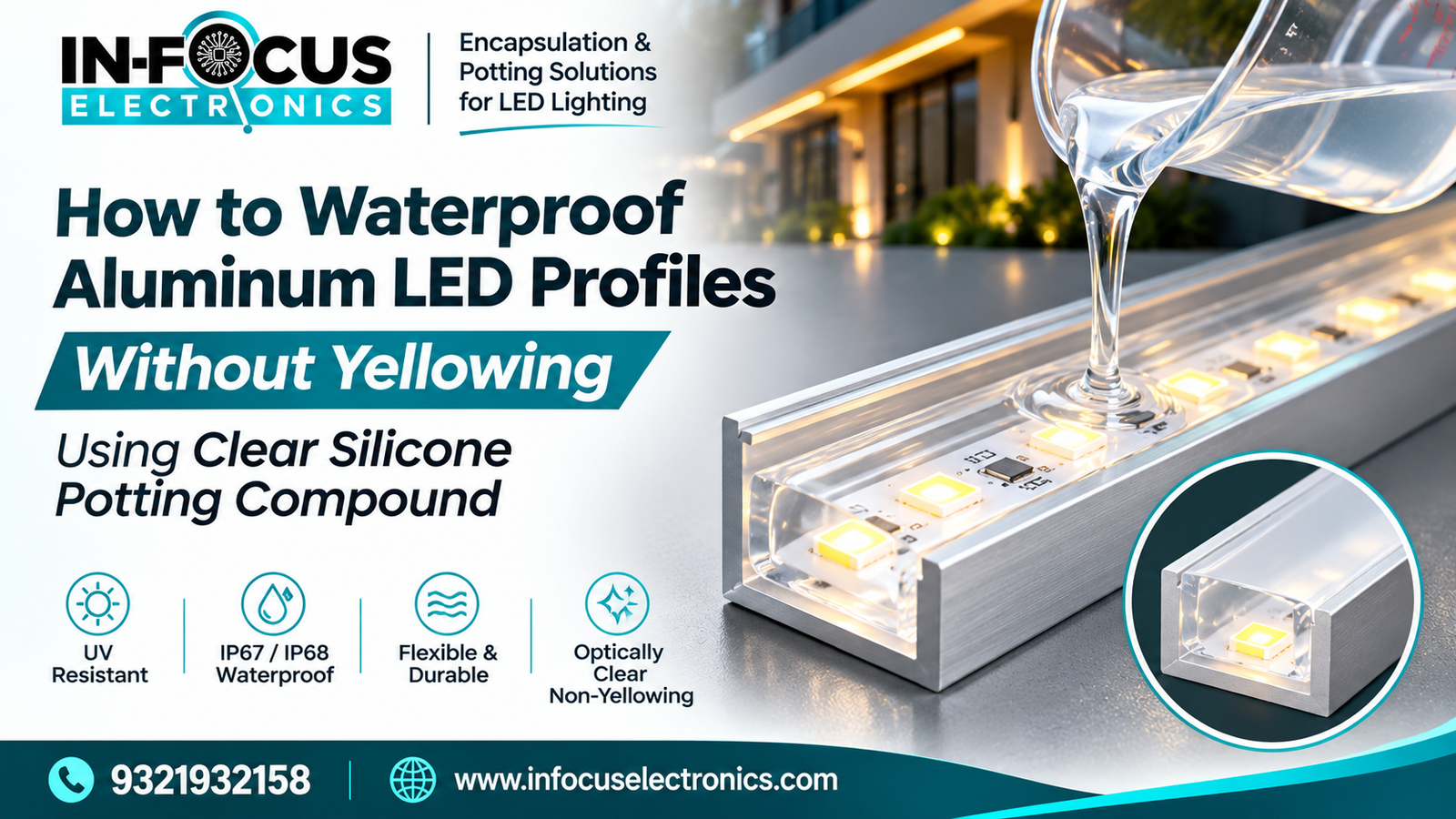
How to Waterproof Aluminum LED Profiles Without Yellowing Using Clear Silicone Potting Compound
Linear LED strip lights installed inside aluminum channels are widely used in modern architectural facades, ceiling coves, landscape pathways and commercial signage. However, when these lighting systems are installed outdoors or in humid, dusty and coastal environments, protecting them against moisture becomes essential.
Water entering an LED profile can damage electrical connections, corrode solder joints and cause premature LED failure. Standard plastic diffusers and ordinary sealants may not provide the protection required for demanding outdoor applications.
One solution used in LED manufacturing and lighting assembly is Clear Silicone Potting Compound for LED Profiles. It helps encapsulate LED strips and electrical components while maintaining optical clarity and flexibility.
Why Is Waterproofing Important for Aluminum LED Profiles?
Aluminum LED profiles protect LED strips and provide a structured housing for linear lighting installations. However, the profile itself does not automatically make the complete fixture waterproof.
Moisture can enter through end caps, cable entry points, joints and gaps around the LED strip. Proper encapsulation and sealing help protect sensitive electrical components against water, humidity and dust.
Why Standard Sealants and Epoxies May Not Be Suitable
1. Yellowing Under UV Exposure and Heat
Some conventional clear resins and sealants can change colour after prolonged exposure to UV radiation and operating temperatures. This can affect the appearance and light transmission of LED profiles.
2. Rigid Material and Cracking
Rigid epoxy materials have limited flexibility after curing. Temperature changes can cause aluminum profiles to expand and contract, potentially creating mechanical stress in the encapsulation layer.
3. Air Bubbles and Uneven Finishing
Incorrect mixing and pouring techniques can introduce air bubbles into the material. These bubbles may affect the appearance of the finished LED profile and create uneven optical results.
Benefits of Clear Silicone Potting Compound for LED Profiles
1. Excellent Optical Clarity
Optically clear silicone potting compounds are designed to allow light to pass through the encapsulation material. Suitable UV-resistant grades can help maintain clarity and reduce yellowing over time.
2. Waterproof and Dust Protection
When the correct compound is used with properly sealed end caps and cable entries, encapsulation helps protect LED strips, solder joints and electrical connections against moisture and dust. The final IP rating depends on the complete fixture design and testing.
3. Flexible and Durable Protection
Unlike rigid encapsulation materials, cured silicone generally retains flexibility. This helps accommodate thermal expansion, contraction and vibration in aluminum LED profile assemblies.
4. Smooth Pouring and Bubble Management
Suitable low-viscosity silicone formulations can flow around LED components and into narrow profile sections. Correct mixing, degassing where required and controlled pouring help achieve a cleaner finish.
Step-by-Step: How to Pot an Aluminum LED Profile
Step 1: Clean and Dry the Channel
Remove dust, oil, grease and other contaminants from the aluminum profile. Ensure that the LED strip and channel are completely dry before starting.
Step 2: Secure End Caps and Cable Entries
Install suitable end caps and seal the cable entry points. Make sure the profile is properly supported to prevent uncured silicone from leaking during pouring.
Step 3: Measure and Mix Part A and Part B
For two-part silicone compounds, measure the components accurately according to the manufacturer's specified mixing ratio. Mix slowly and thoroughly while minimizing air entrapment.
Step 4: Degas the Mixture if Required
For applications requiring high optical clarity, vacuum degassing may help remove trapped air bubbles. Follow the product manufacturer's processing recommendations.
Step 5: Pour the Silicone Compound
Pour the mixed compound slowly and evenly into the aluminum channel. Allow the material to flow around the LED strip and components without trapping excessive air.
Step 6: Allow Proper Curing
Keep the filled profile level and undisturbed during curing. Follow the technical datasheet for curing time, temperature and handling requirements before testing or installation.
Common Applications of Clear Silicone Potting Compound
- Outdoor Architectural Lighting: For facade and building accent lighting.
- Landscape Lighting: For garden pathways and outdoor linear lighting.
- Swimming Pool Perimeter Lighting: For suitably designed and tested lighting assemblies.
- Commercial Signage: For LED signboards and illuminated display profiles.
- Industrial Lighting: For selected industrial and cold-storage linear lighting fixtures.
- LED Strip Lighting: For encapsulation of LED strips inside aluminum channels and linear luminaires.
How to Choose the Right Clear Silicone Potting Compound
Before selecting a silicone potting material for your LED lighting project, consider the following factors:
- Transparency: Select an optically clear grade suitable for your lighting application.
- UV Resistance: Check the formulation's resistance to UV exposure and long-term yellowing.
- Viscosity: Choose a suitable flow characteristic for the dimensions of your aluminum profile.
- Flexibility: Consider the cured hardness and flexibility required for your application.
- Curing Time: Check the manufacturer's curing schedule and processing conditions.
- Waterproof Performance: Verify material compatibility and test the complete luminaire for its required IP rating.
Source Silicone Potting Compound from INFOCUS ELECTRONICS
Choosing the right encapsulation material is important for the durability and performance of LED lighting products. INFOCUS ELECTRONICS, based in Mumbai, Maharashtra, supplies encapsulation materials and lighting components for LED manufacturers, OEMs, traders and project contractors across India.
Our product range includes silicone potting compounds, encapsulation materials and other components used in LED lighting and electronic applications.
- Encapsulation materials for LED and electronic applications
- Silicone potting solutions for lighting manufacturers
- Product support for bulk and project enquiries
- Lighting accessories and components under one roof
Looking for Clear Silicone Potting Compound in Mumbai or Across India?
Contact INFOCUS ELECTRONICS for product information, technical specifications, samples and bulk enquiries.
Explore our complete Silicone Potting Compound and Encapsulation Materials range.
INFOCUS ELECTRONICS
Call / WhatsApp: +91 9321932158
Email: info@infocuselectronics.com
Location: Malad West, Mumbai, Maharashtra, India
Website: www.infocuselectronics.com