5 Suspension Wire Mistakes That Can Ruin a Lighting Installation
Suspended lighting can completely change the look and feel of an interior space. Pendant lights, linear LED lights, decorative fixtures, chandeliers, and architectural lighting systems can create a clean, modern appearance when they are installed correctly. However, the suspension system supporting the fixture is just as important as the light itself.
A poorly selected or incorrectly installed suspension wire can affect the alignment, stability, appearance, and overall performance of a lighting installation. For interior designers, architects, lighting contractors, and installers, choosing the right suspension components from the beginning can help avoid unnecessary installation problems.
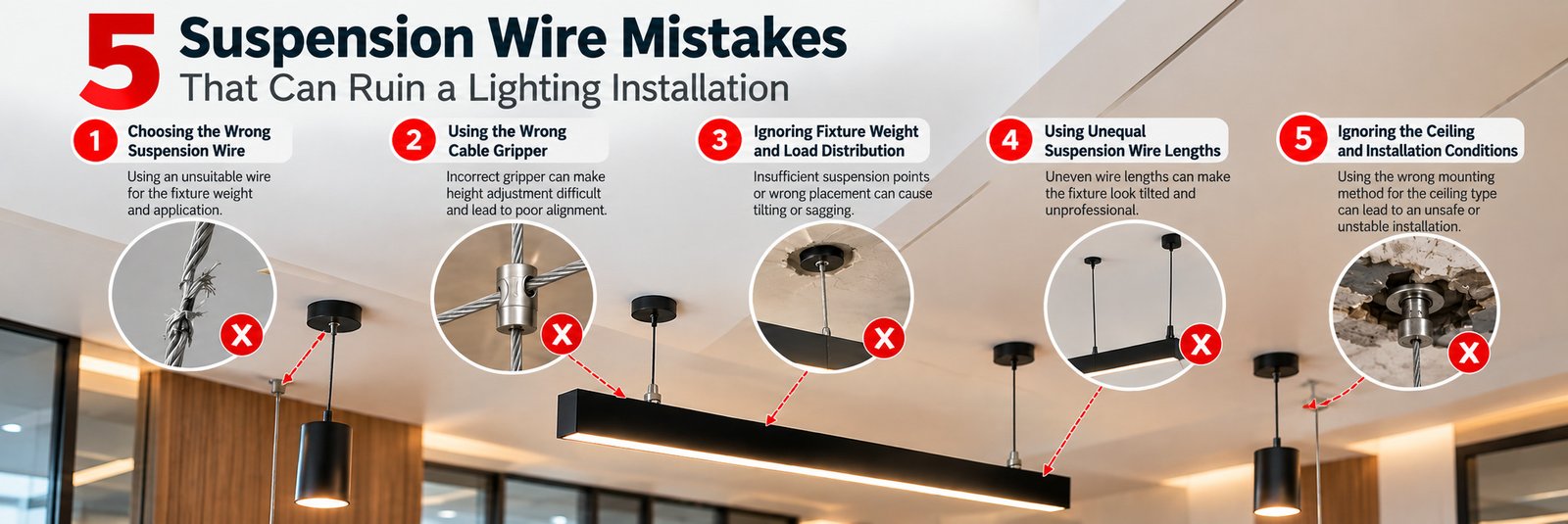
Here are five common suspension wire mistakes to avoid when planning a lighting installation.
1. Choosing the Wrong Suspension Wire for the Fixture
One of the most common mistakes is selecting a suspension wire without considering the lighting fixture it needs to support.
Different lighting fixtures have different sizes, weights, shapes, and mounting requirements. A lightweight pendant light may require a different suspension arrangement than a long linear LED fixture or a large decorative chandelier.
Before selecting a suspension wire, consider:
- Fixture weight
- Fixture length and size
- Number of suspension points
- Required suspension height
- Installation environment
- Type of ceiling
- Required adjustment during installation
The suspension system should be selected according to the actual requirements of the lighting fixture rather than simply choosing a wire based on appearance or availability.
For commercial and architectural lighting projects, properly matched suspension components can also make installation and future adjustment easier.
2. Using the Wrong Cable Gripper or Connector
The suspension wire is only one part of a complete lighting suspension system. The cable gripper, hook, connector, ceiling attachment, and other fittings also play an important role.
Using an unsuitable gripper can make adjustment difficult and may result in poor alignment of the fixture. For example, a suspension system for a linear light may require adjustable cable grippers that allow the installer to fine-tune the height and level of the fixture.
Depending on the lighting application, different types of fittings may be used, including:
- Brass cable grippers
- Looping wire grippers
- Hook-type cable grippers
- Ceiling-mounted suspension fittings
- Adjustable lighting suspension kits
Interior designers and contractors should consider the complete suspension system instead of selecting the wire separately from the supporting hardware.
3. Ignoring Fixture Weight and Load Distribution
Another common mistake is focusing only on the appearance of the suspension wire while ignoring how the fixture's weight is distributed.
A long linear light, for example, may need multiple suspension points to maintain proper alignment. If suspension points are positioned incorrectly, the fixture can tilt, sag, or become difficult to level.
Before installation, determine:
Fixture size + fixture weight + suspension points + mounting position = appropriate suspension arrangement
For larger or longer lighting fixtures, distributing the load across suitable suspension points can help maintain a cleaner and more stable installation.
This is particularly important in offices, retail stores, restaurants, hotels, showrooms, and other commercial interiors where suspended lighting is often installed in rows or groups.
4. Installing Suspension Wires at Unequal Lengths
Even when the correct suspension wire and fittings have been selected, uneven wire lengths can affect the final appearance of the lighting fixture.
This is especially noticeable with:
- Linear LED lights
- Pendant lights installed in groups
- Multiple decorative fixtures
- Suspended profile lighting
- Chandeliers
- Architectural lighting installations
A fixture that is only slightly uneven can become visually obvious once it is installed in a modern interior with clean architectural lines.
Adjustable cable grippers can make this process easier by allowing installers to fine-tune the height after the fixture has been mounted.
For designers working on symmetrical lighting layouts, the ability to make small height adjustments can be particularly useful during the final installation stage.
5. Not Considering the Ceiling and Installation Environment
The ceiling structure and installation environment should always be considered before choosing a suspension system.
A lighting installation may involve different ceiling conditions such as concrete ceilings, false ceilings, exposed ceilings, commercial grid ceilings, or specially designed architectural ceilings.
The suspension system should be compatible with the mounting arrangement and the installation requirements of the project.
Other factors can also influence the selection, including:
- Ceiling height
- Fixture location
- Accessibility for installation
- Required suspension length
- Indoor or semi-outdoor application
- Frequency of future adjustment
- Overall visual appearance
Planning these details before installation can reduce modifications and help achieve a cleaner finished result.
How to Choose the Right Suspension System for Lighting
Selecting a suspension system becomes easier when the requirements are identified before purchasing the components.
Consider the Lighting Fixture
First, identify the type of fixture being suspended. Pendant lights, linear LED fixtures, chandeliers, LED profiles, and decorative lights may require different suspension arrangements.
Check the Required Height
Determine how far the fixture needs to hang from the ceiling. Adjustable suspension systems can be useful when the final height needs to be fine-tuned during installation.
Select Suitable Grippers
The cable gripper should match the wire and the fixture mounting arrangement. A suitable gripper can make installation, adjustment, and alignment easier.
Plan the Suspension Points
Long or larger fixtures may require multiple suspension points. Positioning these points correctly helps maintain the desired level and appearance.
Think About the Final Design
Suspension hardware is visible in many modern lighting installations. For interior projects, the size, finish, and appearance of the wire and fittings can therefore be part of the overall design consideration.
Why Adjustable Suspension Systems Are Useful
Adjustability is one of the most useful features of a modern lighting suspension system.
During installation, small differences in ceiling height, mounting position, or fixture alignment can become noticeable. Adjustable cable grippers allow installers to make fine height corrections without replacing the entire suspension wire.
This can be particularly useful for:
- Pendant lights
- Linear LED lighting
- Suspended LED profiles
- Decorative lighting
- Chandeliers
- Commercial lighting installations
- Architectural lighting systems
A properly selected suspension kit can therefore help combine practical installation requirements with a clean and professional appearance.
Suspension Wires for Modern Interior Lighting
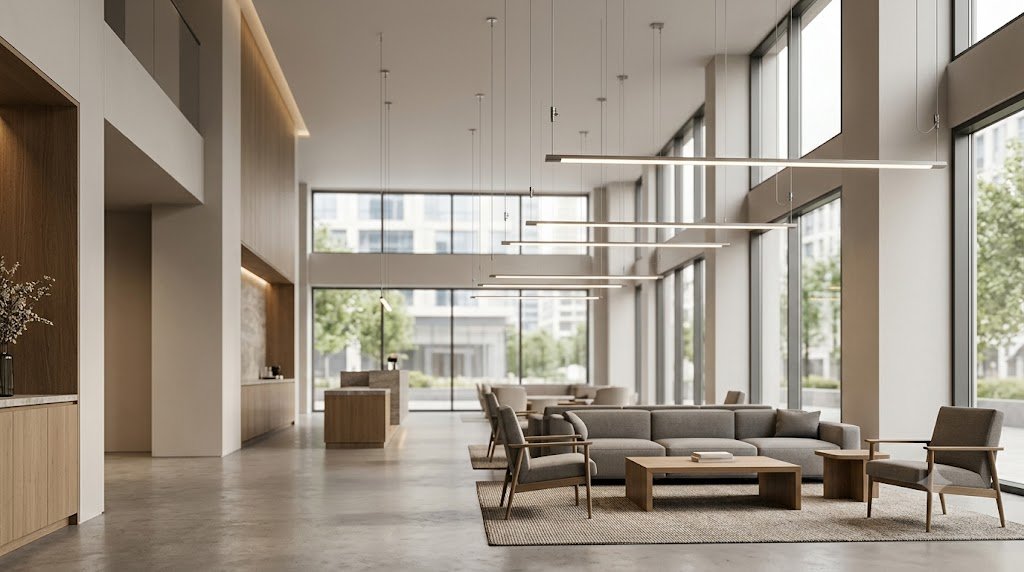
Suspension systems are increasingly used in modern interiors where lighting fixtures are intentionally left suspended from the ceiling.
In offices, restaurants, retail spaces, hotels, showrooms, and residential interiors, suspended lighting can be used to create visual layers while keeping the ceiling design clean.
For these applications, the suspension system should not be treated as an afterthought. The wire, grippers, hooks, and mounting accessories all contribute to the final installation.
Choosing the correct components at the planning stage can make the installation process more straightforward and help achieve the intended lighting design.
Final Checklist Before Installing Suspension Wires
Before starting a lighting suspension installation, check:
- Is the suspension wire suitable for the fixture?
- Is the cable gripper compatible with the wire and mounting system?
- Has the fixture weight been considered?
- Are the suspension points correctly positioned?
- Are the wires equal in length where required?
- Can the fixture height be adjusted?
- Is the mounting method suitable for the ceiling?
- Does the finish of the suspension hardware suit the interior design?
- Has the complete suspension system been checked before installation?
Conclusion
Suspension wires may look like a small component of a lighting project, but they have an important role in the final installation. Choosing the wrong wire, unsuitable grippers, incorrect suspension points, uneven lengths, or incompatible ceiling fittings can create unnecessary installation problems.
For interior designers, architects, lighting contractors, and manufacturers, planning the suspension system together with the lighting fixture can help achieve better alignment, easier installation, and a cleaner finished appearance.
Whether the project involves a single pendant light, a row of linear LED fixtures, a decorative chandelier, or a larger architectural lighting installation, selecting the appropriate suspension wire and supporting accessories is an important part of the overall lighting design.