Are 18650 Batteries Safe? Risks, Charging Tips and Safe Usage Guide
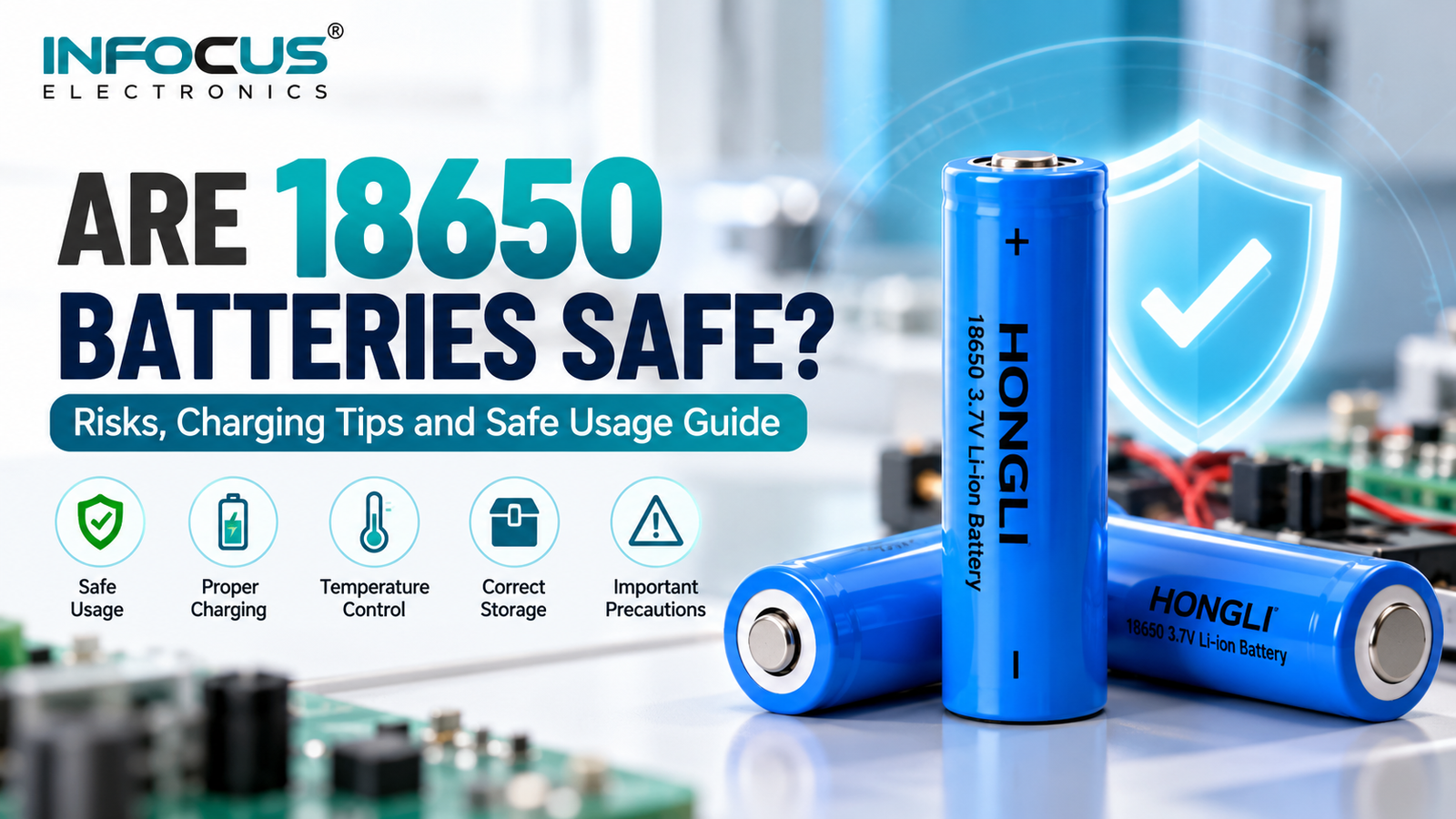
18650 lithium-ion batteries are widely used in electronic devices, rechargeable battery packs, portable equipment, and various industrial applications. Their compact cylindrical design and rechargeable performance make them a practical choice for many applications.
But are 18650 batteries safe?
Yes, 18650 batteries can be safe when they are manufactured to appropriate quality standards and used according to the manufacturer's specifications. However, improper charging, short circuits, physical damage, and excessive heat can create serious safety risks.
In this guide, we explain the major risks, essential precautions, and important factors to consider when selecting and using 18650 lithium-ion batteries.
What Is an 18650 Battery?
An 18650 battery is a cylindrical rechargeable lithium-ion cell. Its name refers approximately to its physical dimensions: 18 mm in diameter and 65 mm in length.
A typical 18650 lithium-ion cell has a nominal voltage of 3.6V or 3.7V, depending on the manufacturer's specification. Its fully charged voltage varies by cell chemistry and must be confirmed using the manufacturer's datasheet.
These batteries are used in compatible portable electronics, battery packs, lighting equipment, and other applications designed for their electrical characteristics.
Are 18650 Lithium-Ion Batteries Dangerous?
18650 batteries are not inherently dangerous when used correctly, but lithium-ion cells contain stored energy and require proper handling.
The main risks include:
- Short circuits: Direct contact between the positive and negative terminals can cause rapid heating.
- Overcharging: Charging beyond the cell's permitted voltage can damage the battery and increase the risk of fire.
- Physical damage: Crushing, puncturing, or denting a cell can damage its internal structure.
- Excessive heat: High temperatures can accelerate degradation and may trigger thermal runaway.
- Incorrect chargers: Chargers with unsuitable voltage or current settings can create unsafe conditions.
- Poor-quality cells: Counterfeit, defective, or improperly specified cells may have inadequate safety performance.
Understanding these risks helps users choose appropriate equipment and handle batteries responsibly.
7 Essential Tips for Using 18650 Batteries Safely
1. Use a Compatible Charger
Always use a charger specifically designed for the battery chemistry and charging limits of your cell. Follow the manufacturer's specified charging voltage, current, and charging procedure.
Never assume that all 18650 batteries have identical charging requirements.
2. Prevent Short Circuits
Keep battery terminals away from loose screws, keys, coins, and other conductive objects. Store individual cells in suitable protective cases rather than allowing them to move freely with metal objects.
Never connect battery terminals directly without an appropriate circuit or load.
3. Inspect Batteries Before Use
Do not use cells with dents, swelling, leakage, corrosion, unusual odours, or damaged outer insulation. Damage to the insulating wrap can expose conductive metal and increase the risk of a short circuit.
Damaged cells should be handled and disposed of through an appropriate battery-safety or recycling service.
4. Avoid Excessive Heat
Keep batteries away from flames, hot surfaces, and environments beyond their specified operating temperature.
Heat can accelerate battery ageing and may cause dangerous internal reactions. Do not leave charging batteries in hot, enclosed spaces.
5. Use Appropriate Protection Circuits
Battery-powered products should have protection suitable for their design, including appropriate overcharge, over-discharge, overcurrent, and short-circuit protection where required.
For battery packs, cell matching, wiring, thermal management, and a properly selected battery management system (BMS) are also important.
Protection features must be appropriate for the particular cell and application.
6. Store Batteries Properly
Store batteries in a cool, dry location within the manufacturer's recommended storage temperature and state-of-charge range.
Protect them from moisture, physical damage, and contact with conductive materials. For long-term storage, follow the manufacturer's recommendations rather than assuming that a fully charged or fully discharged state is suitable for every cell.
7. Recognise Warning Signs
Stop using a battery if it becomes unusually hot, swells, leaks, emits an unusual smell, or shows other signs of damage.
If a battery is hissing, venting, smoking, or burning, move away, keep others away, and contact emergency services as appropriate. Do not handle a smoking or burning battery.
Can 18650 Batteries Be Used in LED Lighting Applications?
18650 lithium-ion cells can be used in compatible rechargeable LED lighting products and battery-powered equipment.
However, suitability depends on the LED load, required runtime, cell discharge rating, operating temperature, battery configuration, and charging system.
Before selecting a battery for an LED product, check:
- Nominal and maximum charging voltage.
- Rated capacity and the conditions under which it was measured.
- Maximum continuous discharge current.
- Required protection circuitry.
- Operating and storage temperature limits.
- Compatibility with the product's driver and charging system.
A battery's capacity alone does not establish whether it is suitable for a particular LED application.
How to Choose the Right 18650 Battery
When comparing 18650 batteries, consider the following specifications:
Voltage: Confirm that the cell voltage and charging limits match the equipment.
Capacity: Capacity is commonly stated in milliampere-hours (mAh). A higher stated capacity does not automatically mean a better or safer battery.
Discharge rating: Ensure the cell can safely supply the current required by the application.
Quality and traceability: Choose cells from reliable suppliers with identifiable product specifications and appropriate quality documentation.
Protection requirements: Determine whether the application requires protected cells, an external protection circuit, or a battery management system.
Always verify the actual manufacturer's datasheet before designing or assembling a battery-powered product.
Frequently Asked Questions
1. Are 18650 batteries safe for everyday use?
They can be safe in compatible devices when the cells are of appropriate quality and are used, charged, and stored according to the manufacturer's instructions.
2. Can an 18650 battery explode?
A lithium-ion cell can vent violently or rupture under severe fault conditions, including certain cases of overcharging, short circuits, physical damage, or overheating. Proper cell selection and safety measures help reduce these risks but cannot eliminate them entirely.
3. What is the normal voltage of an 18650 battery?
Many 18650 lithium-ion cells have a nominal voltage of 3.6V or 3.7V. The maximum charging voltage depends on the particular cell chemistry and model, so consult its datasheet.
4. Can I charge an 18650 battery overnight?
Avoid unattended charging unless the battery system and charger are specifically designed and approved for the intended charging conditions. Follow the manufacturer's instructions and use a suitable charging system with the required safeguards.
5. How should damaged 18650 batteries be disposed of?
Do not put lithium-ion batteries in ordinary household waste or general recycling bins. Use an appropriate battery collection or recycling facility, and follow local requirements for damaged cells.
Looking for Reliable 18650 Lithium-Ion Batteries?
INFOCUS ELECTRONICS supplies 18650 lithium-ion batteries for suitable electronic devices and battery-powered applications. Whether you are a manufacturer, OEM, lighting company, or bulk buyer, connect with us to discuss your battery requirements and available specifications.
We can help you explore suitable battery options based on your application and technical requirements.
Need 18650 batteries for your business? Contact INFOCUS ELECTRONICS today for product details, availability, and bulk enquiries.
Connect with us: https://www.infocuselectronics.com/
Conclusion
18650 lithium-ion batteries offer a practical rechargeable power solution for many applications, but safe use depends on cell quality, compatible charging equipment, suitable protection, and correct handling.
By following the manufacturer's specifications and taking the precautions outlined in this guide, users can reduce avoidable risks and make more informed battery-selection decisions.
For battery requirements and product enquiries, contact INFOCUS ELECTRONICS.