M12 x 1.5 IP68 Air Vent Plug: Uses, Benefits and Selection Guide
Electrical enclosures used in outdoor lighting, industrial equipment, and electronic systems may experience changes in internal air pressure and temperature. Moisture can also become a concern when equipment operates in humid environments or experiences repeated heating and cooling.
An air vent plug with a breathable membrane can help manage these conditions while supporting the enclosure's environmental protection requirements.
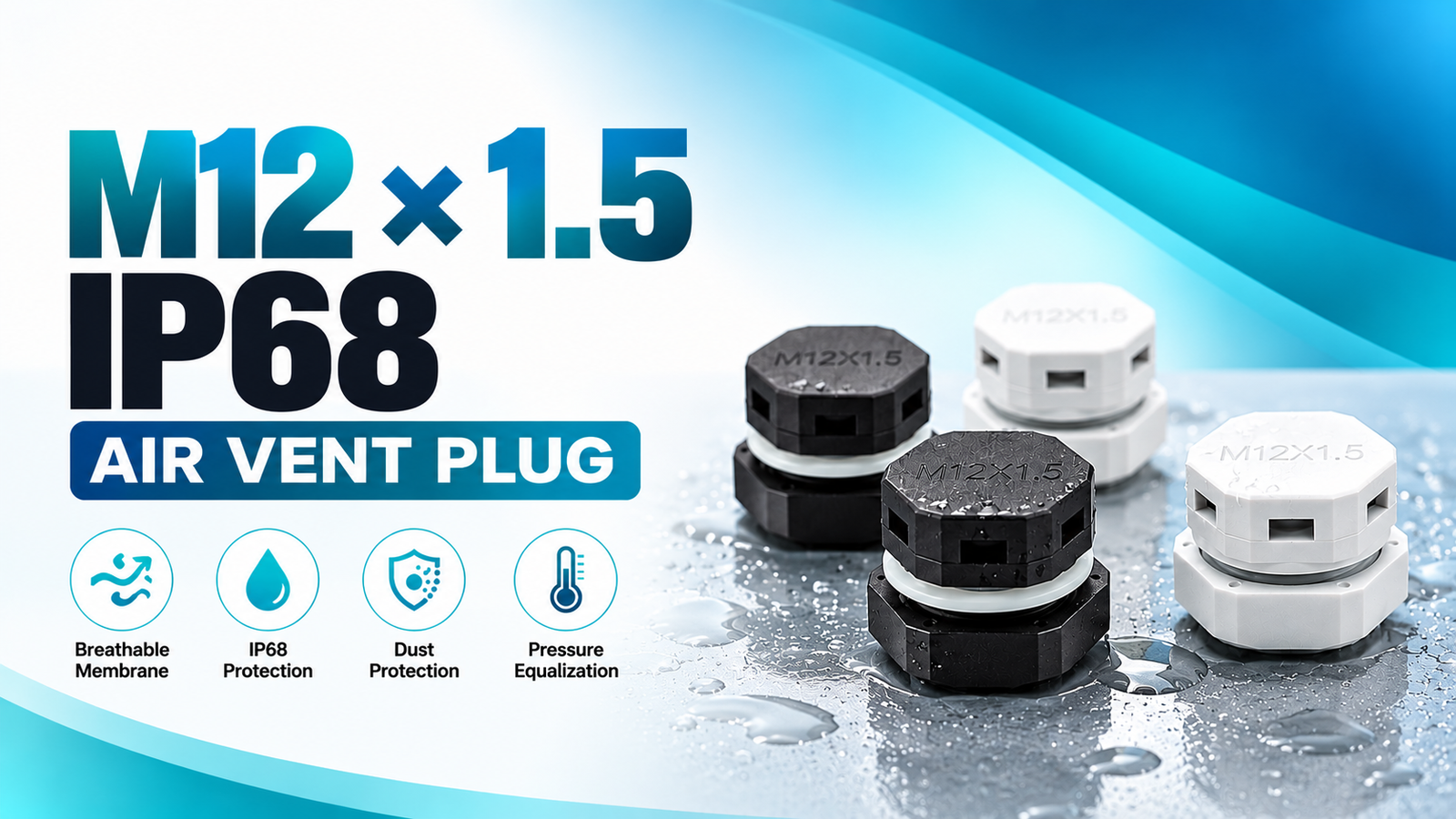
The M12 x 1.5 IP68 air vent plug is one option for applications requiring a threaded ventilation component. In this guide, we explain how it works, where it is used, and what buyers should check before selecting one.
What Is an M12 x 1.5 Air Vent Plug?
An M12 x 1.5 air vent plug is a threaded ventilation component designed to fit a compatible M12 mounting thread with a nominal diameter of 12 mm and a thread pitch of 1.5 mm.
Depending on its design, the plug contains a breathable membrane that permits air or water vapour to pass through while restricting liquid water and particulate ingress under specified test conditions.
This controlled ventilation can help reduce pressure differences between the inside and outside of a sealed enclosure.
Air vent plugs are used in suitable electrical enclosures, lighting equipment, junction boxes, and industrial housings.
How Does an Air Vent Plug Work?
When an enclosure heats up during operation, the air inside expands. When it cools, the internal pressure can decrease. These changes can create a pressure difference between the enclosure and its surroundings.
A suitable membrane vent allows controlled gas exchange, helping equalize pressure while providing a barrier against liquid water and contaminants within its specified performance limits.
Depending on the membrane and enclosure design, a vent may also help reduce conditions that contribute to moisture accumulation.
However, an air vent plug does not guarantee that condensation will never occur. Performance depends on the membrane, enclosure design, temperature changes, humidity, installation, and operating environment.
What Does M12 x 1.5 Mean?
The designation M12 x 1.5 identifies the metric thread size.
- M12: Nominal thread diameter of 12 mm.
- 1.5: Thread pitch of 1.5 mm, meaning the distance between adjacent thread peaks is 1.5 mm.
Before installation, verify that the enclosure has a compatible thread and that the vent's mounting dimensions match the required opening.
Do not assume that every 12 mm opening is suitable for an M12 x 1.5 plug. The mounting hole, thread specification, sealing surface, and required installation method must all be checked.
What Does IP68 Mean for an Air Vent Plug?
IP68 is an ingress protection designation associated with protection against dust and immersion in water under specified conditions.
The exact immersion depth, duration, and test conditions depend on the applicable product specification and manufacturer documentation.
For an air vent plug, it is important to verify the protection rating for the actual component and understand whether the stated performance applies to the vent alone or to a correctly assembled enclosure.
Correct installation, suitable sealing surfaces, and compatibility with the enclosure are essential.
Important: Do not assume that every vent plug marked IP68 will provide identical protection under all operating conditions. Always consult the product's technical documentation.
Main Benefits of an Air Vent Plug
1. Pressure Equalization
A breathable membrane can help reduce pressure differences caused by temperature changes and operating conditions inside an enclosure.
This can help reduce stress on suitable enclosure seals when the vent is correctly selected and installed.
2. Support for Moisture Management
Pressure changes can draw humid air into an enclosure through less suitable sealing points. A properly designed membrane vent provides a controlled path for air exchange.
Depending on the system design and environment, this can help manage conditions that contribute to moisture accumulation.
It does not replace appropriate enclosure sealing, drainage, or condensation-control measures where those are required.
3. Protection Against Environmental Contaminants
A membrane vent designed for the application can help restrict dust and liquid water from entering through the vent opening.
The level of protection depends on the membrane construction, product rating, installation, and specified test conditions.
4. Compact Threaded Installation
A threaded vent plug can provide a practical mounting solution for compatible enclosure designs.
The M12 x 1.5 format is useful when the enclosure has been designed for that thread size.
5. Support for Outdoor Equipment
When appropriately specified, air vent plugs can be incorporated into enclosures used in outdoor and industrial environments where pressure changes and environmental exposure need to be considered.
Applications of M12 x 1.5 Air Vent Plugs
LED Street Lights and Outdoor Lighting
Outdoor LED luminaires experience temperature changes during operation and changes in weather conditions.
A suitable membrane vent can help manage pressure differences within compatible lighting housings. The vent must be selected according to the enclosure's design, environmental exposure, and protection requirements.
Junction Boxes and Electrical Enclosures
Electrical junction boxes and control enclosures may benefit from controlled pressure equalization when the application and enclosure design permit the use of a breathable vent.
The vent must not compromise electrical safety or the required environmental protection of the assembled enclosure.
Industrial Equipment
Industrial housings can experience heating and cooling during normal operation. Suitable venting can help manage pressure changes in compatible equipment.
Selection should account for temperature, dust exposure, water exposure, chemicals, and any industry-specific requirements.
Electronic Equipment Housings
Certain electronic devices use membrane vents to support pressure equalization while restricting environmental contaminants.
The required airflow, membrane characteristics, mounting arrangement, and protection rating depend on the equipment.
How to Choose the Right Air Vent Plug
Before purchasing an M12 x 1.5 air vent plug, consider these important factors.
1. Thread Compatibility
Confirm that the mounting thread is M12 x 1.5 and matches the enclosure design.
Check the required hole dimensions, thread engagement, and mounting arrangement.
2. Ingress Protection Requirements
Identify the required protection level for the complete assembled enclosure.
Verify the vent's documented IP rating and any limitations relating to installation or environmental conditions.
3. Membrane Performance
Review the membrane's air permeability, water resistance, and other available technical specifications.
The correct balance depends on the enclosure volume, pressure changes, operating temperature, and application requirements.
4. Operating Environment
Consider exposure to rain, dust, humidity, temperature fluctuations, UV radiation, and chemicals.
Choose a vent made from materials suitable for the intended environment.
5. Installation and Sealing
Follow the manufacturer's installation instructions, including tightening requirements and the specified sealing method.
Incorrect installation can affect the performance of the vent and the enclosure.
6. Product Documentation
For commercial and industrial applications, review the manufacturer's datasheet and supporting test documentation before finalising a component.
Confirm the specifications required for your particular equipment.
Common Mistakes to Avoid
- Selecting a vent without checking the thread pitch.
- Assuming every M12 vent has the same dimensions or airflow performance.
- Treating IP68 as a guarantee against condensation.
- Ignoring the IP rating of the complete assembled enclosure.
- Installing the vent without following the specified sealing and tightening instructions.
- Using a vent in environments beyond its documented material or temperature limits.
- Choosing a product without verifying the required technical specifications.
Careful selection helps ensure that the vent is suitable for the intended application.
Frequently Asked Questions
What is an M12 x 1.5 air vent plug used for?
It is used in compatible enclosures to provide controlled ventilation and help equalize internal and external pressure while restricting environmental ingress within its specified performance limits.
What does the 1.5 mean in M12 x 1.5?
It refers to the thread pitch of 1.5 mm. The nominal thread diameter is 12 mm.
Can an IP68 air vent plug be used in outdoor LED lights?
It may be suitable for compatible outdoor lighting enclosures, provided its specifications, installation requirements, and environmental performance match the application.
Does an air vent plug prevent condensation completely?
No. It can help manage pressure differences and moisture-related conditions, but condensation depends on humidity, temperature changes, enclosure design, and other factors.
Can an M12 x 1.5 vent plug fit any M12 hole?
No. The thread pitch, mounting dimensions, sealing surface, and installation requirements must be compatible.
Is an air vent plug the same as a cable gland?
No. A cable gland is designed to secure and seal a cable where it enters an enclosure. An air vent plug is designed to provide controlled ventilation and pressure equalization. They serve different purposes.
Looking for M12 x 1.5 IP68 Air Vent Plugs?
INFOCUS ELECTRONICS supplies M12 x 1.5 IP68 air vent plugs for suitable electrical enclosure, lighting, and industrial applications.
Our product is available in a Pack of 30, making it an option for manufacturers, OEMs, electrical product businesses, and bulk buyers.
If you are looking for threaded air vent plugs for your equipment or production requirements, contact INFOCUS ELECTRONICS to discuss product specifications, availability, and bulk enquiries.
Explore our website: https://www.infocuselectronics.com/
Conclusion
An M12 x 1.5 air vent plug can be a useful component in enclosure designs that require controlled ventilation and pressure equalization.
Before selecting a vent, check the thread specification, membrane performance, environmental requirements, installation method, and documented protection rating.
For compatible air vent plugs and other electrical and lighting accessories, contact INFOCUS ELECTRONICS to discuss your requirements.