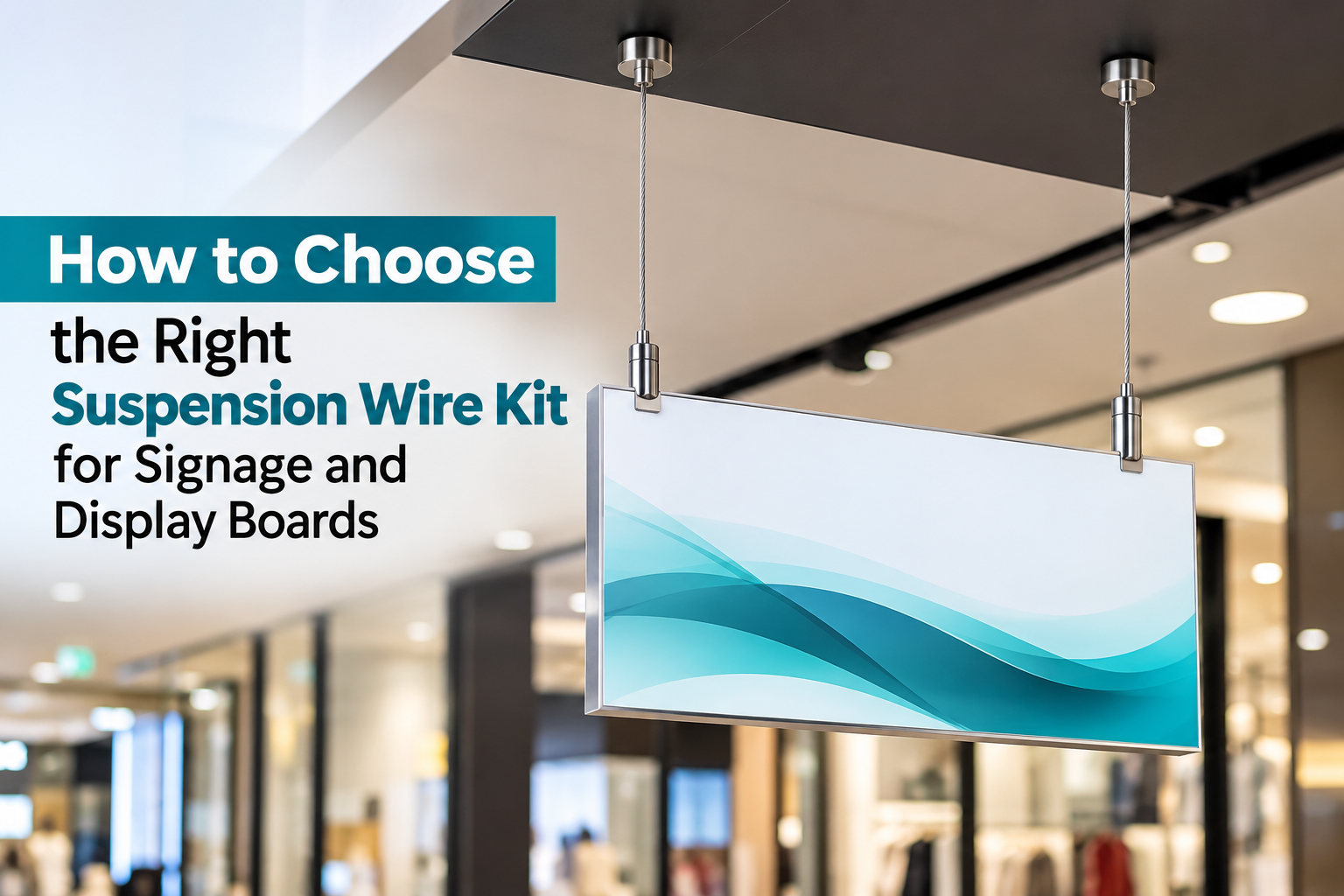
How to Choose the Right Suspension Wire Kit for Signage and Display Boards
Suspension wire kits are widely used to hang signage, display boards, panels, decorative fixtures, and other lightweight installations from ceilings, walls, or overhead structures. They provide a clean and professional way to suspend a board while keeping the installation secure and adjustable.
Choosing the right suspension wire kit is important because the correct combination of wire, grippers, couplers, screws, and fixing points can improve both the stability and appearance of the installation. Whether you are installing a retail display, exhibition signage, directional board, promotional panel, or suspended sign, several factors should be considered before selecting a kit.
What Is a Suspension Wire Kit?
A suspension wire kit is a set of components designed to securely hang a sign, display board, panel, or similar object. A typical kit may include stainless steel or metal suspension wires, cable grippers, couplers, screws, and other mounting accessories.
The wire supports the weight of the display, while the gripper allows the wire to be held and adjusted. Depending on the design of the signage, the kit can be installed from the ceiling, wall, or another suitable support structure.
Why Use a Suspension Wire Kit for Signage and Display Boards?
Suspension wire systems offer several advantages over conventional hanging methods. They provide a neat appearance and can make signage easier to position and adjust.
Some common benefits include:
- Clean and professional appearance
- Adjustable hanging height
- Easy installation and positioning
- Suitable for retail and commercial displays
- Useful for temporary and permanent installations
- Helps keep signage properly aligned
- Compact components with minimal visual impact
Suspension systems are especially useful where signage needs to be suspended rather than directly mounted against a wall or structure.
Factors to Consider When Choosing a Suspension Wire Kit
1. Check the Size and Weight of the Sign
The first step is to consider the dimensions and weight of the signage or display board. A larger or heavier board may require more suspension points and a suitable wire and fixing system.
Do not select a kit only based on appearance. The components should be appropriate for the weight and construction of the board.
2. Choose the Appropriate Wire Length
Wire length depends on how far the signage needs to hang from the ceiling or mounting point.
For installations where the board is positioned close to the ceiling, a shorter wire may be sufficient. For suspended signs that need to hang lower, a longer wire provides greater flexibility.
Before purchasing a suspension wire kit, measure the required hanging distance and allow some additional length for adjustment and installation.
3. Consider the Number of Suspension Points
The number of suspension points depends on the size, shape, and weight distribution of the display.
A small lightweight board may require fewer suspension points, while a larger display may benefit from multiple points to improve stability and prevent unwanted movement.
Using multiple suspension points can also help maintain a level and balanced appearance.
4. Select the Right Cable Gripper
The cable gripper is an important part of a suspension system. It holds the wire securely and can allow the height or position of the display to be adjusted.
Different applications may require different gripper designs, such as loop-type, hook-type, or screw-mounted cable grippers.
When selecting a gripper, make sure its wire compatibility and load requirements are suitable for the application.
5. Check the Fixing Method
The fixing method should match the surface and structure from which the signage will be suspended.
For example, a ceiling-mounted display may require a suitable screw, anchor, hook, or other fixing component. The mounting hardware should be appropriate for the ceiling or supporting structure.
A strong suspension wire cannot compensate for an unsuitable mounting point, so the fixing surface should always be considered during installation.
Common Applications of Suspension Wire Kits
Suspension wire kits can be used in many commercial and decorative applications, including:
- Retail store signage
- Promotional display boards
- Directional signs
- Exhibition and trade-show displays
- Shop and showroom displays
- Hanging information boards
- Decorative panels
- Ceiling-suspended displays
- Advertising signage
- Interior display installations
They are particularly useful when a clean and adjustable hanging solution is required.
What Does a Typical Suspension Wire Kit Include?
The exact contents of a kit can vary depending on the product and application. A typical suspension kit may contain suspension wires, cable grippers, couplers, and screws.
For example, a set designed for signage applications may include multiple wires and matching grippers and couplers so that the board can be supported from several points.
Before ordering, check the number of pieces included in the kit and make sure it matches the number of suspension points required for your installation.
Stainless Steel Wire for a Clean Finish
Stainless steel suspension wire is commonly preferred for display applications because it provides a slim and relatively discreet appearance.
The thin wire can blend into the background while keeping the focus on the signage or display. This makes it suitable for retail environments, exhibitions, showrooms, offices, and commercial interiors where appearance is important.
Common Mistakes to Avoid
Choosing a suspension kit based only on wire length or price can lead to installation problems. Some common mistakes include:
Using an Inappropriate Wire Length
A wire that is too short may make installation difficult, while excessive wire length can make positioning and adjustment unnecessarily complicated.
Ignoring the Weight of the Display
Always consider the weight of the complete signage or board, including any attached components.
Using Too Few Suspension Points
Large or wide boards may become unstable if they are supported from an insufficient number of points.
Choosing the Wrong Gripper
The gripper should be compatible with the suspension wire and suitable for the intended application.
Using Unsuitable Mounting Hardware
The ceiling or wall fixing must be strong enough for the installation. Select mounting hardware according to the surface and load requirements.
Installation Tips for Better Results
Before installation, measure the board and mark the required suspension points carefully. Keep the suspension points balanced so the signage remains level.
After attaching the wires and grippers, adjust the height gradually until the display is correctly positioned. Check that all fixing points are secure before completing the installation.
For heavier or larger installations, use appropriate professional mounting methods and verify that the supporting structure can safely carry the load.
How to Select the Right Suspension Wire Kit
The right kit depends on the specific application. For a small display board, a simple suspension kit with a few wires and grippers may be sufficient. Larger signage may require additional suspension points and stronger supporting components.
Before choosing a product, consider:
- Size of the signage
- Total weight
- Required suspension height
- Number of fixing points
- Wire length
- Gripper type
- Mounting surface
- Indoor or outdoor application
- Required finish and appearance
Taking these factors into account helps you choose a suspension system that is practical, secure, and suitable for the installation.
Conclusion
A properly selected suspension wire kit can make signage and display board installation easier, cleaner, and more adjustable. The right combination of suspension wire, cable grippers, couplers, screws, and mounting points can provide a neat solution for retail displays, exhibitions, showrooms, offices, promotional signage, and other commercial applications.
Before purchasing a suspension wire kit, always consider the size and weight of the display, required wire length, number of suspension points, gripper type, and mounting surface. Selecting the components according to the actual application can help achieve a stable and professional-looking installation.
Frequently Asked Questions
What is a suspension wire kit used for?
A suspension wire kit is used to hang signage, display boards, panels, and other objects from ceilings, walls, or suitable supporting structures.
How do I choose the right suspension wire length?
Measure the distance between the mounting point and the desired position of the display. Select a wire length that provides enough room for installation and adjustment.
Can suspension wire kits be used for display boards?
Yes. Suspension wire kits are commonly used for retail signs, display boards, exhibition panels, promotional signage, and similar applications.
What is a cable gripper?
A cable gripper is a component that holds the suspension wire and can allow the height or position of the suspended object to be adjusted.
How many suspension wires are required for a sign?
The number depends on the size, weight, shape, and design of the sign. Larger boards may require multiple suspension points for better stability and balance.
Are suspension wire kits suitable for indoor displays?
Yes. They are commonly used for indoor retail displays, showrooms, exhibitions, offices, promotional boards, and decorative installations.