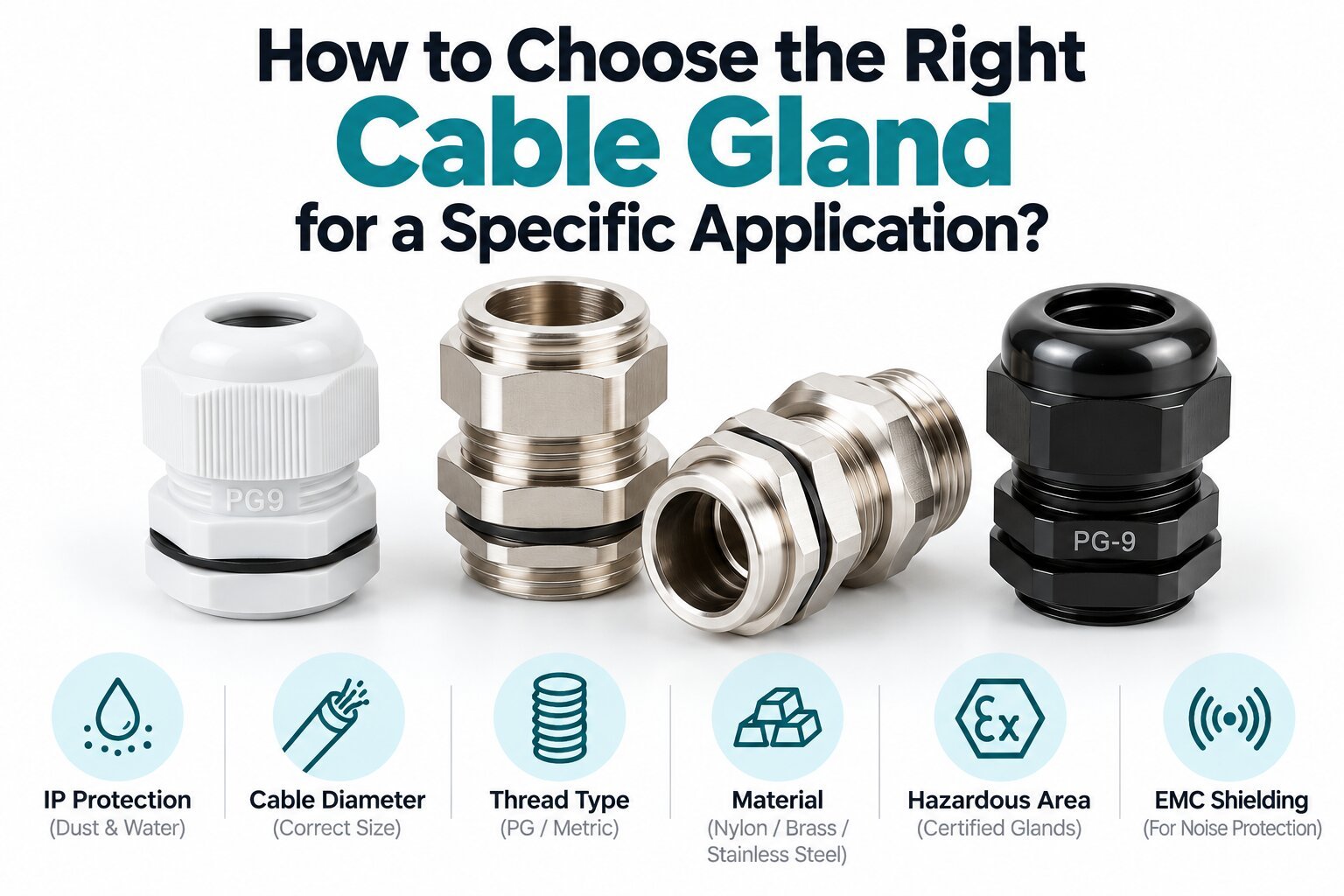
How Do I Choose the Right Cable Gland for a Specific Application?
Choosing the right cable gland is important for creating a secure, protected and reliable cable entry. A cable gland does more than hold a cable in place. It can help provide sealing against dust and moisture, prevent cable movement, protect the cable from environmental conditions and, in certain applications, provide electromagnetic compatibility (EMC) or hazardous-area protection.
With different cable diameters, thread sizes, materials, sealing requirements and application standards available, selecting the correct cable gland depends on where and how the cable will be used.
What Is a Cable Gland?
A cable gland is a mechanical cable-entry device used where a cable enters an electrical enclosure, junction box, control panel, lighting fixture or other equipment. It normally provides mechanical retention and sealing around the cable.
Depending on the design, cable glands can be made from materials such as nylon, PVC, brass or stainless steel. Different designs are available for indoor, outdoor, industrial, waterproof, EMC and hazardous-area applications.
How Do I Choose the Right Cable Gland?
The correct cable gland should be selected by considering several factors rather than choosing only by thread size.
1. Check the Cable Diameter
The first step is to determine the outside diameter of the cable.
Cable glands are designed for specific cable diameter ranges. For example, a gland may be suitable for cables between 3 mm and 6.5 mm, while another may accommodate a larger cable.
The cable should fit securely within the gland's specified clamping range. A gland that is too large may not seal properly, while one that is too small may damage the cable or fail to accommodate it.
Always check the manufacturer's cable diameter range before purchasing.
2. Select the Correct Thread Size
The gland thread must match the threaded entry or mounting hole in the enclosure.
Common thread types include metric threads such as M12, M16 and M20, as well as PG and other thread standards used in electrical equipment.
Do not assume that two glands with similar-looking dimensions are interchangeable. Check the actual thread specification, pitch and required mounting-hole dimensions.
3. Choose the Required IP Rating
For applications exposed to dust or water, the gland's ingress protection rating is an important consideration.
For example, an IP-rated cable gland may be used for outdoor lighting, electrical enclosures, control panels and other equipment where protection from environmental conditions is required.
The required IP protection depends on the application and enclosure design. The gland, cable and enclosure should be selected as a compatible system rather than relying on the gland rating alone.
4. Consider the Gland Material
The gland material should be selected according to the environment.
Nylon or plastic cable glands can be suitable for many general electrical, lighting and indoor applications where lightweight corrosion-resistant components are required.
Brass cable glands are commonly used where greater mechanical strength and durability are required, including many industrial and electrical applications.
Stainless steel cable glands may be considered for demanding environments where corrosion resistance and mechanical durability are particularly important.
Environmental factors such as moisture, chemicals, temperature, UV exposure and mechanical stress should be considered before selecting the material.
How Do I Choose a Cable Gland for Outdoor Applications?
Outdoor installations can expose cable glands to rain, dust, sunlight, temperature changes and mechanical stress.
For outdoor applications, consider:
- Appropriate IP protection
- Correct cable diameter range
- UV and weather resistance where required
- Suitable gland material
- Correct thread specification
- Temperature range
- Proper sealing and installation
For outdoor LED lighting, street lighting, junction boxes and electrical enclosures, the gland should provide suitable sealing while securely retaining the cable.
How Do I Choose a Cable Gland for Hazardous Areas?
Hazardous areas require much more careful selection than ordinary electrical installations.
Where flammable gases, vapours, dust or other hazardous substances may be present, the cable gland must be suitable for the specific hazardous-area classification and the equipment protection method being used.
Depending on the installation, specialist glands may be required for protection concepts such as explosion protection or increased safety. The gland must have the appropriate certification for the intended application and must be installed according to the applicable requirements.
When selecting a gland for a hazardous area, check:
- Hazardous-area classification
- Gas or dust environment
- Equipment protection concept
- Applicable certification
- Cable construction and type
- Cable diameter
- Thread type and size
- Environmental conditions
- Temperature requirements
- Installation requirements
A standard waterproof cable gland should not automatically be considered suitable for a hazardous area. Certified hazardous-area cable glands should be selected when the application requires them.
What Cable Gland Is Used for EMC Shielding?
EMC stands for Electromagnetic Compatibility. In electrical and electronic systems, electromagnetic interference can affect equipment performance and signal integrity.
For applications requiring EMC protection, EMC cable glands are designed to provide electrical continuity between the cable shield and the equipment enclosure or grounding system, depending on the gland design and installation method.
EMC cable glands are commonly considered for applications such as:
- Industrial automation
- Control panels
- Motor and drive systems
- Data and communication equipment
- Instrumentation
- Machinery
- Power electronics
- Sensitive electronic equipment
The correct EMC gland depends on the cable construction, shielding method, enclosure requirements and applicable EMC design.
How Does an EMC Cable Gland Work?
An EMC cable gland generally incorporates a conductive contact or clamping arrangement that can make contact with the cable shield or armour.
When correctly selected and installed, this can help create a controlled electrical connection between the cable shielding and the enclosure or grounding system.
However, the gland is only one part of an EMC installation. Cable routing, enclosure design, grounding, bonding, connectors and overall system construction can also affect EMC performance.
Cable Gland Selection for Industrial Applications
Industrial environments can expose cables to vibration, dust, moisture, chemicals, mechanical stress and temperature variations.
For industrial applications, consider the following:
Cable size: Match the gland to the actual outside diameter of the cable.
Thread: Confirm the enclosure thread or mounting-hole specification.
IP protection: Select suitable protection for the expected environment.
Material: Choose plastic, brass, stainless steel or another suitable material according to environmental and mechanical requirements.
Temperature: Check that the gland and sealing material are suitable for the operating temperature.
Mechanical protection: Consider vibration, pulling forces and cable movement.
EMC requirements: Use an appropriate EMC gland when shielding and bonding requirements call for it.
Cable Gland Selection for LED Lighting
Cable glands are widely used in LED lighting fixtures, outdoor luminaires, junction boxes and electrical enclosures.
For lighting applications, selection normally starts with the cable diameter and enclosure entry size. Outdoor fixtures may also require suitable ingress protection.
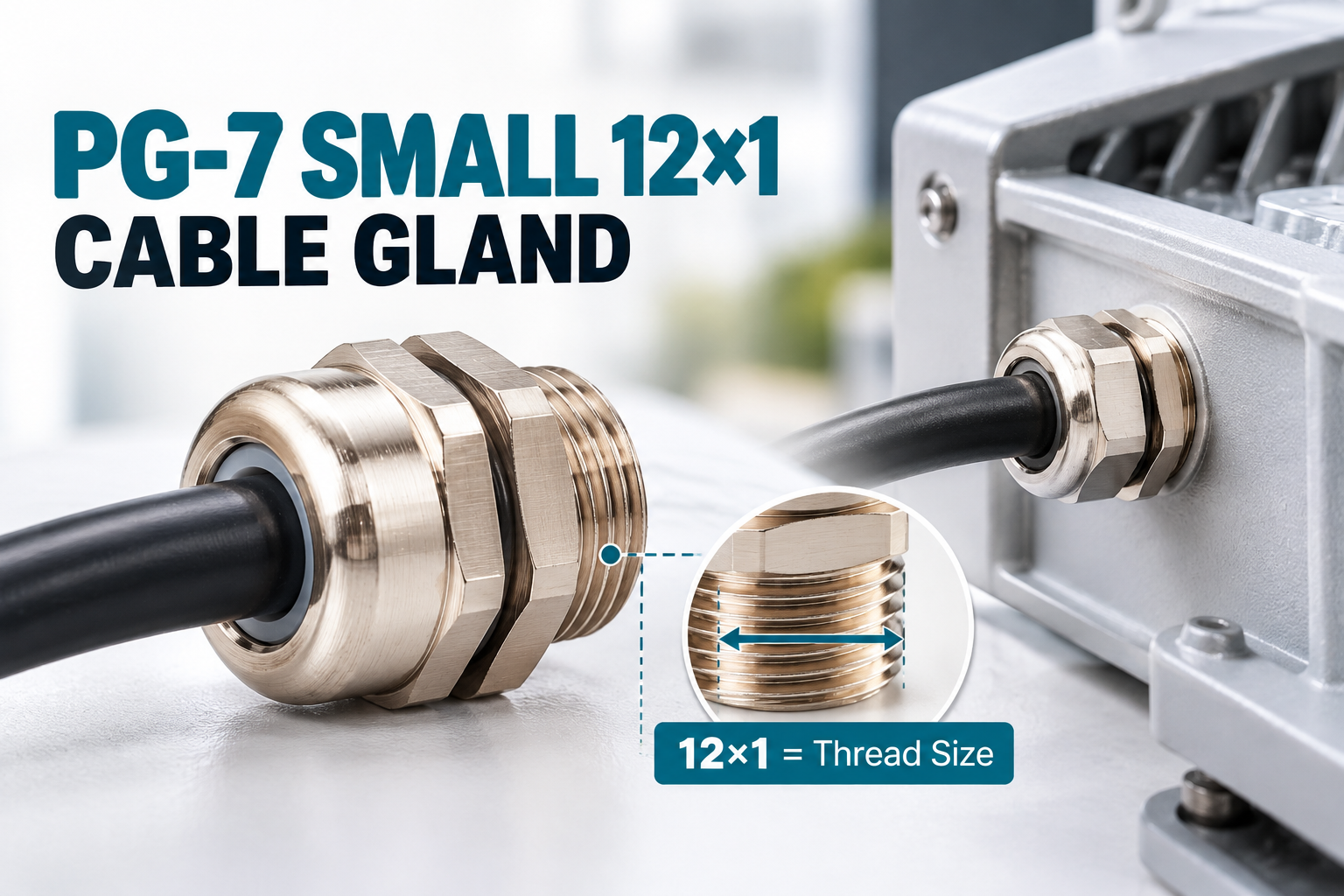
For example, a compact gland such as a PG-7 type may be suitable for smaller cables when its specified cable range and enclosure dimensions match the installation.
For larger cables or different enclosure entries, larger PG, metric or other compatible gland sizes may be required.
What Happens If the Wrong Cable Gland Is Used?
Using an incorrectly sized or unsuitable cable gland can create several problems.
A gland that is too large may not properly seal around the cable. A gland that is too small may cause excessive compression or make installation difficult.
Other possible issues include:
- Poor moisture protection
- Dust entering the enclosure
- Cable movement
- Reduced mechanical protection
- Damage to the cable jacket
- Incorrect thread engagement
- Loss of required environmental protection
- EMC problems where shielding is required
- Non-compliance with application-specific requirements
This is why cable diameter, thread, environmental conditions and application requirements should all be checked before selection.
Simple Cable Gland Selection Checklist
Before purchasing a cable gland, check these points:
- What is the cable's outside diameter?
- What thread size does the enclosure require?
- What type of thread is required?
- What IP protection is needed?
- Is the application indoor or outdoor?
- What material is suitable for the environment?
- Is the installation exposed to chemicals, UV, moisture or vibration?
- Is EMC shielding required?
- Is the installation in a hazardous area?
- Are any specific certifications or standards required?
- What operating temperature range is expected?
- Does the gland's cable range match the actual cable?
Final Thoughts
Choosing the right cable gland starts with the cable itself and the environment in which it will be installed. Cable diameter, thread size, IP protection, material and temperature requirements are important for general applications, while hazardous-area and EMC applications require additional technical considerations.
For hazardous-area installations, always verify the required certification and protection method. For EMC applications, select a gland designed for the required shielding and bonding arrangement. For outdoor and industrial applications, pay particular attention to sealing, environmental resistance and mechanical protection.
By matching the cable gland to the cable, enclosure and operating environment, you can achieve a more secure and reliable cable-entry solution.
Looking for cable glands for electrical, lighting, industrial and enclosure applications? Explore the available cable gland options from InFocus Electronics and select the size and type that matches your application requirements.
Frequently Asked Questions
How do I know what size cable gland I need?
Start by measuring the outside diameter of the cable. Then select a cable gland whose specified cable range includes that diameter. Also make sure the gland thread matches the enclosure entry.
Can the same cable gland be used indoors and outdoors?
Not necessarily. Outdoor applications may require suitable ingress protection, weather resistance, UV resistance and appropriate materials. Always check the gland's specifications against the installation environment.
Are brass cable glands better than plastic cable glands?
Neither is universally better. The appropriate material depends on the application's mechanical, environmental, corrosion and installation requirements.
Can a normal cable gland be used in a hazardous area?
A standard cable gland should not be assumed to be suitable for hazardous areas. Where hazardous-area certification is required, use a cable gland specifically certified for the applicable application and protection method.
What is an EMC cable gland?
An EMC cable gland is designed to help provide electrical continuity between cable shielding or armour and the equipment enclosure or grounding system, depending on its design and installation.
Does IP68 on a cable gland mean it can be used anywhere?
No. An IP rating describes protection against ingress under specified test conditions. It does not automatically indicate suitability for hazardous areas, EMC applications, chemicals, high temperatures or every outdoor environment.
Should cable gland size be selected according to cable diameter or thread size?
Both are important. The cable gland must have a suitable cable clamping range and the correct thread for the enclosure.
What information should I provide when buying a cable gland?
Provide the cable outside diameter, required thread type and size, application environment, required IP protection, gland material preference and any special requirements such as EMC shielding or hazardous-area certification.