PG7 vs PG9 Cable Glands: Which One Should You Use?
Choosing the right cable gland is important for creating a secure and reliable connection between a cable and an electrical enclosure, junction box, LED light, or other electrical equipment. PG7 and PG9 cable glands are commonly used in lighting and electrical applications.
Although PG7 and PG9 cable glands look similar, they are designed for different cable sizes and cable-entry requirements. Selecting the correct cable gland helps provide proper cable gripping, sealing, and protection.
In this guide, we explain the difference between PG7 and PG9 cable glands, their applications, and how to choose the right cable gland for your LED lighting or electrical project.
What Is a Cable Gland?
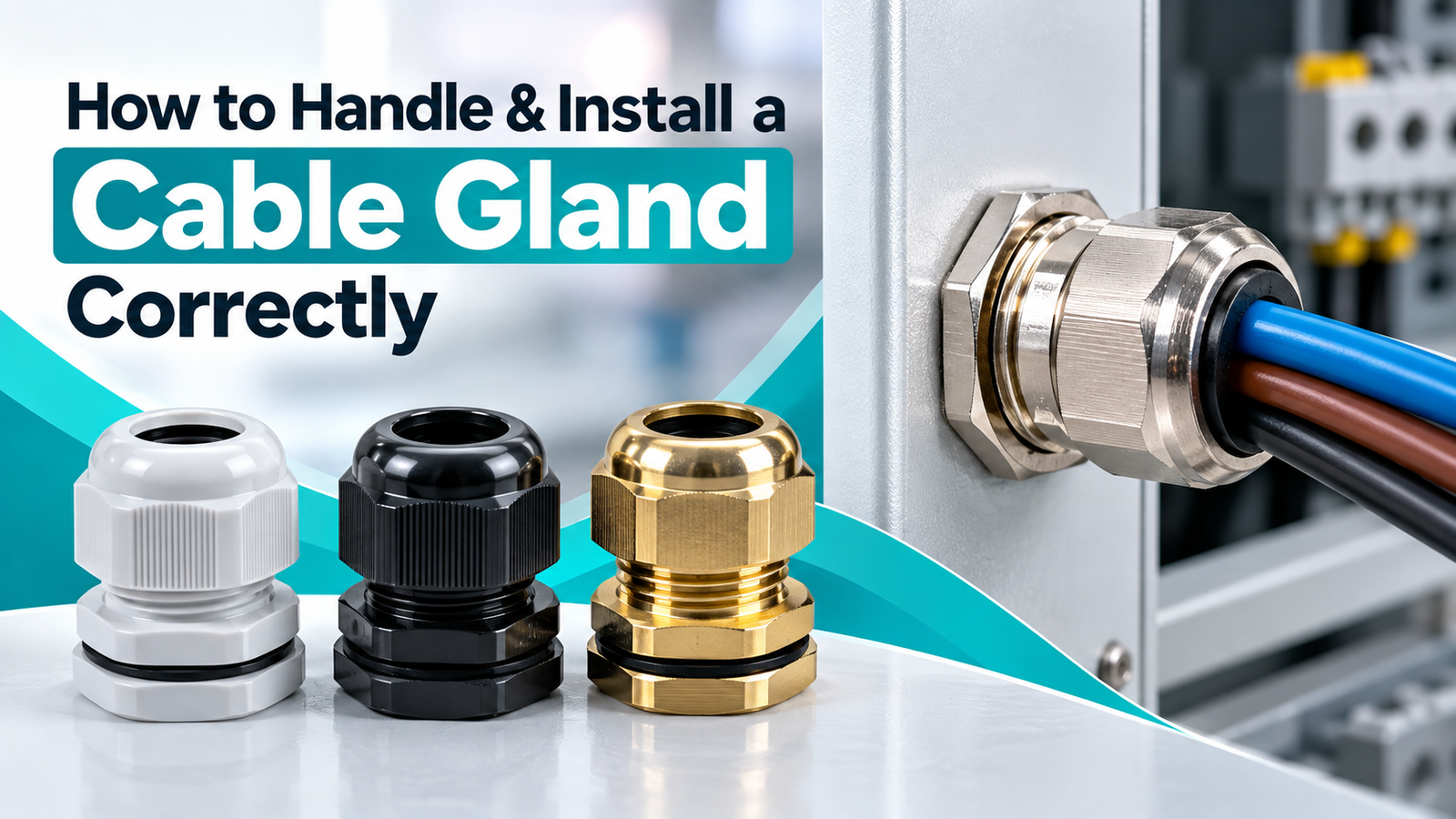
A cable gland is a mechanical cable-entry device used to secure and protect a cable where it enters an electrical enclosure or equipment.
A properly fitted cable gland can help:
• Secure the cable in position • Reduce strain on the cable connection • Seal the cable entry • Help protect against dust and moisture • Provide a neat and professional cable installation
Cable glands are available in different sizes, materials, thread types, and cable-entry ranges to suit different electrical and lighting applications.
What Is a PG7 Cable Gland?
A PG7 cable gland is a compact cable gland generally used for smaller-diameter cables.
PG7 cable glands are commonly used in LED lighting fixtures, small electrical enclosures, junction boxes, control equipment, and other compact electrical applications.
Common applications include:
• LED lighting fixtures • Small electrical enclosures • Control panels • Junction boxes • Low-voltage electrical equipment • Small-diameter cables and wires
The exact cable diameter range depends on the particular PG7 cable gland model and manufacturer. Always check the product specification before installation.
What Is a PG9 Cable Gland?
A PG9 cable gland is a larger gland size than PG7 and is generally used for cables with a larger outside diameter.
PG9 cable glands can be used where a PG7 cable gland does not provide the required cable-entry range.
Typical applications include:
• LED lighting equipment • Outdoor electrical enclosures • Junction boxes • Control equipment • Electrical panels • Industrial electrical installations
As with PG7, the actual cable diameter range depends on the specific PG9 cable gland model.
PG7 vs PG9 Cable Glands
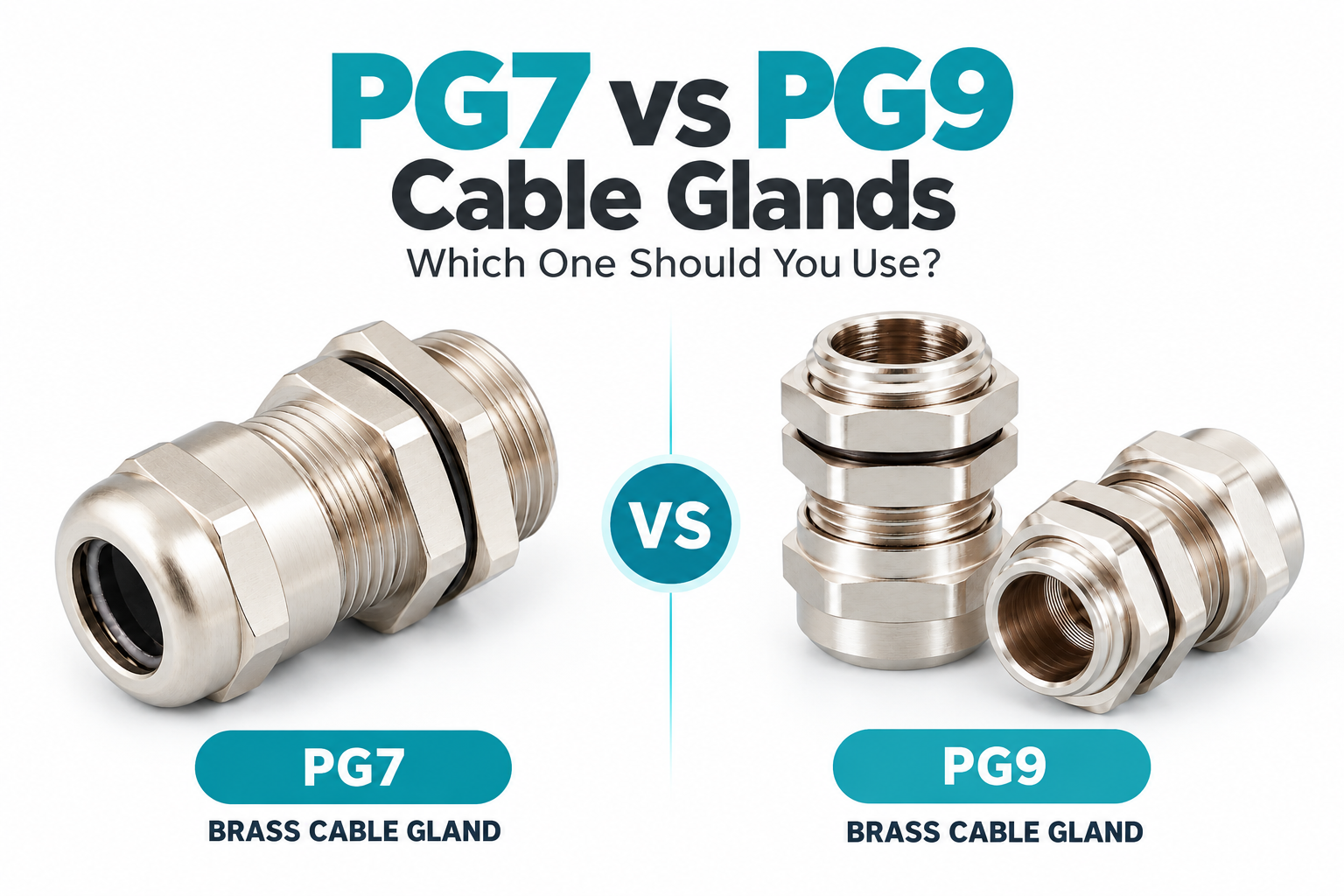
The main difference between PG7 and PG9 cable glands is their size and compatible cable diameter range.
PG7 cable glands are generally used for smaller cable entries, while PG9 cable glands are generally used for larger cable entries within the manufacturer's specified range.
PG7 Cable Gland:
• Smaller gland size • Suitable for smaller cable diameters • Useful for compact lighting and electrical equipment • Requires less installation space
PG9 Cable Gland:
• Larger gland size • Suitable for larger cable diameters • Useful for larger lighting fixtures and electrical enclosures • Requires more entry space
PG9 is not automatically better than PG7. The correct cable gland depends on the cable diameter, enclosure opening, installation environment, and product specifications.
How to Choose Between PG7 and PG9
The simplest way to select the correct cable gland is to start with the outside diameter of the cable.
- Measure the Cable Diameter
Measure the outside diameter of the cable using a suitable measuring tool.
- Check the Cable Gland Clamping Range
Compare the measured cable diameter with the manufacturer's specified cable-entry or clamping range.
The cable should fall within the specified range of the cable gland.
- Check the Enclosure Thread
Make sure the thread size of the cable gland is compatible with the threaded cable-entry hole in the enclosure, LED fixture, junction box, or electrical equipment.
- Consider the Installation Environment
For outdoor or exposed applications, select a cable gland designed for the environmental conditions of the installation.
Consider factors such as exposure to dust, moisture, water, temperature, and mechanical conditions.
- Select the Appropriate Material
Cable glands are available in different materials, including plastic and brass.
Plastic cable glands can be suitable for many general-purpose applications, while brass cable glands may be selected where a metal cable-entry solution is required.
PG7 or PG9 for LED Lighting?
Both PG7 and PG9 cable glands can be used in LED lighting applications.
The correct choice depends primarily on:
• Cable diameter • Cable gland clamping range • Enclosure entry size • Thread compatibility • Installation environment • Required protection level • Cable gland material
For compact LED fixtures using smaller cables, a PG7 cable gland may be suitable.
For fixtures using a larger cable or requiring a larger cable-entry size, a PG9 cable gland may be more appropriate.
For outdoor lighting applications such as street lights, flood lights, and other exposed LED fixtures, the complete cable-entry assembly should be selected according to the cable specifications and environmental requirements.
Why Correct Cable Gland Selection Matters
Using the wrong cable gland can result in poor cable gripping or inadequate sealing.
If a cable gland is too large for the cable, the cable may not be securely gripped or sealed. If the gland is too small, the cable may not fit correctly.
Choosing the correct cable gland helps create a secure and properly fitted cable entry.
For LED lighting manufacturers and OEMs, selecting the appropriate cable gland during product design can also help maintain consistency across different lighting models and electrical assemblies.
Plastic vs Brass PG7 and PG9 Cable Glands
PG7 and PG9 cable glands are available in plastic and brass variants.
Plastic cable glands are commonly used where a lightweight and economical cable-entry solution is required.
Brass cable glands can be selected where the application requires a metal gland and different mechanical characteristics.
The choice of material should be based on the equipment design, cable type, installation environment, and required specifications.
Common Mistakes When Selecting Cable Glands
- Choosing Only by PG Size
The PG number alone should not be used to select a cable gland. Always check the manufacturer's specified cable diameter range.
- Ignoring the Cable Diameter
Always measure the outside diameter of the cable before selecting the cable gland.
- Not Checking the Enclosure Opening
The cable gland thread must be compatible with the enclosure or equipment entry.
- Ignoring the Installation Environment
Outdoor and exposed installations may require cable-entry components with suitable protection characteristics.
- Using an Oversized Cable Gland
An oversized gland may not provide the intended cable grip and sealing performance.
PG7 vs PG9: Quick Selection Guide
If your cable falls within the specified range of a PG7 cable gland, PG7 can be used.
If your cable is larger and falls within the specified range of a PG9 cable gland, PG9 can be used.
The selection process is simple:
Measure the cable → Check the cable gland range → Check the thread → Check the application requirements → Select the appropriate cable gland.
Conclusion
PG7 and PG9 cable glands are both useful for electrical and LED lighting applications, but they are designed for different cable-entry requirements.
The key difference between PG7 and PG9 cable glands is their size and compatible cable diameter range. PG7 is generally used for smaller cable entries, while PG9 is generally used for larger cable entries within the manufacturer's specified range.
For LED lighting manufacturers, OEMs, electrical contractors, and system integrators, choosing the correct cable gland can help achieve a secure and properly fitted cable entry.
InFocus Electronics supplies lighting and electrical components for a range of B2B applications, including cable glands, LED lenses, encapsulation materials, lighting suspension systems, batteries, and other lighting accessories.
Before purchasing a PG7 or PG9 cable gland, always check the cable diameter, gland specifications, thread compatibility, material, and required protection level for your application.