What Causes Uneven Light Distribution in LED Street Lights?
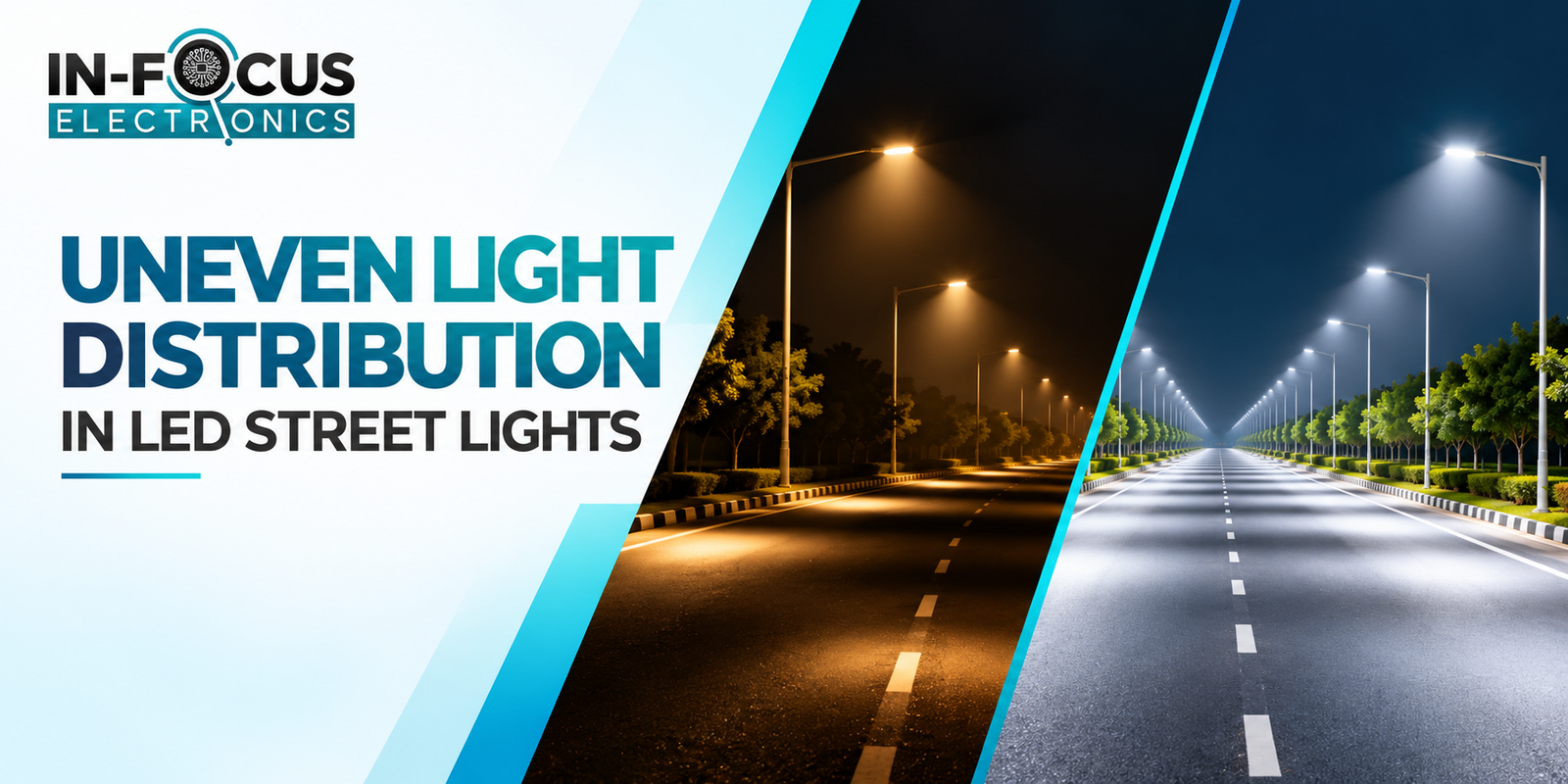
LED street lights are designed to provide consistent illumination across roads, footpaths, parking areas, and other outdoor spaces. However, some installations produce bright spots directly beneath the lights while areas between poles remain dark. This problem is known as uneven light distribution.
Uneven illumination can result from incorrect LED lens selection, unsuitable pole height, excessive spacing between poles, incorrect LED positioning, or improper fixture alignment. Understanding these factors helps lighting manufacturers and installers develop more effective street lighting systems.
1. What Is Uneven Light Distribution?
Uneven light distribution occurs when illumination is not spread consistently across the intended area. Common signs include:
- Bright spots directly below street lights.
- Dark patches between consecutive poles.
- Poor illumination along road edges.
- Excessive light spilling outside the road.
- Glare that affects visual comfort.
Effective roadway lighting depends on both the amount of light produced and how that light is distributed across the road surface.
2. Incorrect LED Lens Selection
LED optical lenses help control the direction and distribution of light emitted by an LED source. Selecting an unsuitable lens can cause concentrated bright spots, insufficient illumination in distant areas, or unwanted light spill.
- Narrow-beam lenses: Concentrate light into a relatively small area.
- Medium-beam lenses: Provide a more moderate spread, depending on the optical design.
- Wide-beam lenses: Distribute light across a broader area.
- Asymmetric street light lenses: Direct light in a specific distribution pattern suited to roadway applications.
A wider beam angle does not automatically mean better street lighting. The correct lens depends on road width, mounting height, pole spacing, LED configuration, and required illumination.
Solution: Select an LED lens designed for the intended application and review its photometric data before finalising the lighting design.
3. Incorrect Pole Height and Spacing
Pole height and the distance between street lights strongly influence illumination uniformity. Poles placed too far apart can leave dark gaps, while unsuitable mounting heights can create inconsistent brightness across the road.
Solution: Evaluate pole height, road width, spacing, fixture orientation, and lens distribution together. Lighting calculations can help determine an appropriate arrangement.
4. Incorrect LED Positioning Inside the Fixture
The LED source must be correctly aligned with its optical lens. Misalignment, incompatible LED packages, or incorrect lens assembly can change the intended light distribution.
Solution: Check LED-to-lens compatibility, maintain correct alignment during assembly, and inspect the completed lighting module for consistent optical performance.
5. Incorrect Fixture Angle and Installation
Even a correctly selected lens can produce unwanted lighting patterns if the fixture is tilted or oriented incorrectly. Poor alignment may direct light away from the road or create glare and uneven illumination.
Solution: Follow the luminaire manufacturer's installation instructions and verify the mounting angle and optical orientation during installation.
6. Dirt, Dust, and Damaged Optical Components
Dust, scratches, moisture deposits, and damaged protective covers can reduce light output or affect optical performance. LED output may also decline over time.
Solution: Inspect lighting fixtures regularly, clean optical surfaces using manufacturer-approved methods, and replace damaged components when necessary.
7. How to Improve LED Street Lighting Uniformity
- Choose suitable optics: Match the lens distribution to the road and lighting application.
- Check photometric data: Review the available light distribution files and reports.
- Plan pole placement: Consider mounting height, pole spacing, road width, and overhang.
- Verify LED alignment: Ensure the LED source is correctly positioned relative to the lens.
- Align the fixture correctly: Follow the specified mounting and orientation requirements.
- Evaluate illumination: Use lighting simulations and field measurements to identify dark spots and excessive brightness.
- Maintain the system: Inspect lenses, LED modules, and protective covers periodically.
8. Why LED Optical Lenses Matter in Street Light Design
LED optical lenses are important components in street lighting because they help direct light toward the intended area. A suitable optical design can support more effective light distribution when combined with the correct LED source, fixture housing, mounting position, and installation geometry.
At INFOCUS ELECTRONICS, we offer LED optical lenses for lighting applications. When selecting a street light lens, manufacturers should consider beam distribution, LED compatibility, module configuration, and the intended mounting conditions.
Choosing the appropriate optical component during the design stage can help manufacturers develop lighting systems with more predictable illumination performance.
Frequently Asked Questions
Why are there dark spots between LED street lights?
Dark spots may result from excessive pole spacing, unsuitable mounting height, incorrect lens distribution, or poor fixture alignment.
Does a wider beam angle always provide better street lighting?
No. A wider beam spreads light over a larger area but may not provide the required intensity or uniformity. The correct distribution depends on the application.
Can an LED lens improve street light uniformity?
Yes. An appropriately designed and correctly installed lens can help improve light distribution. The final result also depends on the LED source, fixture design, pole height, and spacing.
How can uneven street lighting be tested?
Lighting professionals can measure illuminance at multiple points across the road and compare the results with the applicable project requirements.
Conclusion
Uneven light distribution in LED street lights can result from incorrect lens selection, unsuitable pole placement, poor LED alignment, incorrect fixture aiming, or deteriorating optical components.
Evaluating the complete lighting system and choosing suitable optical components can help achieve more consistent roadway illumination.
Explore LED optical lens solutions from INFOCUS ELECTRONICS to find components suited to your lighting design requirements.