What Is an SMD Connector?
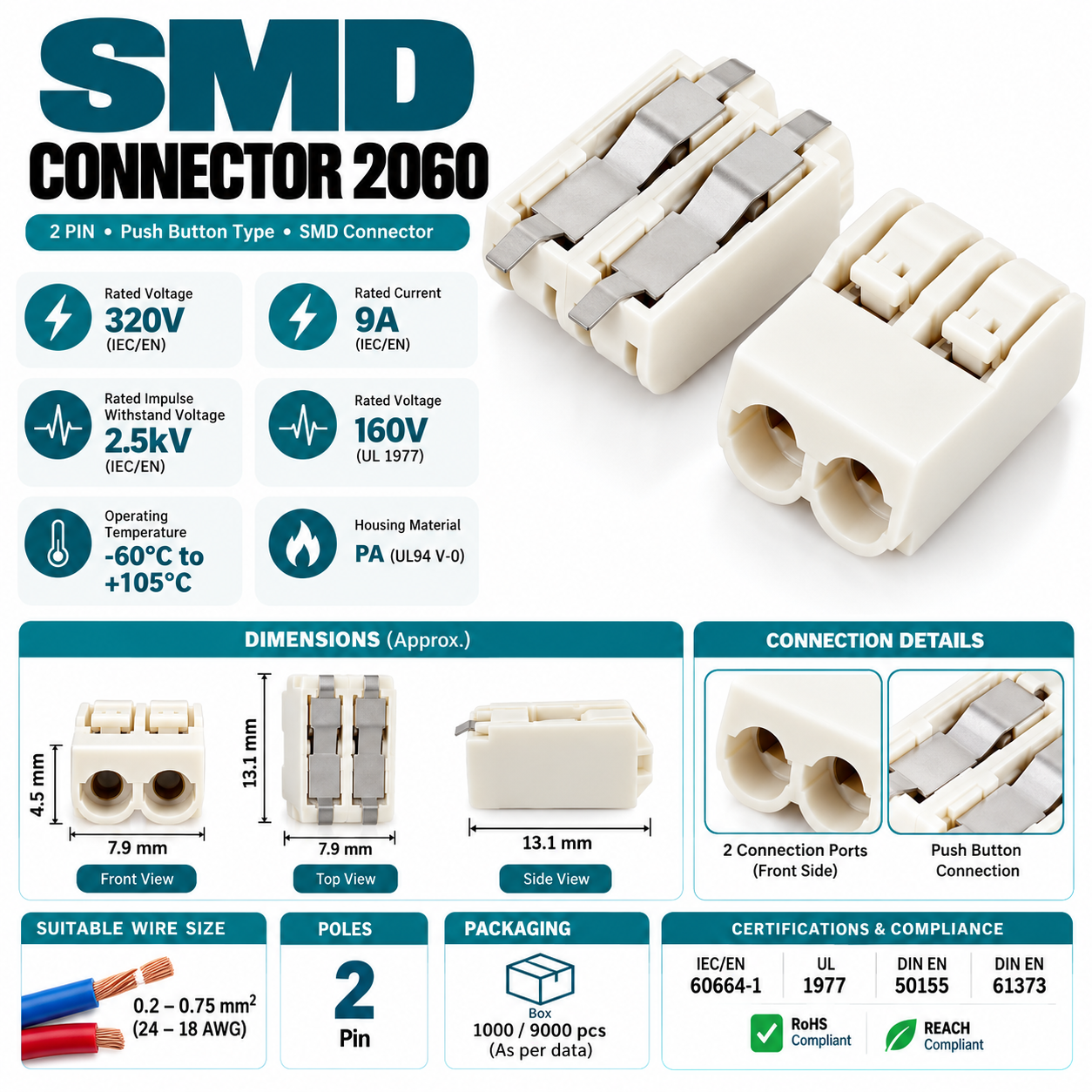
An SMD connector is a compact electrical connector designed to be mounted directly onto the surface of a printed circuit board (PCB). SMD stands for Surface Mount Device, and these connectors are commonly used in modern electronic and LED applications where space-saving and reliable electrical connections are important.
Unlike traditional through-hole connectors, SMD connectors are soldered directly onto the PCB surface. This makes them suitable for compact circuit designs and automated PCB assembly.
Why Are SMD Connectors Used?
SMD connectors are used when manufacturers need a reliable electrical connection while keeping the PCB design compact. Their small size makes them useful in electronic products where available space is limited.
They are also suitable for automated manufacturing processes, making them practical for large-scale production of electronic and LED products.
Where Are SMD Connectors Used?
SMD connectors can be found in many electronic and electrical applications, including:
- LED lighting products
- LED modules
- PCB assemblies
- Display boards
- Consumer electronics
- Industrial control systems
- Automotive electronics
- Power and control circuits
- Compact electronic devices
In LED lighting, they can be used to connect different parts of a lighting assembly and provide convenient electrical connections between PCBs, modules, and wires.
What Are the Main Types of SMD Connectors?
There are different types of SMD connectors depending on their application and design.
Wire-to-board connectors are used to connect wires to PCBs.
Board-to-board connectors are used to connect two separate circuit boards.
FFC/FPC connectors are designed for flexible flat cables and flexible printed circuits.
SMD LED connectors are used in various LED and lighting assemblies where compact connections are required.
The correct type depends on the PCB design, cable requirements, current, voltage, and available space.
What Are the Benefits of SMD Connectors?
One of the biggest benefits of SMD connectors is their compact size. They can help save valuable PCB space and allow manufacturers to create smaller electronic products.
Another advantage is their compatibility with automated PCB assembly. SMD connectors can be placed using modern surface-mount assembly equipment, which can improve manufacturing efficiency.
They can also provide reliable electrical connections when the correct connector is selected and properly soldered.
How Do You Choose the Right SMD Connector?
Choosing the correct SMD connector requires checking several specifications.
First, check the number of pins required by your circuit. Next, check the pitch, which is the distance between adjacent contacts.
You should also check the connector's current rating and voltage rating to ensure that it is suitable for your application.
The connector's physical dimensions and PCB footprint are equally important. The connector must match the PCB layout for proper installation.
For outdoor or industrial applications, environmental factors such as temperature, moisture, vibration, and dust should also be considered.
Are SMD Connectors Suitable for LED Lighting?
Yes, SMD connectors can be suitable for many LED lighting applications. Their compact construction makes them useful in LED modules, PCB-based lighting systems, display lighting, and other electronic lighting assemblies.
For LED manufacturers, the correct connector can help simplify assembly while maintaining a compact product design.
What Is the Difference Between an SMD Connector and a Through-Hole Connector?
The primary difference is how the connector is mounted on the PCB.
An SMD connector is soldered directly onto the surface of the PCB, while a through-hole connector has leads that pass through holes in the PCB.
SMD connectors are generally preferred when compact size and automated assembly are important. Through-hole connectors may be preferred in applications where greater mechanical strength is required.
What Should You Check Before Buying an SMD Connector?
Before purchasing an SMD connector, check:
- Number of pins
- Contact pitch
- Current rating
- Voltage rating
- Connector dimensions
- PCB footprint
- Connector orientation
- Operating temperature
- Required cable or wire size
- Application requirements
Checking these specifications before purchasing can help prevent compatibility problems during PCB assembly.
Why Is Choosing the Correct SMD Connector Important?
The connector is an important part of an electronic assembly. Choosing an unsuitable connector can result in poor connections, installation problems, or electrical performance issues.
Selecting a connector that matches the PCB design and electrical requirements helps ensure a more reliable and efficient electronic product.
Conclusion: Is an SMD Connector Useful for Modern Electronics?
Yes. SMD connectors are useful for modern electronics because they combine compact construction with practical PCB connectivity. They are used across LED lighting, consumer electronics, industrial equipment, automotive electronics, and many other applications.
Whether you are designing an LED product or assembling a PCB, understanding the connector's pin configuration, pitch, electrical ratings, dimensions, and mounting requirements is important for selecting the right SMD connector.