What Is IP68 Optical Silicone?
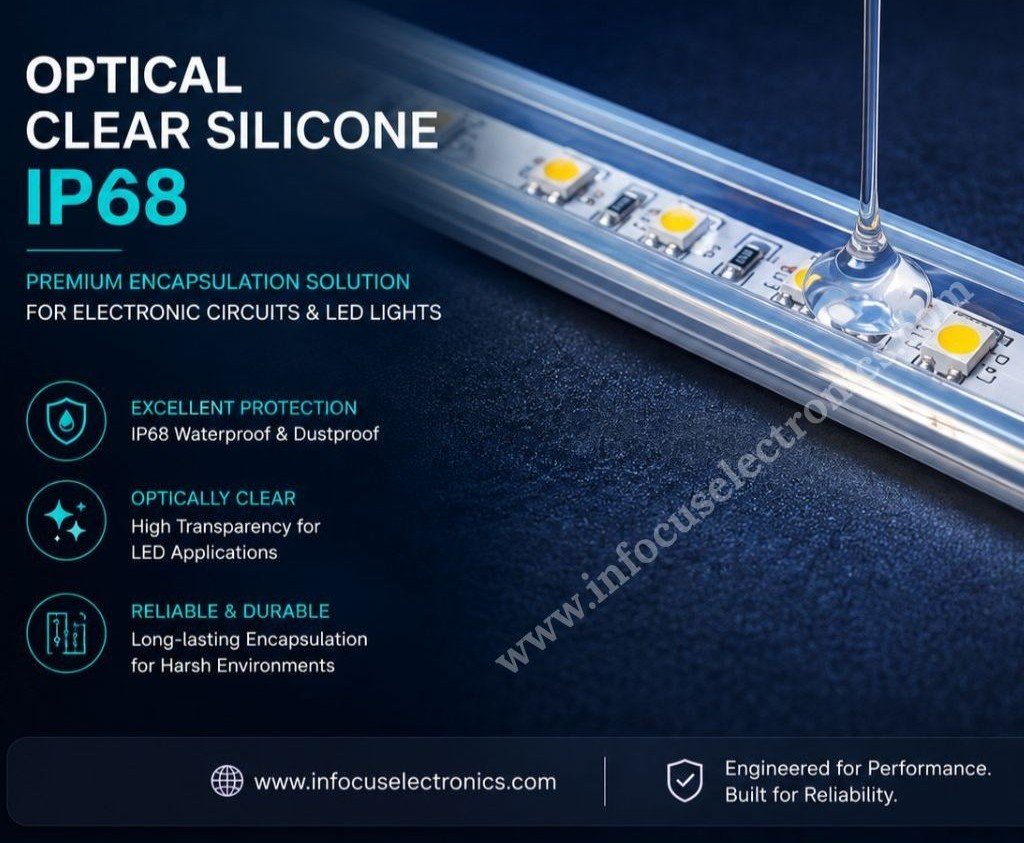
IP68 optical silicone is a transparent, high-performance silicone material used to protect LEDs, optical components, and electronic assemblies from moisture, dust, environmental exposure, and other demanding conditions while maintaining excellent optical clarity.
Unlike conventional sealing silicone, optical silicone is specifically designed for applications where light transmission, transparency, flexibility, and long-term protection are important.
It is widely used in LED lighting, outdoor electronics, optical modules, displays, sensors, and other applications where sensitive components need protection without significantly affecting optical performance.
What Does IP68 Mean?
IP68 refers to an Ingress Protection rating defined under IEC 60529.
The first number, 6, indicates protection against dust ingress.
The second number, 8, indicates protection against the effects of continuous immersion in water under specified conditions.
However, IP68 does not mean that every product can be submerged to the same depth or for the same duration. The actual test conditions depend on the particular product and application.
For this reason, the IP68 rating should always be considered for the complete finished assembly, including its enclosure, seals, connectors, encapsulation, and manufacturing process.
What Is Optical Silicone?
Optical silicone is a specially formulated silicone material designed to provide high transparency and light transmission.
It is particularly useful where conventional opaque or less-transparent materials could interfere with light output or optical performance.
Optical silicone can be used for:
- LED encapsulation
- LED optical modules
- Outdoor lighting
- LED displays
- Sensors
- Optoelectronic components
- Electronic protection
- Optical assemblies
Its combination of transparency and flexibility makes it especially useful for modern LED and electronic applications.
Why Is Optical Silicone Used in LED Lighting?
LED components can operate for long periods and may be exposed to heat, humidity, dust, vibration, and temperature changes.
A suitable silicone encapsulant can create a protective layer around sensitive components while maintaining flexibility.
This is important because LED assemblies repeatedly heat up during operation and cool down when switched off. These temperature changes can create mechanical stress between different materials.
Flexible silicone can help accommodate this movement and reduce stress on sensitive components.
Depending on the formulation, optical silicone can provide:
- High optical clarity
- Good light transmission
- Flexibility
- Thermal stability
- Moisture protection
- Weather resistance
- UV resistance
- Protection from dust and contaminants
How Does Optical Silicone Protect an LED?
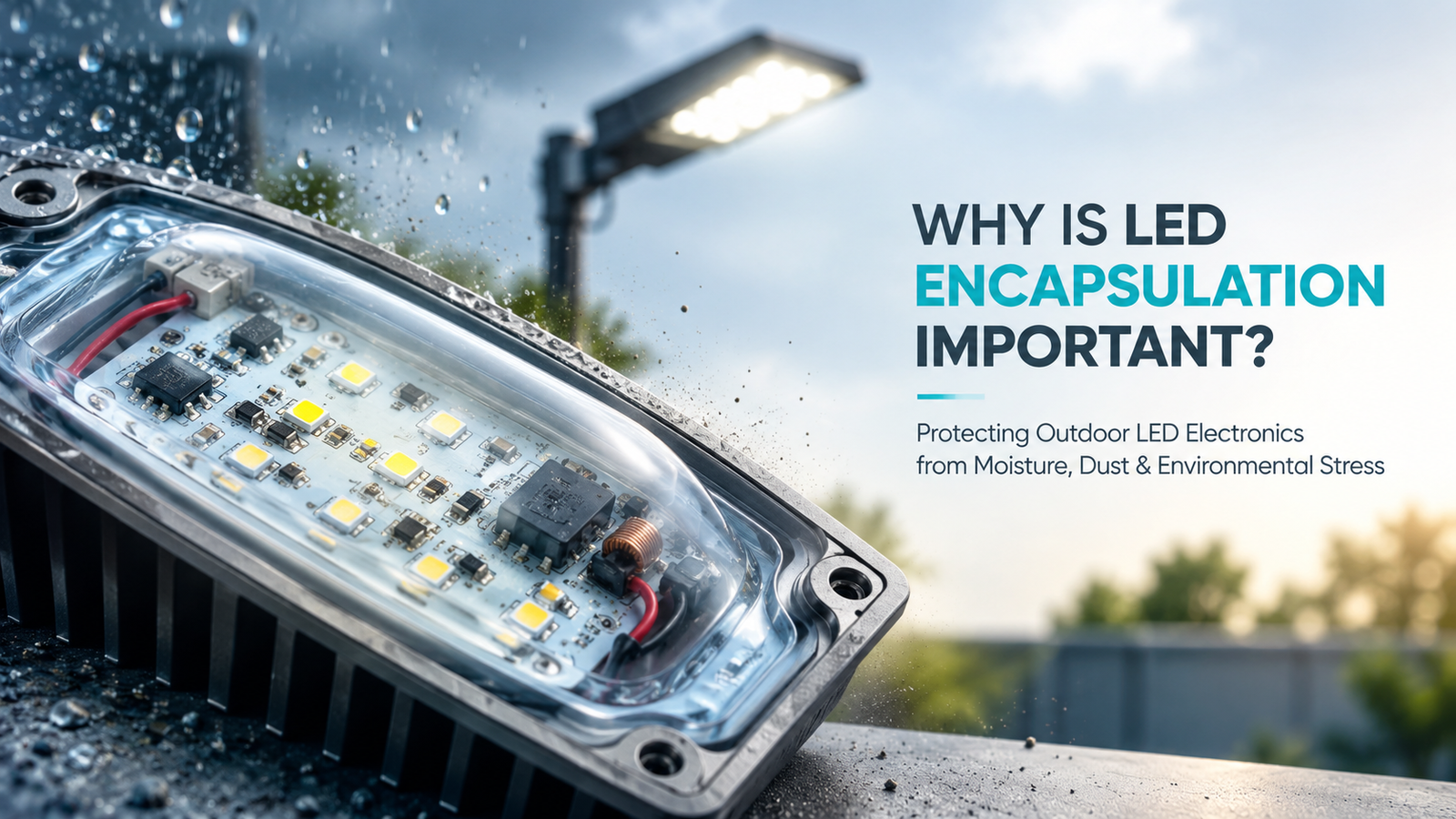
During the encapsulation process, silicone is applied around the LED, PCB, optical component, or electronic assembly.
After curing, the material forms a protective layer around the component.
This protective layer can help reduce exposure to:
Moisture • Dust • Humidity • Environmental contaminants • Vibration • Thermal cycling
The result is a better-protected electronic or optical assembly.
However, the silicone alone does not automatically make a product IP68 rated. The complete product design and manufacturing process must be properly engineered and tested to achieve the required IP rating.
Optical Silicone vs Ordinary Silicone
Not every transparent silicone is an optical silicone.
General-purpose silicone is commonly designed for sealing, bonding, construction, or other applications where optical performance may not be important.
Optical silicone is formulated with properties such as transparency, light transmission, refractive index, and long-term optical stability in mind.
For LED applications, this difference can be important.
A suitable optical silicone should maintain its optical properties while also providing the required environmental and thermal protection.
Applications of IP68 Optical Silicone
Outdoor LED Lighting
Outdoor lighting equipment can be exposed to rain, humidity, dust, temperature changes, and UV radiation.
Optical silicone can help protect LED components while allowing light to pass through efficiently.
Typical applications include:
- LED street lights
- Floodlights
- High-bay lights
- Industrial lighting
- Outdoor architectural lighting
- LED modules
LED Optical Systems
Optical components require protection without unnecessarily reducing light output.
Clear silicone can be used around LED and optical assemblies where both transparency and environmental protection are required.
LED Displays and Signage
Outdoor LED displays and signage can be exposed to moisture, dust, and changing weather conditions.
Transparent encapsulation can help protect sensitive LED and electronic components while maintaining visibility and light transmission.
Sensors and Optoelectronics
Sensors and optoelectronic assemblies may also require protection from environmental conditions.
Optical silicone can be useful when protection needs to be combined with transparency and optical performance.
Key Benefits of Optical Silicone
High Optical Clarity
One of the most important characteristics of optical silicone is its transparency.
A good optical material allows light to pass through while minimizing unwanted scattering and optical losses.
Moisture Protection
Proper encapsulation can help reduce the exposure of sensitive electronic components to moisture and humidity.
Dust Protection
A well-designed encapsulation system can help prevent dust and environmental particles from reaching sensitive components.
Flexibility
Silicone remains flexible after curing, allowing it to accommodate movement caused by thermal expansion and contraction.
Thermal Stability
LEDs generate heat during operation. Silicone formulations designed for LED applications can be engineered to maintain their properties under elevated temperatures.
Outdoor Durability
Specialized silicone formulations can provide resistance to environmental exposure, making them suitable for demanding outdoor applications.
Why Optical Clarity Matters
For a standard electronic component, transparency may not be important.
For an LED or optical component, it can be critical.
If an encapsulant absorbs or scatters too much light, it can reduce the efficiency and visual performance of the finished product.
This is why optical silicone may be evaluated for properties such as:
- Light transmission
- Refractive index
- Optical clarity
- Yellowing resistance
- UV resistance
- Thermal stability
- Weather resistance
Selecting the correct material can therefore have a direct impact on the optical performance and reliability of the final product.
Important Factors When Selecting Optical Silicone
Before selecting an optical silicone for an LED or electronic application, manufacturers should consider the complete technical requirements.
Optical Performance
Check transparency, light transmission, refractive index, and other optical requirements.
Viscosity
Viscosity affects how easily the material can be mixed, dispensed, filled, or applied during production.
Mixing Ratio
For two-component silicone systems, the correct A:B mixing ratio is essential for proper curing and final performance.
Curing Conditions
Check whether the silicone requires room-temperature curing, heat curing, or another specific curing process.
Temperature Resistance
The material should be capable of operating within the temperature range expected during the product's lifetime.
UV and Weather Resistance
For outdoor lighting, resistance to UV exposure and environmental conditions is particularly important.
Adhesion
The silicone should be compatible with the materials used in the assembly, including PCBs, plastics, metals, lenses, and other components.
Hardness and Flexibility
The required hardness depends on the application. Some applications require a softer, more flexible encapsulant, while others require greater mechanical protection.
Chemical Compatibility
The silicone should be compatible with the other materials and chemicals present in the finished product.
IP68 Optical Silicone for Outdoor LED Lighting
Outdoor LED lighting is one of the applications where optical silicone can provide significant advantages.
A street light, floodlight, or industrial LED fixture may experience rain, humidity, dust, vibration, UV exposure, and repeated temperature cycling.
Using a suitable optical silicone can help protect sensitive LED and electronic components while maintaining optical performance.
However, choosing the right material requires more than simply looking for the term "IP68."
Manufacturers should evaluate the silicone's optical properties, thermal performance, curing characteristics, adhesion, flexibility, environmental resistance, and compatibility with the complete product design.
Does IP68 Silicone Make a Product IP68?
Not by itself.
This is an important distinction.
A silicone material can be designed for demanding waterproofing or encapsulation applications, but the final IP rating belongs to the finished product or assembly.
The enclosure design, connectors, cable entries, seals, joints, encapsulation quality, manufacturing process, and testing all contribute to the final IP rating.
Therefore, manufacturers should validate the complete assembly rather than relying only on the silicone material specification.
Conclusion
IP68 optical silicone is a valuable material for applications that require a combination of optical clarity, environmental protection, flexibility, and long-term reliability.
For LED lighting and electronic applications, it can help protect sensitive components from moisture, dust, temperature changes, and environmental exposure while maintaining the optical performance required for efficient light transmission.
For outdoor LED manufacturers, lighting OEMs, electronics manufacturers, and industrial applications, selecting the right optical silicone can be an important step toward developing reliable and durable products.
The most important point is to evaluate the complete technical specification and the final assembly, rather than choosing a material based only on the term "IP68."
Looking for Optical Silicone for LED & Electronic Applications?
Infocus Electronics provides optical clear silicone and encapsulation solutions for LED lighting, electronics, and industrial applications where reliable protection and optical performance are important.