How LED Optics Are Changing Modern Street Lighting in 2026
Street lighting technology continues to evolve as lighting manufacturers look for better illumination, controlled light distribution and more efficient LED lighting systems. In 2026, LED optics are an important part of modern street lighting design, helping manufacturers direct light toward roads, pedestrian areas, highways and public spaces.
Although LED chips produce the light, optical lenses help determine how that light is distributed. Choosing the right LED street light lens can make a significant difference to roadway coverage, illumination uniformity, glare management and the overall performance of a lighting fixture.
At [INFOCUS ELECTRONICS](https://www.infocuselectronics.com/), we provide LED optical lens solutions and lighting components for manufacturers, OEMs, distributors and lighting businesses across India.
In this article, we explain how LED optics are changing modern street lighting and what lighting manufacturers should consider when selecting optical lenses.
1. What Are LED Optics in Street Lighting?
LED optics are components designed to control the direction and distribution of light emitted by LEDs. They include optical lenses and other light-controlling elements used in the design of LED luminaires.
In street lighting, optics help distribute light along the road and across its width instead of allowing excessive light to spread in unwanted directions.
Modern street light optical lenses are available in different shapes, configurations and beam distributions to suit different lighting applications.
Common applications include:
- Urban street lighting
- Highways and roadways
- Industrial roads
- Parking areas
- Residential streets
- Outdoor public spaces
- Commercial outdoor lighting
The right optical design depends on the LED package, lens configuration, road width, pole height, fixture spacing and required lighting performance.
2. Why Are LED Optical Lenses Important for Modern Street Lights?
An effective street lighting system needs more than a bright LED. It must distribute light appropriately across the intended area.
Controlled Light Distribution
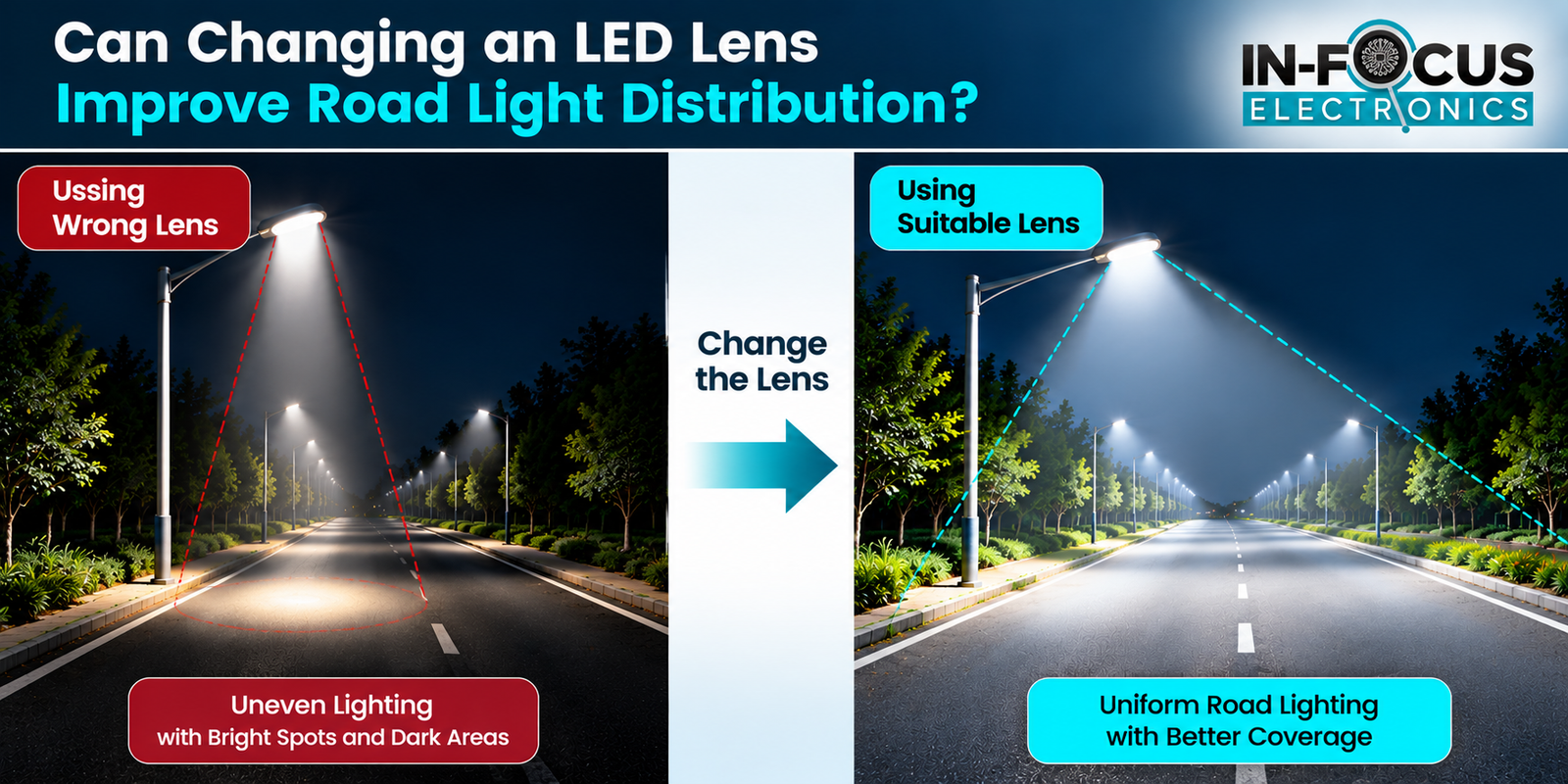
LED lenses help direct light toward the target area. Roadway-specific optics can distribute light along and across a road, depending on the optical design.
Improved Illumination Uniformity
A suitable lens can help reduce uneven illumination and bright or dark patches when used in a properly designed luminaire installation.
Better Use of LED Light Output
Optical lenses guide the available LED light toward the required area. This can help lighting designers make better use of the light produced by the LED system.
Glare and Light Spill Management
Suitable optical distribution can help limit unwanted light outside the target area. Actual glare performance depends on the lens, luminaire design, installation angle and lighting layout.
Application-Specific Performance
Different roads and outdoor spaces require different light distribution patterns. Selecting appropriate optics helps manufacturers develop fixtures for specific lighting requirements.
3. How Street Light Lens Beam Distribution Is Changing
One important development in modern street lighting is the use of application-specific optical distributions rather than selecting lenses based only on a general beam angle.
Asymmetric Street Light Optics
Asymmetric lenses are designed to distribute light differently across two directions. This is particularly useful in roadway lighting, where light needs to reach along the road and across its width.
For example, a Type II or Type III optical distribution may be suitable for certain roadway layouts, depending on the design and photometric requirements.
Multi-LED Optical Lens Arrays
Multi-element LED lenses combine several optical elements in a single component. These configurations are used with LED modules containing multiple LEDs.
Examples include 2X2, 2X3, 6X1, 8X1, 12X1, 16X1 and other lens arrangements, subject to product availability and compatibility.
The correct configuration depends on the LED package, PCB layout, optical distribution and dimensions of the lighting fixture.
Application-Specific Beam Control
Not every street requires the same light distribution. Road width, mounting height, pole spacing and the position of the lighting fixture all influence the choice of optics.
The objective is to select a lens that supports the required lighting pattern rather than assuming that one beam angle will suit every installation.
4. How to Choose the Right LED Street Light Lens
Choosing a suitable LED optical lens requires checking several technical and application-related factors.
LED Package Compatibility
Confirm that the lens is designed for the LED package being used. Common package formats include 3030, 3535 and 5050, although compatibility varies by product.
Beam Distribution
Identify whether the application requires a roadway-specific asymmetric distribution or another optical pattern. Check the manufacturer's specifications rather than relying on the lens appearance alone.
Lens Dimensions and PCB Layout
Verify the lens footprint, LED positions, mounting arrangement and available space inside the luminaire.
Mounting Height and Road Width
Consider the pole height, road geometry, spacing between poles and required illumination. These factors help determine the optical distribution needed for the project.
Optical Material
Review the lens material, light transmission, temperature suitability and resistance to environmental exposure. Material suitability should be verified for the actual operating conditions.
Photometric Performance
For professional lighting projects, review relevant photometric data and, where necessary, conduct lighting simulations or measurements to confirm illumination levels, uniformity and glare performance.
5. Types of LED Lenses Used in Outdoor Lighting
Different LED optical lens designs serve different lighting applications.
Street Light LED Lenses
Street light lenses are designed to support controlled light distribution for roadways, highways, urban streets and parking areas.
Explore our [Street Light LED Lens Solutions](https://www.infocuselectronics.com/street-light-lens.php) for optical components intended for street lighting applications.
Flood Light LED Lenses
Flood light lenses help shape the beam for outdoor areas, building exteriors, industrial facilities, security lighting and other applications requiring targeted illumination.
The required distribution depends on the mounting distance, target area and intended coverage.
High Bay LED Lenses
High bay lenses are used in industrial facilities, factories, warehouses and other spaces with high ceilings. Their optical distribution helps direct light toward floors, aisles and work areas.
IP LED Lenses
IP LED lens designs can be used in suitable outdoor and enclosed lighting fixtures. The complete luminaire must provide the required ingress protection; an optical lens alone does not establish the fixture's IP rating.
Single LED Lenses
Single LED lenses are optical components designed for individual LEDs in compatible lighting assemblies. Their suitability depends on the LED package, mounting arrangement and desired beam pattern.
Explore our complete [LED Optics and Lens Product Range](https://www.infocuselectronics.com/optics-led-lens.php) to discover available categories and product options.
6. How LED Optics Support Modern Lighting Design in 2026
Modern street lighting design increasingly focuses on matching the optical system to the application instead of considering brightness alone.
The following considerations remain important when developing lighting fixtures:
- Directing light toward the intended roadway or outdoor area.
- Achieving the required illumination uniformity.
- Selecting optics compatible with the chosen LED package.
- Managing glare and unwanted light spill.
- Matching the optical distribution to pole height and spacing.
- Checking the performance of the complete luminaire before installation.
Optical design also works alongside LED efficiency, thermal management, electrical design and lighting controls. The complete system determines the final lighting performance.
7. Common Mistakes to Avoid When Selecting Street Light Optics
Selecting a lens based only on its dimensions or advertised beam angle can lead to unsuitable lighting performance.
Avoid these common mistakes:
- Ignoring LED package compatibility.
- Selecting optics without considering road width and mounting height.
- Assuming that a wider beam is always better.
- Choosing a lens without checking its intended optical distribution.
- Overlooking lens alignment and mounting requirements.
- Assuming that the lens alone guarantees uniform illumination or energy savings.
- Skipping photometric verification for projects with specific lighting requirements.
Careful optical selection helps manufacturers develop lighting fixtures that better match the intended application.
8. Why Choose INFOCUS ELECTRONICS for LED Optical Lenses?
INFOCUS ELECTRONICS supplies LED optical lenses and lighting components for lighting manufacturers, OEMs, distributors and other businesses seeking components for professional lighting applications.
Our product range includes optical lens options for street lights, flood lights, high bay lights and other LED lighting assemblies.
When evaluating an optical component, buyers should confirm the required LED package, dimensions, beam distribution and application with the product specifications.
Whether you are developing a street light, upgrading an outdoor luminaire or sourcing optical components for production, selecting the appropriate lens is an important part of the design process.
Visit the [INFOCUS ELECTRONICS website](https://www.infocuselectronics.com/) to explore our product range or contact our team for product enquiries.
Frequently Asked Questions
What is the role of an LED lens in street lighting?
An LED lens controls and shapes the distribution of light from an LED, helping direct it toward the intended roadway or outdoor area.
Which LED lens is suitable for street lights?
The appropriate lens depends on the LED package, roadway dimensions, pole height, pole spacing and required optical distribution. Roadway-specific asymmetric optics may be appropriate for many street lighting designs.
What is the difference between street light lenses and flood light lenses?
Street light optics are commonly designed to distribute light along and across roadways. Flood light optics are selected according to the coverage area, mounting distance and intended illumination pattern. The exact distribution depends on the individual lens design.
Do LED optical lenses improve energy efficiency?
A suitable lens can help direct more of the available LED light toward the intended area. Actual system energy efficiency depends on the LED, driver, optical losses, luminaire design, lighting layout and operating controls.
How do I select a lens for a 3030 or 5050 LED?
Check the specific lens specifications for LED package compatibility, emitting area, mounting dimensions and optical requirements. Do not assume that every lens supports every LED package.
Conclusion
LED optics are an important part of modern street lighting because they help control beam distribution, improve the use of LED light output and support the illumination requirements of different road layouts.
By considering LED compatibility, optical distribution, mounting height, lens material and photometric performance, lighting manufacturers can make more informed decisions when selecting street light lenses.
INFOCUS ELECTRONICS offers LED optical lens solutions for street lighting and other LED lighting applications.
About INFOCUS ELECTRONICS
INFOCUS ELECTRONICS is a supplier of LED lighting components andelectronic accessories for lighting manufacturers, OEMs, distributorsand businesses across India. Our product range includes LED opticallenses for street lights, flood lights and high bay lights, along withlighting accessories, cable glands, suspension systems and encapsulationmaterials.
Explore our complete range ofLED Optics and Lensesor visit ourofficial websiteto learn more about our products.
Contact:+91 93219 32158
Website:www.infocuselectronics.com