Why Proper LED Encapsulation Is Important for Outdoor Lighting
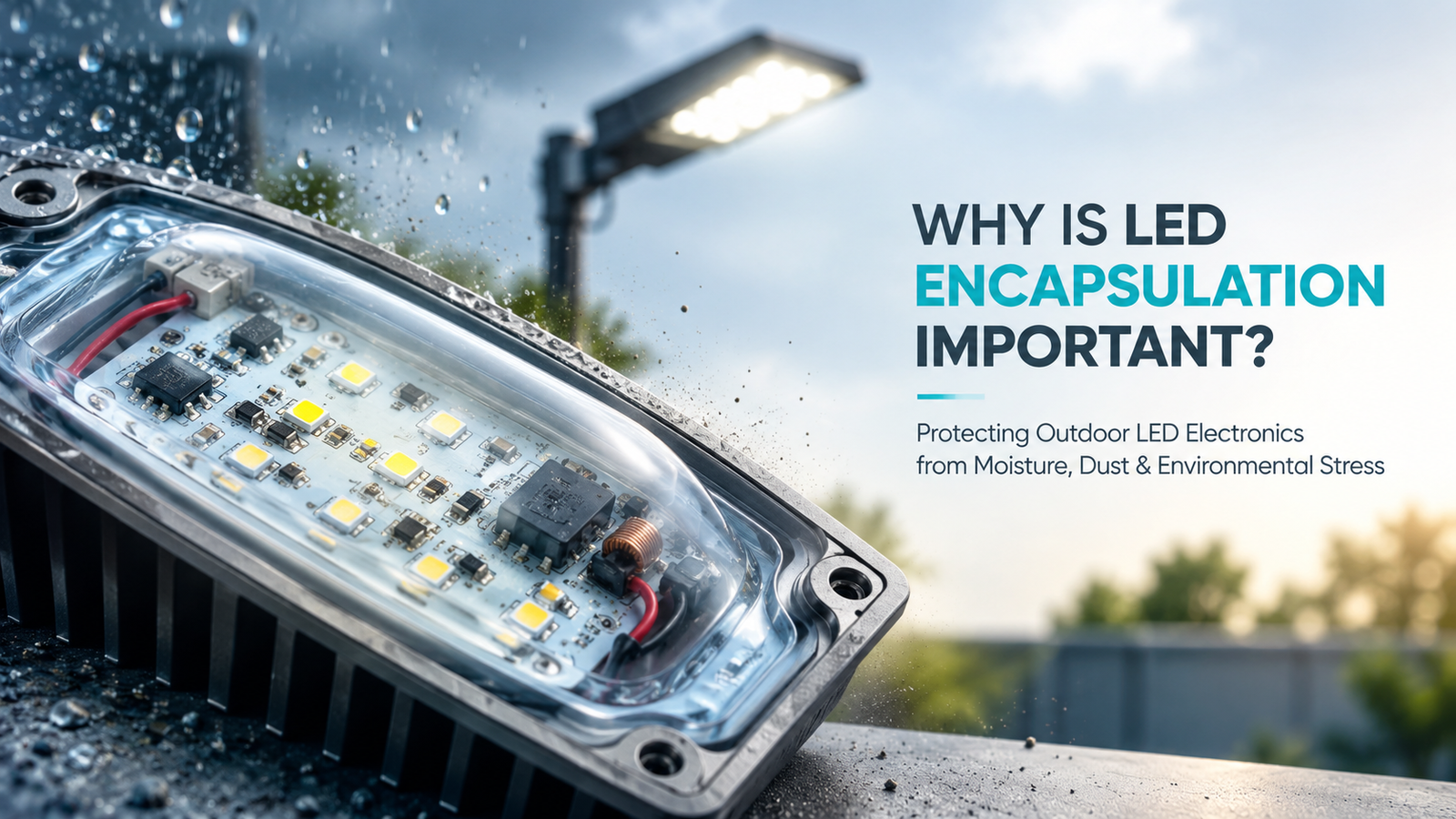
Outdoor LED lighting systems are designed to operate in challenging environments where they are constantly exposed to moisture, dust, temperature changes, vibrations and other environmental factors. Whether used in street lights, flood lights, architectural lighting, industrial fixtures or landscape lighting, LED electronics require reliable protection to ensure long service life and consistent performance. This is where LED encapsulation plays a vital role.
LED encapsulation is the process of protecting sensitive electronic components using specialized materials such as silicone or polyurethane compounds. These materials create a protective barrier around LED drivers, PCBs, connectors and other electronic assemblies, helping to improve durability, reliability and overall lighting performance.
What Is LED Encapsulation?
LED encapsulation is a protective process in which electronic components are covered or sealed with potting and encapsulation materials. The encapsulating compound surrounds the components and forms a strong protective layer against environmental and mechanical stresses.
Encapsulation materials are widely used in outdoor lighting applications because they help prevent damage caused by water, dust, chemicals, vibrations and temperature fluctuations. Proper encapsulation significantly enhances the lifespan of LED products and reduces maintenance requirements.
Protection Against Moisture and Humidity
Moisture is one of the biggest causes of failure in outdoor LED lighting systems. Rainwater, humidity and condensation can enter electrical assemblies and damage sensitive electronic circuits.
Proper LED encapsulation provides excellent waterproof protection by sealing gaps and preventing moisture ingress. High-quality silicone and polyurethane compounds offer superior resistance against water and humidity, making them suitable for outdoor applications such as:
- LED street lights
- Flood lights
- Garden lighting
- Tunnel lighting
- Industrial lighting systems
- Architectural lighting
For applications requiring high environmental protection, encapsulation materials designed for IP65, IP67 and IP68 ratings are commonly used.
Protection Against Dust and Contaminants
Outdoor environments often expose LED fixtures to dust, dirt, pollution and other airborne contaminants. Dust accumulation can affect thermal performance, damage circuits and reduce lighting efficiency.
Encapsulation creates a protective barrier that prevents contaminants from reaching critical electronic components. This improves product reliability and helps maintain consistent performance even in harsh operating conditions.
Industries such as infrastructure, manufacturing, mining and transportation particularly benefit from well-encapsulated LED lighting systems.
Resistance to Vibration and Mechanical Stress
Outdoor lighting installations are frequently subjected to vibration caused by wind, traffic movement, machinery and mechanical impacts. Continuous vibration can loosen components, damage solder joints and reduce the lifespan of electronic assemblies.
Encapsulation compounds provide mechanical support by securing components in place and absorbing vibrations. Flexible silicone materials are especially effective in reducing stress on delicate electronics and improving long-term reliability.
This is particularly important for:
- Street lighting poles
- Industrial lighting fixtures
- Transportation lighting
- High-bay lighting systems
- Outdoor control units
Protection Against Temperature Variations
Outdoor LED lights operate in environments where temperatures can vary significantly between day and night or across different seasons.
Frequent temperature changes can cause expansion and contraction of electronic components, leading to cracks, failures and reduced performance. High-quality encapsulation materials offer thermal stability and help protect components from extreme temperatures.
Silicone encapsulation compounds generally provide excellent performance in high-temperature applications, while polyurethane compounds offer strong mechanical protection and environmental resistance.
Silicone vs Polyurethane Encapsulation Materials
Selecting the right encapsulation material depends on the application requirements.
Silicone encapsulation compounds provide excellent flexibility, UV resistance, high-temperature performance and optical clarity, making them suitable for LED modules and outdoor lighting systems.
Polyurethane encapsulation compounds offer good adhesion, strong mechanical protection and excellent resistance against moisture and chemicals, making them ideal for industrial electronic applications.
The correct choice depends on environmental conditions, operating temperatures and required protection levels.
Benefits of Proper LED Encapsulation
Using high-quality encapsulation materials offers several advantages:
- Improved moisture protection
- Better dust resistance
- Enhanced vibration resistance
- Increased product reliability
- Longer LED lifespan
- Reduced maintenance costs
- Better thermal performance
- Improved environmental protection
Proper encapsulation helps manufacturers produce more durable and reliable outdoor lighting products.
Applications of LED Encapsulation
LED encapsulation materials are widely used in:
- Street lighting
- Flood lighting
- High bay lighting
- Landscape lighting
- Industrial LED fixtures
- Solar lighting systems
- LED drivers
- Power supplies
- Electronic control units
As outdoor lighting systems become more advanced, reliable encapsulation solutions become increasingly important for ensuring performance and durability.
Conclusion
Proper LED encapsulation is essential for protecting outdoor lighting systems from moisture, dust, vibration and environmental stress. High-quality silicone and polyurethane encapsulation compounds improve reliability, extend product life and reduce maintenance requirements.
For manufacturers and lighting professionals, selecting the right encapsulation material is a key step in creating durable and high-performance outdoor LED products.
Infocus Electronics offers high-quality encapsulation materials, including silicone potting compounds, polyurethane compounds and optical-grade solutions designed for demanding LED lighting applications.