Which Is Better for Outdoor Use: Brass or Nylon Cable Glands?
Choosing the right cable gland is essential for protecting electrical connections from dust, moisture, rain, and other environmental conditions. When selecting cable glands for outdoor electrical installations, two popular options are brass cable glands and nylon cable glands.
But which one is better for outdoor use? The answer depends on the installation environment, exposure to sunlight, mechanical stress, corrosion risks, and the required level of protection.
In this guide, INFOCUS ELECTRONICS explains the key differences between brass and nylon cable glands to help you select the right option for your application.
What Is a Brass Cable Gland?
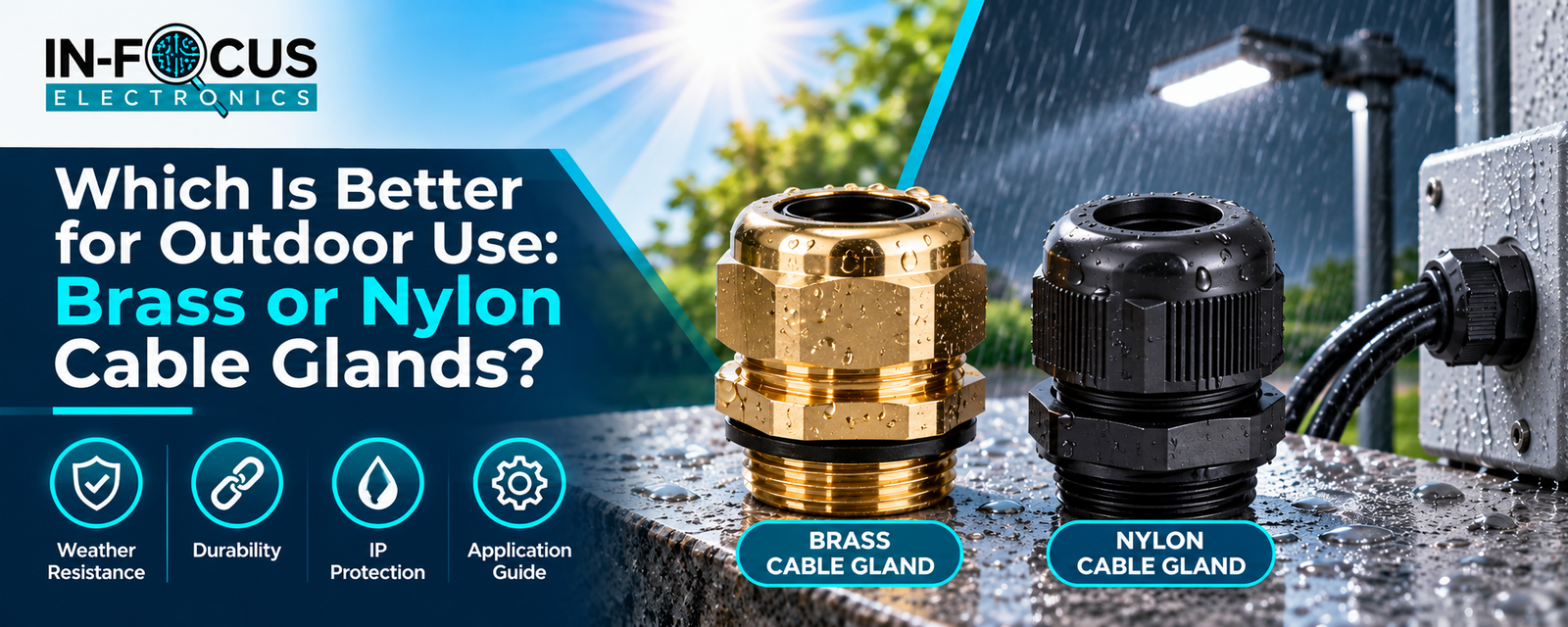
A brass cable gland is a mechanical fitting used to secure and seal electrical cables where they enter an enclosure, junction box, control panel, or electrical equipment. Brass cable glands are often nickel-plated to improve surface corrosion resistance.
Benefits of Brass Cable Glands
- High mechanical strength: Suitable for applications that require a robust cable entry connection.
- Good outdoor durability: The metal body is resistant to ultraviolet radiation and does not become brittle from UV exposure like some unprotected plastics.
- Electrical conductivity: Can support earth continuity when the gland is correctly designed and installed for that purpose.
- Industrial applications: Commonly used in machinery, control panels, outdoor electrical enclosures, lighting systems, and other industrial installations.
- Secure cable retention: Helps hold cables in position and reduce strain at the enclosure entry.
Where Are Brass Cable Glands Used?
Brass cable glands are commonly used in industrial control panels, outdoor lighting equipment, electrical distribution systems, machinery, and installations requiring a mechanically strong cable entry.
For outdoor installations, nickel-plated brass can be a practical choice. However, highly corrosive coastal or chemical environments may require stainless steel or another material selected specifically for those conditions.
What Is a Nylon Cable Gland?
A nylon cable gland is a cable-entry fitting manufactured from an engineering polymer, commonly polyamide (PA66). It secures the cable and helps seal the opening in an electrical enclosure against dust and moisture when installed according to the manufacturer's instructions.
Benefits of Nylon Cable Glands
- Lightweight construction: Easy to handle and suitable for applications where reducing component weight is useful.
- Electrical insulation: Nylon is non-conductive, making it useful where an electrically insulating cable entry is required.
- Corrosion-free body: Unlike metal glands, nylon does not rust or undergo metallic corrosion.
- Cost-effective option: Often economical for electrical panels and high-volume manufacturing.
- Chemical resistance: Can resist many chemicals, although compatibility depends on the particular nylon grade and the substances involved.
Where Are Nylon Cable Glands Used?
Nylon cable glands are frequently used in electrical junction boxes, control panels, plastic enclosures, instrumentation equipment, CCTV installations, and other applications where a non-metallic cable entry is appropriate.
For outdoor use, choose a suitable UV-stabilised grade if the gland will be exposed to direct sunlight for extended periods.
Brass vs Nylon Cable Glands: Key Differences
| Feature | Brass Cable Gland | Nylon Cable Gland | |---|---|---| | Material | Brass, often nickel-plated | Polyamide, commonly PA66 | | Mechanical strength | Generally higher | Depends on grade and design | | UV resistance | Excellent | Depends on UV stabilisation | | Corrosion | Can corrode in aggressive environments | No metallic corrosion | | Electrical conductivity | Conductive | Non-conductive | | Weight | Heavier | Lightweight | | Cost | Generally higher | Generally lower | | Outdoor suitability | Good for many outdoor applications | Good when the grade is suitable for outdoor exposure | | Typical applications | Industrial panels, lighting and machinery | Junction boxes, control panels and plastic enclosures |
Actual performance depends on the manufacturer's specifications, construction, sealing components, and installation conditions.
Which Cable Gland Is Better for Outdoor Use?
1. For General Outdoor Lighting
Brass cable glands, particularly suitable nickel-plated versions, are often a practical choice for outdoor lighting equipment because of their mechanical strength and UV resistance.
Nylon cable glands can also be suitable for outdoor lighting when the selected grade is designed for outdoor exposure and meets the required sealing and temperature specifications.
2. For Electrical Junction Boxes
Both materials can be suitable for outdoor junction boxes. The decision depends on enclosure material, cable type, exposure conditions, and the required IP rating.
Nylon may be preferable for plastic enclosures where electrical insulation and low weight are priorities. Brass may be preferable where mechanical strength or electrical bonding is required.
3. For Industrial Environments
Brass cable glands are often preferred where equipment experiences vibration, mechanical stress, or demanding industrial operating conditions.
For environments with aggressive chemicals, salt spray, or prolonged coastal exposure, consider whether stainless steel or a specially selected polymer is more appropriate.
4. For Direct Sunlight and Rain
For installations exposed to direct sunlight, rain, and changing temperatures, verify the complete gland's UV resistance, temperature range, seal material, and ingress protection rating.
A metal body does not automatically guarantee a waterproof connection, and a nylon gland is not automatically unsuitable for outdoor use.
How to Choose the Right Cable Gland for Outdoor Applications
Before purchasing a cable gland, consider these important factors:
1. Cable diameter: Select a gland whose clamping range matches the actual outer diameter of the cable.
2. Thread size: Confirm the correct PG or metric thread, such as PG7, PG9, PG11, PG13.5, M12, or M16, according to the enclosure opening and product specifications.
3. IP rating: Choose the required ingress protection rating based on the exposure to dust and water. Check the rating of the complete assembly, including seals and installation.
4. Environmental exposure: Consider sunlight, rain, humidity, chemicals, salt spray, and operating temperature.
5. Earthing requirements: If the cable gland must provide earth continuity or electromagnetic compatibility, use a suitable metallic gland and follow the applicable electrical installation requirements.
6. Installation compatibility: Check the gland's material, sealing washer, locknut, cable type, and enclosure compatibility before installation.
Frequently Asked Questions
Are brass cable glands better than nylon cable glands?
Brass cable glands generally offer greater mechanical strength and inherent UV resistance. Nylon cable glands are lighter, non-conductive, and resistant to metallic corrosion. The better option depends on the installation requirements.
Can nylon cable glands be used outdoors?
Yes. Suitable nylon cable glands can be used outdoors when their UV resistance, temperature rating, sealing performance, and IP rating meet the application requirements.
Are brass cable glands waterproof?
Brass cable glands can achieve specified IP ratings when properly designed and installed with compatible seals. The material alone does not determine waterproof performance.
Which cable gland is best for outdoor LED lights?
A suitable brass cable gland can be a good option for outdoor LED lights, particularly where mechanical strength and UV resistance are important. A properly rated nylon gland may also work where its material and environmental specifications are appropriate.
What is the difference between PG and metric cable glands?
PG and metric refer to different thread systems. They are not interchangeable simply because their nominal sizes appear similar. Always match the gland thread to the enclosure entry.
Conclusion
Both brass and nylon cable glands have important roles in electrical installations. Brass cable glands are often preferred for outdoor applications requiring mechanical strength and UV resistance, while suitable nylon cable glands are useful when lightweight construction, electrical insulation, and cost efficiency are priorities.
The best choice is the one that matches the cable diameter, thread size, enclosure, environmental exposure, and required ingress protection.
INFOCUS ELECTRONICS provides lighting components and electrical accessories for manufacturers, OEMs, traders, and other businesses. Choose cable glands according to your project specifications to help achieve a reliable and secure cable entry connection. ## Explore Cable Glands from INFOCUS ELECTRONICS
Looking for suitable cable glands for your electrical or outdoor lighting applications? INFOCUS ELECTRONICS offers cable gland solutions for electrical installations, lighting equipment, control panels, and other applications.
When selecting a cable gland, consider the cable diameter, thread size, material, environmental conditions, and required ingress protection rating to ensure compatibility with your installation.
Explore our range of cable glands, including different sizes and options, to find a suitable solution for your requirements.
View our [Cable Gland Products](https://www.infocuselectronics.com/cable-gland.php) to learn more about the available options.