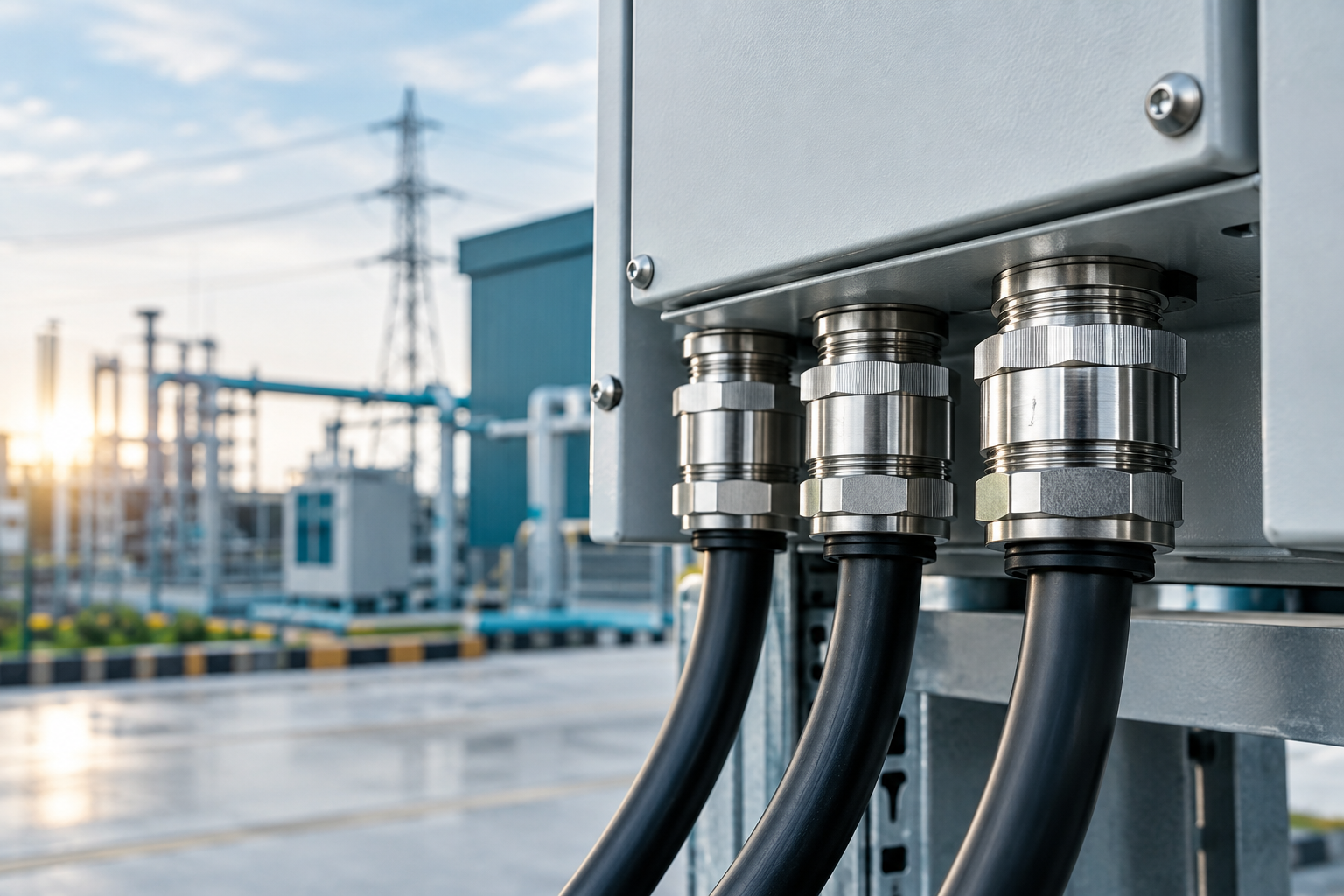
Cable Gland IP Ratings Explained: IP65, IP66, IP67 & IP68
When selecting a cable gland for electrical, lighting, industrial or outdoor applications, the IP rating is an important specification to consider. The right IP-rated cable gland helps protect the cable entry point from dust, moisture and water, while also supporting a secure and reliable installation.
Understanding the difference between IP65, IP66, IP67 and IP68 can make cable gland selection much easier.
What Is an IP Rating?
IP stands for Ingress Protection. An IP rating is a standardized way of describing how well an enclosure or component protects against the entry of solid particles and water.
An IP rating normally contains two digits.
The first digit indicates protection against solid objects such as dust.
The second digit indicates protection against water.
For cable glands, the IP rating is particularly important because the gland forms the transition between a cable and an electrical enclosure, junction box, control panel or equipment housing.
What Does IP65 Mean?
An IP65 cable gland provides protection against dust and protection against water jets from any direction.
The first digit, 6, indicates a dust-tight level of protection.
The second digit, 5, indicates protection against water jets.
IP65 cable glands can be suitable for many indoor and outdoor electrical installations where the equipment may be exposed to dust, rain or water spray.
What Does IP66 Mean?
An IP66 cable gland provides dust-tight protection and a higher level of protection against powerful water jets compared with IP65.
IP66 can be useful in applications where cable entries may experience stronger water spray or more demanding outdoor conditions.
Typical applications can include industrial equipment, outdoor electrical installations, lighting systems, machinery and control panels.
What Does IP67 Mean?
An IP67 cable gland provides dust-tight protection and protection against temporary immersion in water under specified test conditions.
This makes IP67 useful where equipment may occasionally be exposed to standing water, flooding or temporary immersion.
However, IP67 should not automatically be considered equivalent to IP68. The two ratings address different immersion conditions.
What Does IP68 Mean?
An IP68 cable gland provides dust-tight protection and protection against continuous immersion in water under conditions specified by the manufacturer.
The exact immersion depth and duration for an IP68 product depend on the manufacturer's specifications.
For applications involving prolonged exposure to water, submerged equipment or demanding outdoor environments, the manufacturer's IP68 test conditions should always be checked before selecting the gland.
IP65 vs IP66 vs IP67 vs IP68
The main difference between these ratings is the level and type of water protection.
IP65 is designed for water jets.
IP66 provides protection against more powerful water jets.
IP67 provides protection against temporary immersion.
IP68 is intended for continuous immersion under specified conditions.
A higher number does not necessarily mean that every lower-numbered test condition has been covered in every possible combination. The manufacturer's stated testing and product specifications should therefore be checked when the application has specific environmental requirements.
Why IP Rating Matters for Cable Glands
A cable gland is more than a mechanical cable-entry component. In many installations, it also helps maintain the environmental protection of the enclosure.
An appropriately selected gland can help reduce the risk of dust and moisture entering through cable-entry points.
This is especially important in:
- Outdoor LED lighting
- Street lighting systems
- Flood lights
- Industrial control panels
- Electrical junction boxes
- Machinery
- Automation equipment
- Outdoor power equipment
- Industrial enclosures
- Weather-exposed electrical installations
For outdoor and industrial applications, the cable gland should be selected according to the actual environmental conditions rather than simply choosing the highest available IP rating.
How to Choose the Right IP-Rated Cable Gland
Choosing a cable gland involves more than looking at the IP rating.
1. Check the Environment
Consider whether the installation will be indoors, outdoors, exposed to rain, exposed to water jets, or potentially submerged.
2. Check Cable Diameter
The gland must be suitable for the outside diameter of the cable. A correct sealing range is essential for achieving the intended protection.
3. Check Thread Size
Match the gland thread with the threaded entry of the enclosure, junction box or equipment.
4. Consider the Gland Material
Cable glands are available in materials such as nylon and metal. Material selection depends on mechanical requirements, environmental conditions and the application.
5. Check the Required IP Rating
Select an IP rating appropriate for the actual installation conditions and verify the manufacturer's specifications.
6. Consider Installation Conditions
Correct installation is essential. The gland, sealing components, locknut and enclosure entry must be assembled according to the manufacturer's recommendations.
Metal Cable Glands for Industrial Applications
Metal cable glands are commonly used where mechanical strength and durability are important.
They can be suitable for industrial equipment, electrical panels, machinery and other applications where a robust cable-entry solution is required.
The specific metal, thread type, sealing system and IP rating should be checked according to the application.
Cable Glands for LED Lighting
Cable glands are widely used in LED lighting systems to provide a protected cable-entry point.
Applications can include street lights, flood lights, industrial lights, outdoor luminaires and other lighting equipment.
In outdoor lighting, the cable gland needs to be selected according to the enclosure design, cable diameter and environmental exposure.
A properly selected cable gland can help maintain the intended protection of the lighting enclosure at the cable entry.
Common Cable Gland Selection Mistakes
One common mistake is choosing a cable gland based only on its IP number.
Other important factors include cable diameter, thread size, material, sealing range, installation environment and mechanical requirements.
Another mistake is assuming that an IP68 gland will automatically provide the same protection in every installation. IP68 performance depends on the conditions specified by the manufacturer.
Incorrect installation can also affect sealing performance. Even a correctly rated cable gland may not provide its intended protection if the cable size, sealing components or installation method are unsuitable.
Final Thoughts
Understanding IP65, IP66, IP67 and IP68 makes it easier to select the right cable gland for electrical and industrial applications.
The correct choice depends on the complete installation environment, including water exposure, dust, cable diameter, thread size, gland material and required level of protection.
For outdoor lighting, industrial equipment, electrical panels and other demanding applications, selecting the appropriate cable gland and installing it correctly can help provide a more reliable and protected cable-entry system.
Infocus Electronics supplies cable glands and electrical components for lighting, industrial and other applications. For product specifications, availability and bulk requirements, contact the Infocus Electronics team.