Can Changing an LED Lens Improve Road Light Distribution?
Proper road lighting is essential for visibility, safety and comfortable driving at night. However, even when a street light uses a powerful LED module, the road may not receive light evenly. Some areas may appear too bright, while other sections remain dim.
One possible reason is the optical lens used in the lighting fixture. Changing an LED lens can improve road light distribution when the existing lens does not provide the appropriate beam pattern for the application. However, the lens must be compatible with the LED module and the fixture design.
In this guide, we explain how LED lenses affect street lighting, when replacing a lens may help, and what to consider when selecting a suitable optical solution.
1. What Is the Role of an LED Lens in Street Lighting?
An LED lens is an optical component that controls how light travels from an LED source toward the intended area. Instead of allowing light to spread without sufficient control, the lens helps shape its distribution according to the lighting application.
In street lights, an appropriately selected lens can help direct light along the roadway, reduce unnecessary light spill and improve illumination across the target area.
LED lenses are available in different optical designs and beam distributions. The right option depends on road width, pole height, pole spacing, fixture orientation and the LED module being used.
2. Can Changing an LED Lens Improve Road Light Distribution?
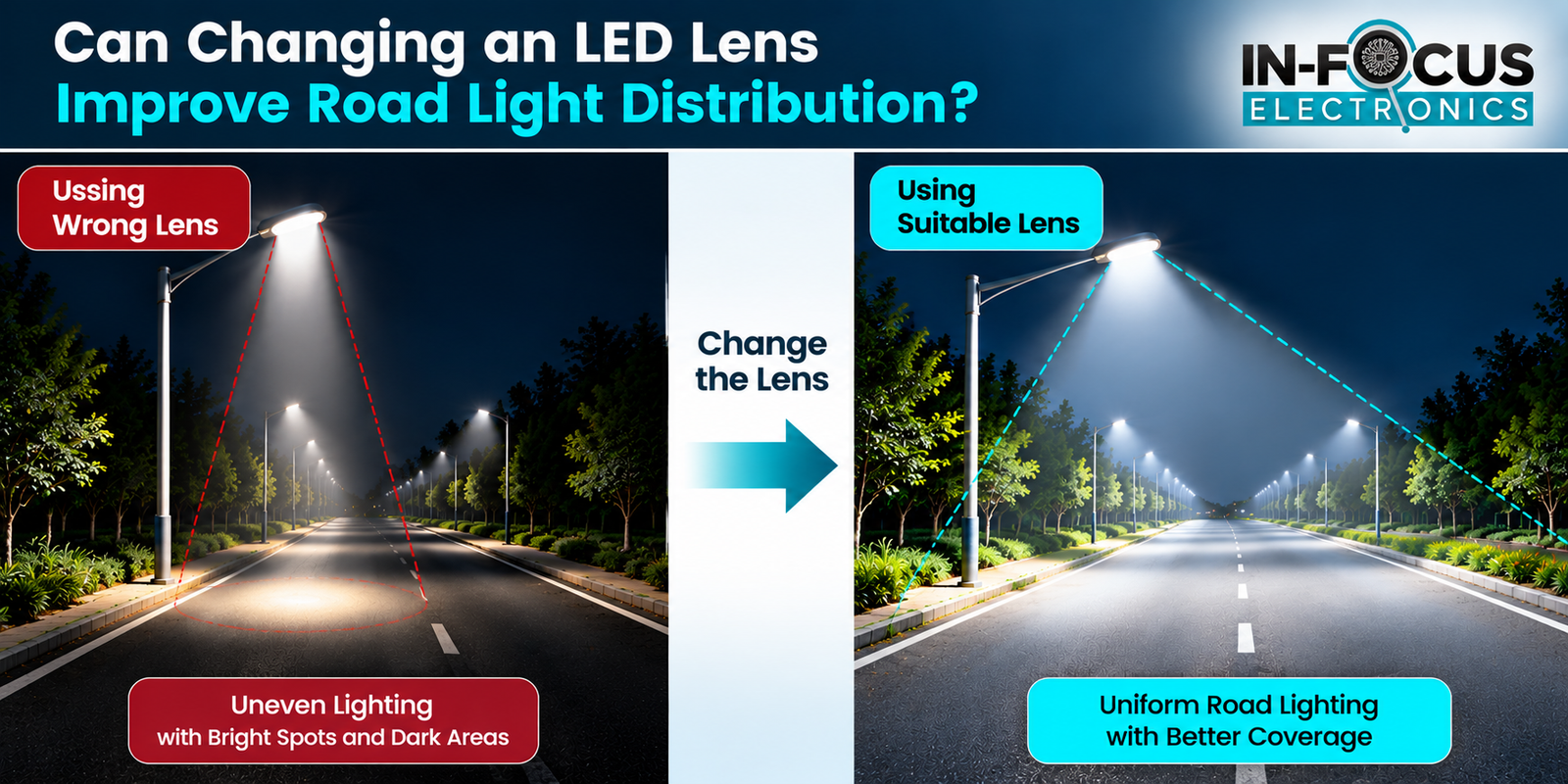
Yes, changing an LED lens can improve road light distribution if the current lens produces an unsuitable beam pattern.
For example, a lens designed for a relatively narrow distribution may not adequately cover a wide roadway. Similarly, an unsuitable optical distribution may concentrate too much light in one area while leaving other sections poorly illuminated.
Selecting a lens with a more appropriate distribution can help achieve better coverage and more consistent illumination.
However, changing the lens alone will not solve every lighting problem. Incorrect pole spacing, mounting height, fixture alignment, LED output or electrical issues may also contribute to poor illumination.
3. Signs That an LED Street Light Lens May Be Unsuitable
Consider reviewing the optical design when you notice any of the following:
- Uneven illumination: Some parts of the road appear significantly brighter than others.
- Insufficient roadside coverage: The light does not adequately reach the intended edges of the roadway.
- Excessive light spill: A considerable amount of light falls outside the target area.
- Unsuitable beam distribution: The existing optical pattern does not match the road layout or installation requirements.
- Poor overlap between fixtures: Light patterns from neighbouring street lights do not provide the required uniformity.
These symptoms do not automatically mean that the lens is defective. A photometric assessment can help identify whether the optics, installation geometry or another component is responsible.
4. How to Choose the Right LED Lens for Road Lighting
Choosing an LED street light lens involves more than selecting a beam angle. Consider the following factors before replacing an existing lens.
A. Road Width and Layout
A narrow road, a multi-lane road and a wide highway have different lighting requirements. Select an optical distribution that suits the width and layout of the area being illuminated.
B. Beam Angle and Light Distribution
The beam angle describes the spread of light according to a defined measurement method. A wider beam is not automatically better for every road.
Some applications require asymmetric roadway optics to distribute light along the road and across its width. The appropriate choice depends on the complete photometric distribution rather than the beam angle alone.
C. Pole Height and Spacing
The mounting height and distance between poles affect the illuminated area and the overlap between neighbouring fixtures. The lens should be selected with these installation details in mind.
D. LED Module Compatibility
Check the LED package, module arrangement, dimensions and lens mounting requirements. A lens designed for a particular LED configuration may not perform correctly with a different module.
E. Optical Material and Quality
Optical-grade polycarbonate (PC) and PMMA are commonly used in LED optics. Material quality, optical clarity, temperature resistance and environmental suitability can affect long-term performance.
5. Why Lens Compatibility Matters
A replacement lens must match the intended LED module and fixture design. Even when a lens physically fits, its optical performance may differ from the original design.
Before changing a lens, verify its dimensions, LED positioning, mounting arrangement and intended beam distribution. Also consider operating temperature and the environmental conditions in which the fixture will be used.
For lighting manufacturers and OEMs, selecting compatible optics during the fixture design stage can help reduce redesign work and improve the consistency of the finished product.
6. Other Factors That Affect Road Light Distribution
If replacing the lens does not resolve the problem, investigate other possible causes.
- Pole spacing: Excessive distance between poles may leave darker areas between fixtures.
- Mounting height: An unsuitable installation height can change the coverage and illumination pattern.
- Fixture alignment: Incorrect tilt or orientation can direct light away from the intended area.
- LED output: Reduced output, damaged LEDs or an unsuitable LED configuration can affect illumination.
- Maintenance: Dirt, damaged optical components and ageing materials may reduce the light reaching the road.
A complete lighting assessment should consider the luminaire, optical system and installation together.
7. How Can Lighting Manufacturers Improve Uniformity?
Lighting manufacturers can improve roadway lighting performance by selecting suitable optical lenses during the product design and testing process.
A practical approach includes defining the application, selecting compatible LED optics, checking the photometric distribution and evaluating the assembled luminaire under appropriate test conditions.
Photometric data and lighting calculations help assess illuminance, uniformity, glare and light distribution before a product is installed across a road network.
The final selection should meet the applicable project requirements and relevant lighting standards.
Conclusion
Changing an LED lens can improve road light distribution when the existing optics are unsuitable for the roadway or lighting fixture. The right lens can help direct light toward the intended area, improve coverage and support more uniform illumination.
However, the best result depends on lens compatibility, LED configuration, pole height, spacing, fixture orientation and photometric performance. Evaluating these factors together is the most reliable way to choose an appropriate LED street light lens.
IN-FOCUS ELECTRONICS supplies LED optical lenses and lighting components for lighting manufacturers and other B2B buyers. Explore suitable optical solutions for your street lighting applications and select components according to your design requirements.
Looking for the right LED optical lens for your lighting application? INFOCUS ELECTRONICS offers a range of LED lenses for street lights, flood lights, high bay lights and other lighting solutions.
Explore our LED optical lens products: View LED Optical Lenses – INFOCUS ELECTRONICS
For product enquiries and assistance with lens selection, contact our team at info@infocuselectronics.com.