Silicone vs Epoxy Potting Compound: Which Is Better for Electronics?
Choosing the right potting compound is essential for protecting electronic components from moisture, dust, vibration, temperature changes and environmental damage. Two commonly used materials for electronic encapsulation are silicone potting compounds and epoxy potting compounds.
Both materials help protect sensitive electronic assemblies, but they differ in flexibility, mechanical strength, temperature performance, adhesion and suitability for different applications.
So, which is better: silicone or epoxy potting compound? The answer depends on your application, operating environment and protection requirements.
In this guide, we explain the differences between silicone and epoxy potting compounds, their advantages, applications and how to choose the right material for your electronic products.
What Is Silicone Potting Compound?
Silicone potting compound is a protective material used to encapsulate electronic components inside an enclosure. After curing, it typically forms a flexible or elastomeric layer that helps protect sensitive electronics from moisture, vibration and temperature-related stress.
Silicone potting compounds are commonly used in LED lighting, electronic circuit boards, power supplies, sensors, electrical assemblies and industrial equipment.
Common Applications of Silicone Potting Compound
- LED drivers and LED lighting modules
- Electronic control units and circuit boards
- Sensors and measuring devices
- Automotive electronic components
- Outdoor electrical equipment
- Power supplies and electronic assemblies
Advantages of Silicone Potting Compound
1. Flexibility After Curing
Silicone generally remains flexible after curing. This flexibility can help reduce mechanical stress on sensitive components during thermal expansion and contraction.
2. Good Temperature Performance
Many silicone formulations perform well across a broad temperature range. This makes them suitable for applications exposed to temperature fluctuations. Always check the manufacturer's technical datasheet for the recommended operating temperature.
3. Vibration Protection
Silicone's elastomeric properties can help absorb vibration and mechanical shock, making it useful for electronic applications exposed to movement or vibration.
4. Moisture Protection
When correctly selected and applied, silicone potting compounds can help protect electronic assemblies from moisture and environmental exposure.
5. Suitable for Sensitive Electronics
The flexibility of silicone makes it a useful option for electronic assemblies containing components that may be affected by mechanical stress.
What Is Epoxy Potting Compound?
Epoxy potting compound is a resin-based material used to encapsulate and protect electronic components. Many epoxy systems consist of two components that must be mixed according to the manufacturer's instructions.
After curing, epoxy typically forms a hard and rigid protective structure around electronic assemblies. It is often selected when an application requires strong mechanical support, good adhesion and durable encapsulation.
Common Applications of Epoxy Potting Compound
- Power supply assemblies
- Transformers and inductors
- Electrical connectors
- Industrial control equipment
- Electronic sensors and modules
- Electronic assemblies requiring rigid support
Advantages of Epoxy Potting Compound
1. High Mechanical Strength
Many epoxy formulations cure into a hard material that provides structural support and helps protect components against physical damage.
2. Strong Adhesion
Epoxy can provide strong adhesion to compatible substrates, depending on the formulation and surface preparation.
3. Chemical Resistance
Certain epoxy systems offer good resistance to oils, chemicals and other substances. Compatibility should be verified for the specific chemical and operating conditions.
4. Durable Encapsulation
The rigid cured material can help secure components in place and provide a durable protective barrier.
5. Suitable for Structural Applications
Epoxy is often a suitable choice when components require rigid support rather than flexible protection.
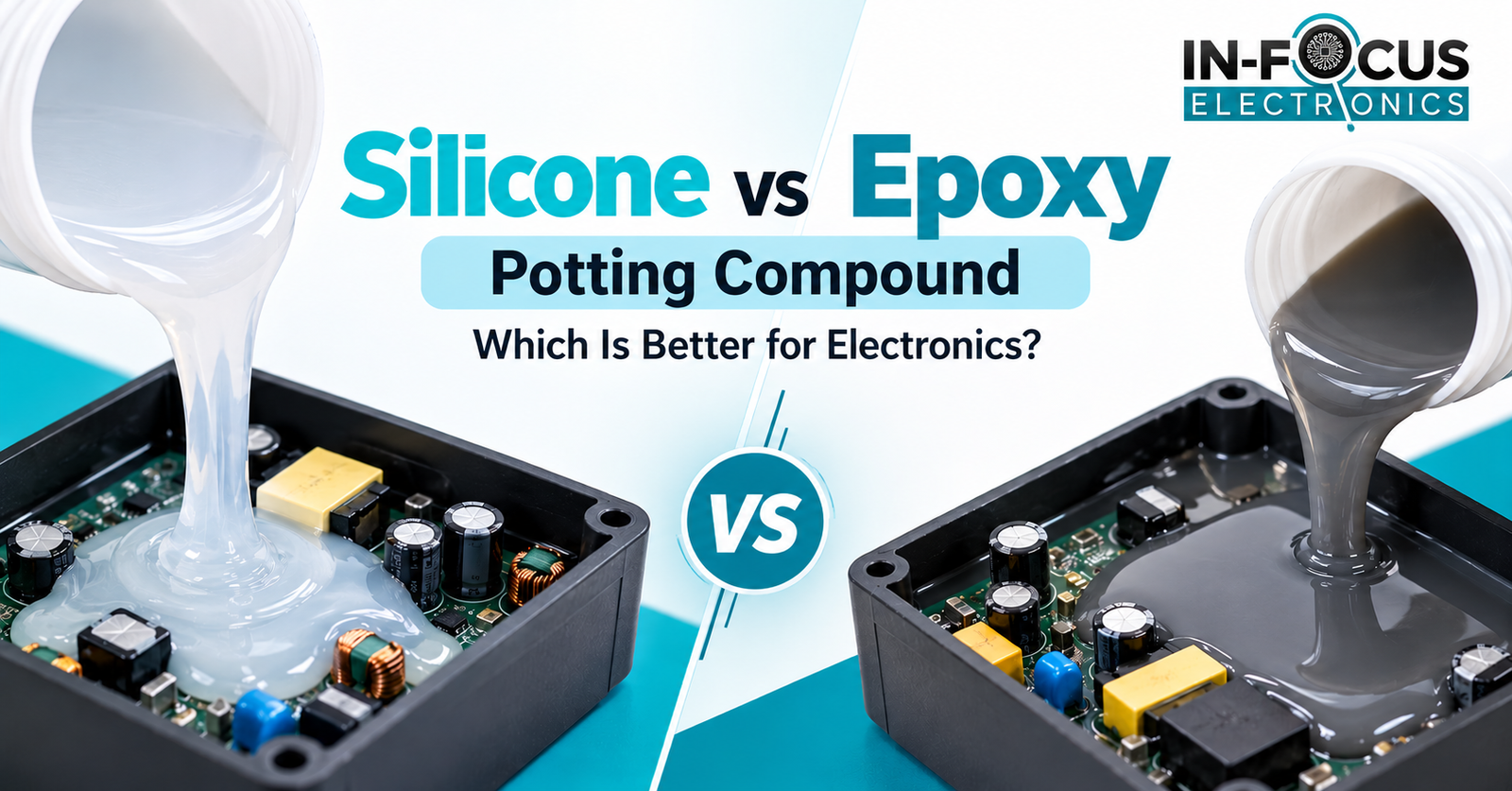
Silicone vs Epoxy Potting Compound: What Are the Main Differences?
Although both materials are used for electronic encapsulation, their physical properties and performance after curing make them suitable for different applications.
1. Flexibility and Hardness
Silicone potting compounds are generally flexible after curing. They can accommodate some movement and thermal expansion, which may help reduce stress on sensitive electronic components.
Epoxy potting compounds usually cure into a hard, rigid material. This rigidity can provide mechanical support but may increase stress on components during temperature changes.
2. Temperature Performance
Many silicone formulations are designed to withstand wide temperature variations while retaining flexibility.
Epoxy temperature performance depends on its formulation, curing process and thermal rating. Some epoxy systems are designed for demanding temperature conditions, so the technical datasheet should always be checked.
3. Mechanical Protection
Epoxy is often preferred when rigid structural support and strong adhesion are important.
Silicone is often preferred when flexibility and vibration absorption are more important than rigidity.
4. Moisture Resistance
Both silicone and epoxy can help protect electronics from moisture when the correct formulation is selected and the material is applied properly.
The actual protection depends on the product, curing quality, component coverage and the design of the complete enclosure.
5. Chemical Resistance
Certain epoxy formulations provide good resistance to oils and chemicals. Silicone formulations also offer useful resistance in selected environments, but compatibility varies.
Always confirm compatibility with the substances the finished product may encounter.
6. Removal and Repair
Some silicone potting materials may be easier to remove than rigid epoxy systems. However, removal depends on the specific formulation, curing state and electronic assembly design.
Neither material should be assumed to be easily removable after full curing.
Which Potting Compound Is Better for LED Lighting Applications?
For LED lighting manufacturers, choosing between silicone and epoxy potting compound depends on the lighting design, operating temperature, environmental exposure and electronic components being encapsulated.
When Should You Choose Silicone Potting Compound?
Silicone may be suitable when:
- The LED driver or electronic assembly experiences repeated temperature changes.
- Flexible protection is needed around sensitive components.
- The assembly is exposed to vibration.
- The application requires an encapsulant that remains flexible after curing.
- The selected formulation is compatible with the operating environment.
For outdoor LED lights, silicone may help protect electronic components against moisture and temperature cycling when the complete encapsulation system is correctly designed.
When Should You Choose Epoxy Potting Compound?
Epoxy may be suitable when:
- The assembly requires rigid mechanical support.
- Strong adhesion to compatible surfaces is important.
- The design benefits from a hard protective encapsulation layer.
- Chemical exposure requires a compatible epoxy formulation.
- Electronic components must remain firmly secured inside an enclosure.
For both materials, enclosure design, cable entry points, surface preparation and application quality affect the final level of protection.
How to Choose the Right Potting Compound
Before purchasing a silicone or epoxy potting compound, consider the following important factors.
1. Operating Temperature
Determine the minimum and maximum temperatures the electronic assembly will experience. Check both the continuous operating temperature and any short-term temperature peaks against the product's technical datasheet.
2. Flexibility Requirements
Choose a flexible silicone system if the application needs to accommodate movement or thermal expansion. Consider epoxy when rigidity and mechanical support are priorities.
3. Moisture and Environmental Exposure
Identify whether the product will be exposed to humidity, rain, condensation, oils or chemicals. Select a formulation with suitable resistance and verify that the finished assembly meets the required protection level.
4. Electrical Insulation
Check the electrical requirements of the application, including dielectric strength, volume resistivity and relevant electrical safety standards. Do not assume all potting compounds provide identical insulation performance.
5. Mixing and Curing Requirements
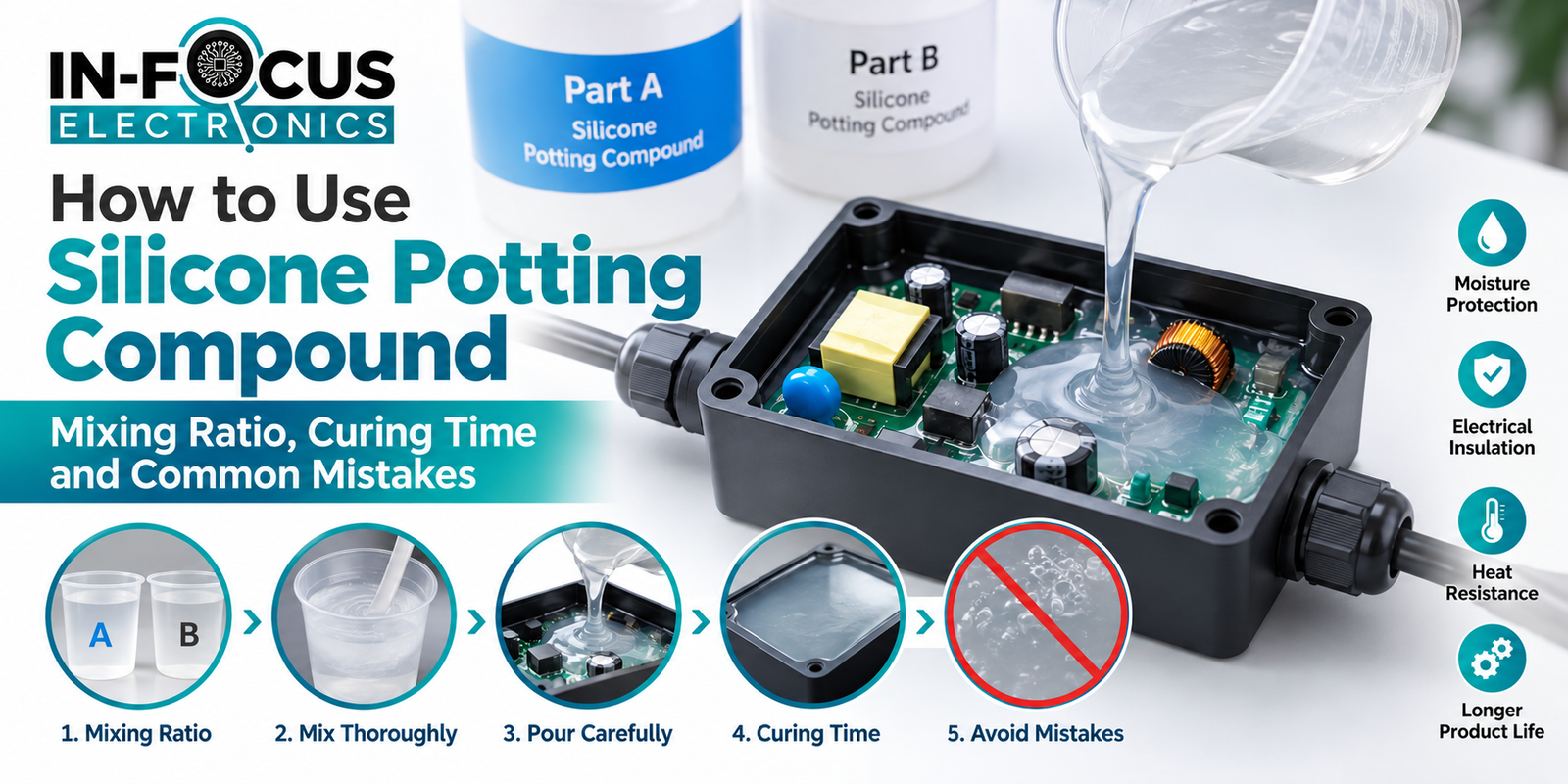
Follow the manufacturer's specified mixing ratio, mixing procedure, working time and curing schedule. Some products require additional steps to remove air bubbles or prepare the substrate.
Incorrect mixing or incomplete curing can reduce the effectiveness of the encapsulation.
6. Compatibility With Electronic Components
Confirm that the selected material is compatible with circuit boards, wire insulation, connectors, plastics and other materials in your assembly.
Checking compatibility before application can help prevent adhesion problems or damage to sensitive components.
Common Mistakes to Avoid When Using Potting Compounds
Whether you select silicone or epoxy, avoid these common mistakes:
- Using an incorrect mixing ratio.
- Mixing the material too aggressively and introducing excess air.
- Applying the compound to contaminated or damp surfaces when the product requires a clean, dry substrate.
- Ignoring the manufacturer's curing time.
- Selecting a product without checking its operating temperature limits.
- Assuming that potting alone guarantees an IP rating for the finished assembly.
- Failing to check compatibility with plastics, wire insulation, connectors and other materials.
- Pouring the compound before confirming the correct application and curing procedure.
Proper preparation, correct mixing and suitable curing conditions are essential for achieving reliable protection.
Where to Find Encapsulation Materials for Electronics
Choosing the right encapsulation material is an important step in protecting LED drivers, circuit boards, power supplies and other electronic components.
INFOCUS ELECTRONICS provides encapsulation materials for electronic and electrical applications. If you are looking for suitable materials for LED lighting, electronic assemblies or other electrical equipment, explore our product range.
Explore Encapsulation Materials from INFOCUS ELECTRONICS
Visit our product page to learn more about the available encapsulation materials and identify options that may suit your application.
Before selecting a potting compound, review the product specifications and confirm its suitability for your operating temperature, flexibility, electrical insulation and environmental protection requirements.
Frequently Asked Questions
1. Is silicone better than epoxy potting compound for electronics?
Silicone is often preferred when flexibility, vibration absorption and performance during temperature changes are important. Epoxy is often preferred when rigid mechanical support and strong adhesion are required. The best option depends on the application.
2. Which potting compound is better for LED drivers?
Both materials can be suitable for LED drivers. Silicone may be advantageous when thermal cycling and component stress are concerns, while epoxy may be suitable when rigid encapsulation is required. Consider the driver's thermal design and the manufacturer's recommendations.
3. Does silicone potting compound protect against water?
A properly selected silicone potting compound can provide moisture protection. However, the final protection depends on the formulation, application quality, component coverage and complete enclosure design.
4. Is epoxy potting compound waterproof?
Some epoxy formulations provide good moisture resistance, but performance varies by product. Proper curing, adhesion and assembly design are necessary to achieve the intended protection.
5. Can silicone and epoxy potting compounds be removed?
Removal depends on the formulation and curing state. Some silicone materials can be removed more easily than rigid epoxy, but cured materials of either type may be difficult to remove without damaging components.
6. How long does potting compound take to cure?
Curing time depends on the chemistry, product formulation, ambient temperature and specified curing conditions. Always follow the technical datasheet rather than assuming every silicone or epoxy product cures at the same rate.
7. Which potting compound is suitable for outdoor LED lights?
Both silicone and epoxy may be suitable, depending on the product formulation and lighting design. Consider temperature cycling, moisture exposure, mechanical requirements and compatibility with the electronic components before selecting a material.
Conclusion
Silicone and epoxy potting compounds both play important roles in protecting electronic components.
Silicone potting compound is often a good choice for flexible encapsulation, vibration absorption and applications involving temperature changes. Epoxy potting compound is often a good choice when rigidity, mechanical support and strong adhesion are priorities.
For LED lighting manufacturers and electronics businesses, selecting the correct encapsulation material can help improve the reliability and durability of the finished product.
Before making a selection, compare the technical specifications of the available materials with your application's temperature, electrical, mechanical and environmental requirements.
Explore the INFOCUS ELECTRONICS Encapsulation Materials range to learn more about encapsulation solutions for electronic and electrical applications.
Note: Material properties, curing times and suitability vary by product. Always follow the manufacturer's technical datasheet and safety instructions.