What Is Silicone Potting Compound?
Silicone potting compound is a protective material used to encapsulate electronic components inside an enclosure. After curing, it forms a flexible protective layer that can help shield sensitive electronics from moisture, dust, vibration and environmental exposure.
Silicone potting compounds are commonly used in LED lighting, electronic circuit boards, power supplies, sensors, electrical assemblies and industrial equipment. Selecting the right formulation is important for achieving the required protection and performance.
How to Use Silicone Potting Compound
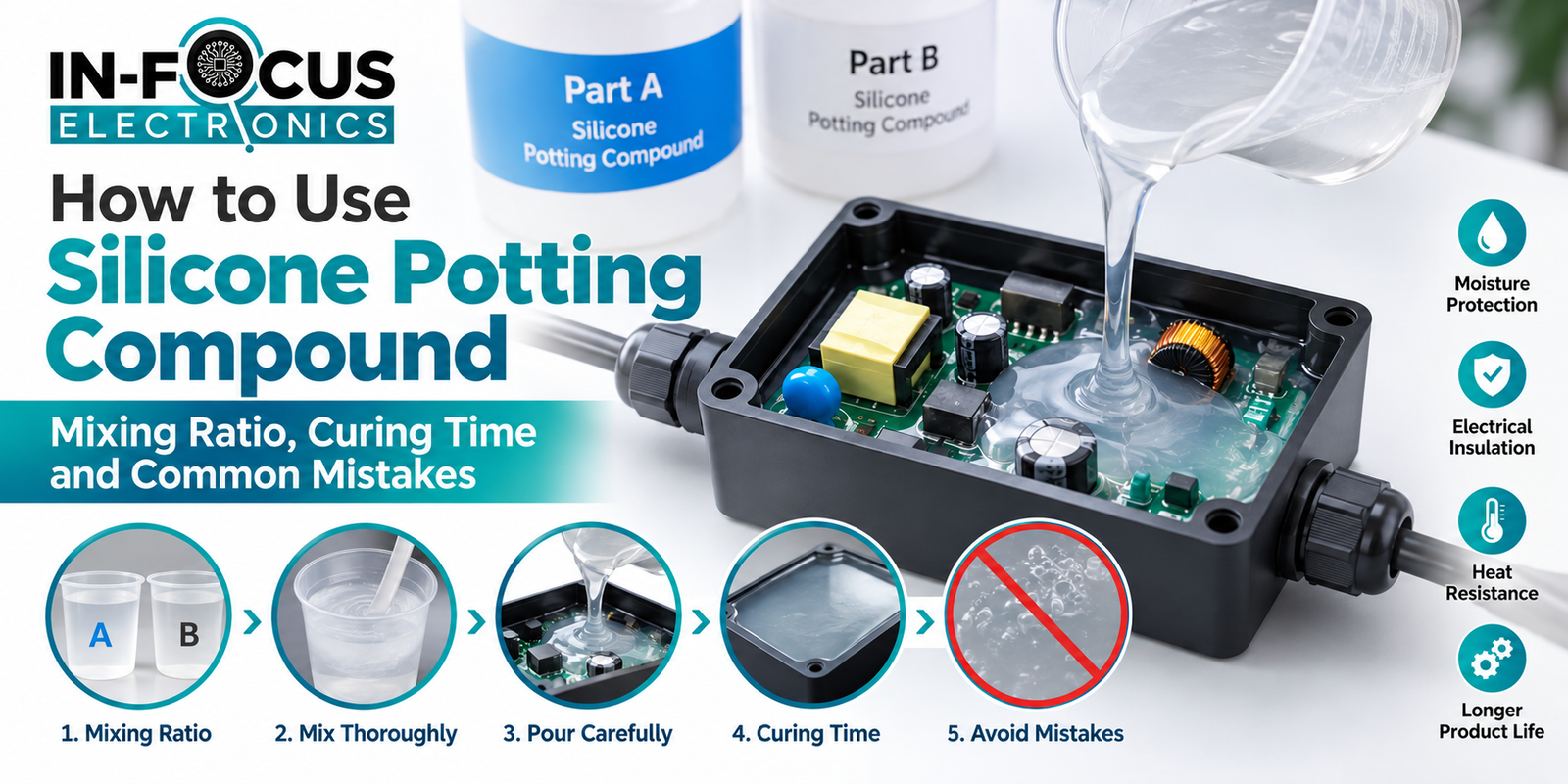
Using silicone potting compound correctly involves preparing the components, measuring the material accurately, mixing it thoroughly, pouring it carefully and allowing it to cure under the recommended conditions.
Step 1: Prepare the Components and Enclosure
Before starting, ensure the electronic assembly is clean, dry and free from dust, oil, grease and other contaminants. Check that the enclosure is ready for potting and that any areas requiring future access are properly protected.
- Clean the components using an appropriate method.
- Ensure the assembly is dry.
- Check compatibility with circuit boards, wires, connectors and enclosure materials.
- Seal openings where compound leakage could occur.
- Complete any required electrical checks before encapsulation.
Step 2: Check the Silicone Potting Compound Mixing Ratio
Many silicone potting compounds are supplied as two-part systems consisting of Part A and Part B. These components must be mixed according to the manufacturer's specified ratio.
For example, a 1:1 ratio by weight requires 100 grams of Part A and 100 grams of Part B. A 10:1 ratio by weight requires 100 grams of Part A and 10 grams of Part B. These examples are for illustration only; always follow the instructions for your specific product.
Important: Check whether the ratio is specified by weight or by volume. These measurements are not necessarily interchangeable because the components may have different densities. An incorrect ratio can result in incomplete curing or reduced material performance.
Step 3: Mix the Components Thoroughly
Measure the required quantities using suitable equipment. Mix Part A and Part B slowly until the material becomes uniform.
- Use clean, dry mixing containers and tools.
- Measure both components accurately.
- Scrape the sides and bottom of the container while mixing.
- Avoid vigorous mixing that introduces excess air.
- Follow the manufacturer's instructions for vacuum degassing, if required.
Step 4: Pour the Compound Carefully
Pour the mixed silicone compound slowly into the prepared enclosure. Allow it to flow around the components and fill the intended spaces without trapping excessive air.
For LED drivers and lighting electronics, confirm that the material is compatible with the assembly and that the potting design does not compromise thermal management or access to connectors.
Step 5: Allow the Compound to Cure
Leave the potted assembly undisturbed under the conditions specified by the manufacturer. Curing time varies with the formulation, temperature, layer thickness and other application conditions.
Working time, tack-free time and full curing time are different. Some materials cure in hours, while others require longer. Follow the technical data sheet for the recommended curing temperature, duration and any post-curing requirements. Do not energize the assembly until it is safe to do so according to the product and equipment instructions.
Silicone Potting Compound Curing Time
There is no single curing time that applies to every silicone potting compound. The time required depends on the specific chemistry, mixing ratio, ambient conditions and thickness of the potted section.
- Working time: How long the mixed material remains suitable for application.
- Tack-free time: The time needed for the exposed surface to stop feeling sticky under specified conditions.
- Full cure: The time needed for the material to develop its intended cured properties throughout the relevant section.
Always consult the manufacturer's technical data sheet rather than assuming that every product cures at the same rate.
Common Mistakes to Avoid When Using Silicone Potting Compound
1. Using the Wrong Mixing Ratio
Incorrect proportions may prevent the material from curing properly or achieving its intended properties. Measure each component accurately according to the specified ratio.
2. Mixing Too Quickly
Vigorous mixing can introduce air bubbles that remain trapped after pouring. Mix slowly and use an approved degassing process when necessary.
3. Potting Damp or Contaminated Components
Moisture, dust and oil can interfere with adhesion or affect performance, depending on the formulation. Clean and prepare the assembly as instructed.
4. Ignoring the Working Time
Once mixed, the compound may gradually become more viscous. Apply it within the recommended working time to ensure proper flow and coverage.
5. Assuming All Silicone Compounds Cure at the Same Speed
Different formulations have different curing requirements. Check the recommended curing time and temperature for the selected product.
6. Choosing an Incompatible Material
Some silicone chemistries may be incompatible with certain coatings, plastics, adhesives or electronic components. Verify compatibility before starting production.
7. Ignoring Heat Management
Potting does not automatically solve overheating problems. Consider the operating temperature, heat generation and thermal conductivity of the material when designing the assembly.
How to Choose the Right Silicone Potting Compound
Select a material based on the operating environment and the requirements of the finished product. Important considerations include:
- Viscosity: Determines how easily the compound flows around components and into gaps.
- Mixing ratio: Must suit the product and the production process.
- Curing time: Affects manufacturing and handling schedules.
- Operating temperature: The cured material must withstand the intended temperature range.
- Electrical properties: Review insulation resistance and dielectric strength where relevant.
- Flexibility: Important for assemblies exposed to vibration or thermal expansion.
- Thermal conductivity: Relevant when heat transfer through the encapsulant is required.
- Optical clarity: Important for applications where light transmission or visual transparency matters.
- Compatibility: Confirm suitability for the complete assembly.
Applications of Silicone Potting Compound
Suitable silicone potting compounds are used in many electronic and electrical applications, including:
- LED driver and lighting module encapsulation
- Outdoor LED lighting electronics
- Power supplies and control units
- Printed circuit boards and electronic modules
- Sensors and industrial electronic assemblies
- Electrical components requiring additional insulation or environmental protection
Explore Silicone Potting Compounds and Encapsulation Materials
Choosing the right encapsulation material helps manufacturers protect electronic components and meet the requirements of their applications. INFOCUS ELECTRONICS supplies encapsulation materials for suitable LED lighting, electronics, electrical and industrial applications.
Explore our range, including silicone potting compounds, optically clear potting materials, thermally conductive silicone compounds and polyurethane potting compounds.
Explore Silicone Potting Compounds and Encapsulation Materials from INFOCUS ELECTRONICS
Visit our product range to review available options or contact our team for product specifications, availability, pricing, bulk orders and OEM requirements.
Frequently Asked Questions
What is silicone potting compound used for?
It is used to encapsulate and protect suitable electronic and electrical components from moisture, dust, vibration and other environmental stresses.
What is the mixing ratio for silicone potting compound?
The mixing ratio depends on the specific formulation. Some products use a 1:1 ratio, while others require different proportions. Always follow the manufacturer's instructions and confirm whether the ratio is by weight or volume.
How long does silicone potting compound take to cure?
Curing time varies by product, temperature, layer thickness and application conditions. Consult the technical data sheet for the correct working time and full cure requirements.
Can silicone potting compound be used for LED drivers?
Yes, suitable formulations can be used to encapsulate LED drivers and lighting electronics. Confirm compatibility with the components and consider the assembly's heat-management requirements.
Is silicone potting compound waterproof?
Some formulations provide strong resistance to moisture and water exposure. However, the finished assembly's protection also depends on its enclosure, seals, cable entries, design and testing. The compound alone does not guarantee an IP rating.
Is silicone potting compound flexible after curing?
Many silicone potting compounds cure into flexible or elastomeric materials. The actual flexibility depends on the formulation.
Conclusion
Successful silicone potting requires proper preparation, accurate measurement, thorough mixing, careful pouring and sufficient curing time. Avoiding common mistakes can help manufacturers achieve more consistent encapsulation results and protect sensitive electronic assemblies.
INFOCUS ELECTRONICS offers a range of encapsulation materials for LED lighting, electronics and industrial applications. Explore our encapsulation materials to find a suitable product for your requirements.
Note: Mixing ratios, curing times and material properties vary by product. Always follow the manufacturer's technical data sheet and safety instructions.