Waterproofing LED Lighting: The Role of Sealing, Potting and IP Protection
LED lighting is used in many environments where exposure to moisture, dust, humidity and water is unavoidable. Outdoor street lights, flood lights, industrial fixtures, signage and other lighting systems may need protection against environmental conditions that can affect electrical and optical components.
Waterproofing an LED lighting fixture is not achieved by one component alone. A reliable design can involve proper sealing, potting or encapsulation, cable entry protection and an appropriate IP-rated enclosure.
Understanding how these elements work together helps lighting manufacturers and installers select suitable components for different applications.
Why Waterproofing Matters in LED Lighting
Moisture can enter a lighting fixture through several points, including cable entries, joints, connectors, housing gaps and poorly sealed openings.
Once moisture reaches electrical or electronic components, it can contribute to corrosion, electrical faults and deterioration of components. In outdoor applications, repeated exposure to rain, humidity and temperature changes can make environmental protection particularly important.
For this reason, waterproofing should be considered during the design and assembly of the complete lighting fixture rather than treated as a final step.
What Is IP Protection?
IP stands for Ingress Protection. The IP Code is defined under IEC 60529, which classifies the degree of protection provided by enclosures against the ingress of solids and water.
An IP rating normally contains two digits:
- First digit: Protection against solid particles such as dust.
- Second digit: Protection against water.
For example, an enclosure marked IP65 has a defined level of protection against dust and water jets under the applicable test conditions.
It is important to select an IP rating based on the actual environment and application rather than simply choosing the highest number.
The Role of Sealing in LED Fixtures
Sealing helps prevent moisture from entering through joints, openings and connection points.
Common sealing areas in lighting fixtures include:
- Housing joints
- Covers and lenses
- Cable entry points
- Connectors
- Screwed interfaces
- Gaskets and O-rings
- Junction points
A small opening can become an entry path for moisture. Therefore, the sealing system needs to work together with the fixture housing and other components.
Cable Glands and Waterproof Cable Entry
Cable entry is one of the important areas to consider when designing an environmentally protected lighting fixture.
A suitable cable gland can help secure the cable while providing sealing around the cable entry point. IEC material also describes cable glands as having an important role in maintaining enclosure integrity and environmental protection requirements in relevant applications.
The cable gland should be selected according to factors such as:
- Cable diameter
- Thread size
- Enclosure design
- Environmental conditions
- Required protection level
- Cable and gland compatibility
Using a suitable gland helps prevent the cable-entry point from becoming a weak point in the overall protection system.
What Is Potting in LED Lighting?
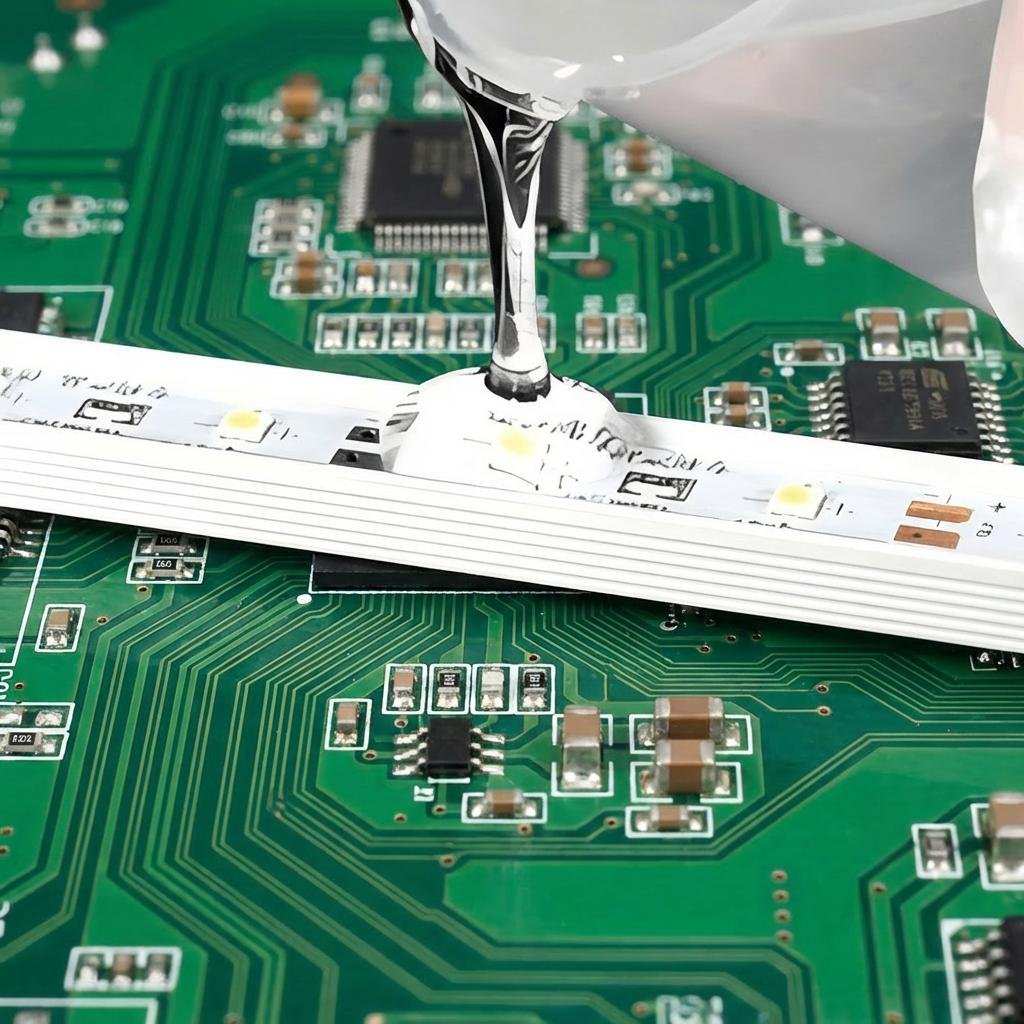
Potting is a process in which an electronic assembly or selected components are surrounded or encapsulated with a protective material.
Depending on the application, manufacturers may use materials such as silicone potting compounds or polyurethane potting compounds.
Potting can help protect components from environmental exposure and can also provide mechanical protection and insulation.
For LED and electronic assemblies, the choice of potting material depends on the design requirements, operating conditions and compatibility with the components.
Silicone Potting vs Polyurethane Potting
Different encapsulation materials have different characteristics.
Silicone Potting Compound
Silicone-based materials are commonly considered when flexibility, environmental resistance and temperature-related performance are important design considerations.
They can be useful for applications where the encapsulating material needs to accommodate movement or thermal expansion.
Polyurethane Potting Compound
Polyurethane materials can be selected for applications requiring a protective encapsulation around electronic components.
The appropriate formulation depends on the intended application, operating environment and required physical properties.
Rather than choosing a material only by its name, manufacturers should consider the complete application and the manufacturer's technical specifications.
Sealing vs Potting: What Is the Difference?
Sealing and potting serve related but different purposes.
Sealing generally focuses on preventing ingress through a joint, opening or interface.
Potting involves encapsulating selected components or assemblies with a protective compound.
A lighting fixture may use both approaches.
For example, an outdoor fixture could use:
Enclosure + gasket/sealing + cable gland + potting/encapsulation
Each element addresses a different potential path for environmental exposure.
Why IP Rating Alone Is Not Enough
An IP rating describes the protection provided by an enclosure under specified test conditions. It does not mean that every internal component automatically has the same level of protection.
The complete fixture design still matters.
For example, the enclosure, cable entry, seals, connectors, assembly quality and other components need to be appropriate for the intended application.
This is why waterproof lighting design should be viewed as a complete system rather than relying on a single component.
Applications Where Waterproofing Is Important
Environmental protection can be particularly relevant in:
- Outdoor LED street lights
- Flood lights
- High bay lighting used in demanding environments
- Industrial lighting fixtures
- Outdoor signage
- Architectural lighting
- Landscape lighting
- Decorative outdoor lighting
- Lighting used in humid environments
- Electronic assemblies exposed to moisture
The required protection level depends on the specific installation environment and applicable requirements.
Common Waterproofing Considerations for Lighting Manufacturers
Before finalizing an LED fixture design, manufacturers can consider:
1. Identify the Environment
Determine whether the fixture will be exposed to rain, humidity, dust, water jets, condensation or other environmental conditions.
2. Select the Appropriate IP Protection
Choose an enclosure and protection level suitable for the intended application and applicable requirements.
3. Protect Cable Entry Points
Cable glands and other cable-entry components should be compatible with the cable and enclosure.
4. Check Housing Seals
Gaskets, O-rings and other sealing interfaces should be properly selected and installed.
5. Consider Encapsulation
Where appropriate, potting or encapsulation can provide additional protection for selected electronic components.
6. Consider the Complete Assembly
Waterproofing performance depends on the interaction between the enclosure, seals, cable entries and internal components.
Building More Reliable LED Lighting Systems
Waterproofing is an important part of designing LED lighting for outdoor and demanding environments. Sealing, cable glands, potting compounds and IP-rated enclosures can each contribute to protecting a lighting assembly from environmental exposure.
For lighting manufacturers, OEMs and installers, selecting the right combination of components is important for developing lighting fixtures suited to their intended application.
At Infocus Electronics, we provide components for LED lighting and electronic applications, including encapsulation materials, cable glands, LED optics and lighting accessories for different manufacturing and installation requirements.
Explore the appropriate product category and select components according to your fixture design, environmental conditions and technical requirements. -