Introduction
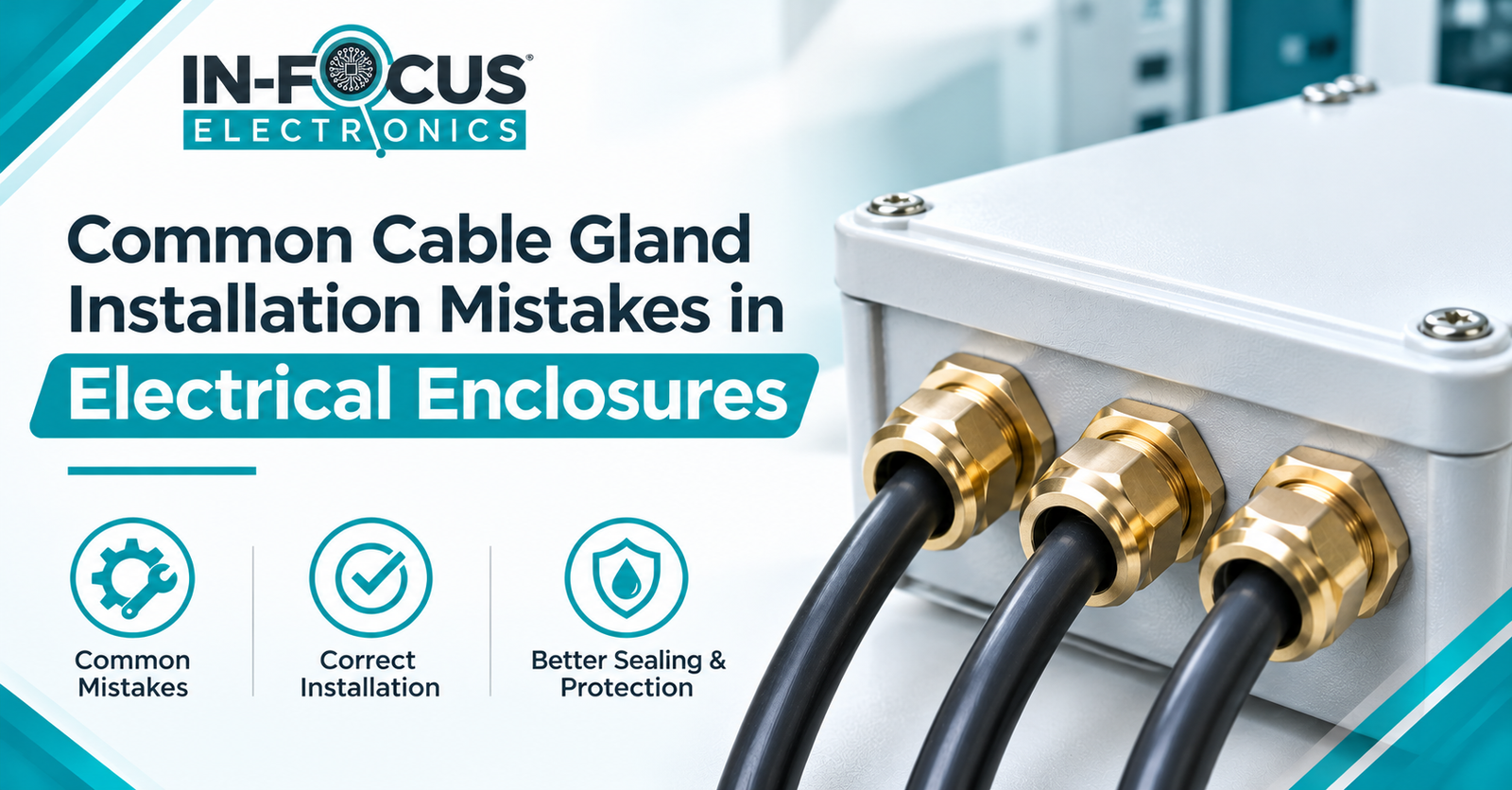
Cable glands are essential components used to secure and protect electrical cables where they enter electrical enclosures, control panels, junction boxes and lighting equipment. They provide cable retention, help protect against dust and moisture, and support the overall safety and reliability of an electrical installation.
However, even a good-quality cable gland may not perform correctly if it is installed improperly. Incorrect sizing, mismatched threads, damaged sealing washers and excessive tightening are some common mistakes that can affect the protection of an electrical enclosure.
In this guide, we explain the most common cable gland installation mistakes and how to avoid them when working with brass PG cable glands and other electrical cable entry fittings.
1. Choosing the Wrong Cable Gland Size
One of the most common mistakes is selecting a cable gland without checking the outer diameter of the cable. A gland that is too large may not grip the cable properly, while one that is too small can make cable insertion difficult and damage the cable sheath.
How to avoid it:
- Measure the cable's actual outer diameter before selecting a gland.
- Check the manufacturer's specified cable clamping range.
- Ensure the selected gland is suitable for the cable construction and application.
- Do not select a gland based only on the cable conductor size.
2. Using an Incorrect Thread Size
Cable glands are available with different thread standards, including PG and metric sizes. Using an incorrect thread can result in poor engagement, loose mounting or damage to the enclosure entry.
How to avoid it:
- Check whether the enclosure requires a PG or metric thread.
- Verify the thread size before purchasing the cable gland.
- Never force a gland into an incompatible threaded opening.
- Use a suitable adapter only when the installation design permits it.
3. Forgetting the Sealing Washer or O-Ring
Some cable gland installations require a sealing washer or O-ring between the gland and the enclosure surface. Missing, damaged or incorrectly positioned sealing components can create a path for dust or moisture to enter.
How to avoid it:
- Check the gland manufacturer's installation instructions.
- Use the specified sealing washer or O-ring where required.
- Ensure the sealing surface is clean and free from damage.
- Replace damaged or deformed sealing components.
4. Over-Tightening the Cable Gland
Excessive tightening can damage the cable sheath, deform sealing components or affect the gland's threads. It may also damage the enclosure, particularly when the mounting surface is thin or made from a softer material.
How to avoid it:
- Tighten the gland according to the manufacturer's instructions.
- Use the recommended tightening method and torque where specified.
- Avoid applying excessive force with tools.
- Check that the cable is held securely without being crushed.
5. Ignoring Sharp Edges Around the Enclosure Entry
Drilled openings in electrical panels and enclosures can have sharp edges or metal burrs. These edges may damage the cable insulation during installation or when the cable moves.
How to avoid it:
- Inspect every cable entry opening before installation.
- Remove sharp edges and burrs using an appropriate deburring tool.
- Ensure the opening is clean and suitable for the selected gland.
- Check that the cable sheath is not damaged during insertion.
6. Installing the Gland on an Uneven Surface
A cable gland requires a suitable mounting surface for correct fitting and sealing. Installing it on a rough, uneven or unsuitable enclosure surface can affect the sealing arrangement and mechanical stability.
How to avoid it:
- Use a flat and sufficiently rigid mounting surface.
- Check the enclosure entry hole for correct dimensions.
- Position the sealing washer correctly where required.
- Follow the manufacturer's instructions for thin-wall and thick-wall enclosures.
7. Leaving Unused Cable Entry Holes Open
Unused cable entry openings can become entry points for dust, moisture and other contaminants. This can affect the protection of the electrical enclosure.
How to avoid it:
- Inspect the enclosure for unused openings.
- Use compatible blanking plugs or stopping plugs.
- Check that the selected plug matches the opening's thread and protection requirements.
- Ensure all unused entries are properly sealed.
8. Ignoring Cable Routing and Mechanical Strain
Incorrect cable routing can place unnecessary tension or bending force on the cable gland. Continuous pulling, vibration or sharp cable bends may affect the cable connection and mechanical grip.
How to avoid it:
- Provide suitable cable support where required.
- Avoid unnecessary pulling or twisting during installation.
- Maintain the recommended cable bending radius.
- Use suitable strain-relief arrangements for the application.
9. Assuming the Cable Gland Alone Guarantees Enclosure IP Protection
A cable gland's IP rating does not automatically guarantee the same protection level for the complete electrical enclosure. The final protection depends on the gland, cable diameter, sealing components, mounting surface, unused openings and installation quality.
How to avoid it:
- Select a gland suitable for the required environmental conditions.
- Check the manufacturer's stated IP rating and installation requirements.
- Use compatible sealing accessories.
- Ensure the complete enclosure assembly meets the required protection level.
10. Skipping the Final Inspection
Completing the installation without checking the gland can leave loose fittings, incorrectly positioned seals or poorly supported cables unnoticed.
How to avoid it:
- Check that the gland is properly seated.
- Confirm that the cable is securely retained.
- Inspect the sealing components and mounting area.
- Verify that unused openings are closed.
- Follow the applicable inspection and testing requirements for the installation.
Why Correct Cable Gland Installation Matters in LED Lighting
LED street lights, flood lights, high-bay lights, outdoor lighting fixtures and electrical control panels often operate in environments where dust, moisture, vibration and temperature changes can affect electrical connections.
Correct cable gland selection and installation help provide suitable cable retention and sealing at cable entry points. This is particularly important for outdoor lighting equipment and electrical enclosures where environmental protection is required.
Choosing the Right Brass Cable Gland
Before selecting a cable gland, consider the cable's outer diameter, enclosure thread size, mounting arrangement, environmental conditions and required protection level. Brass cable glands are commonly used in electrical panels, industrial equipment and lighting applications where a robust cable entry fitting is required.
INFOCUS ELECTRONICS offers cable gland options in different sizes and configurations, including PG series and metric cable glands, for various electrical and lighting applications.
Explore our Cable Gland Products to find suitable options for your electrical installation requirements.
Conclusion
Correct cable gland installation is important for maintaining cable retention, sealing and reliable cable entry into electrical enclosures. Avoiding common mistakes such as incorrect sizing, thread mismatch, missing washers and over-tightening can help improve installation quality and reduce potential problems.
Always check the product specifications and follow the manufacturer's installation instructions to ensure the cable gland is suitable for the intended application.
For more practical guidance, read our related article: How to Handle and Install a Cable Gland Correctly.